
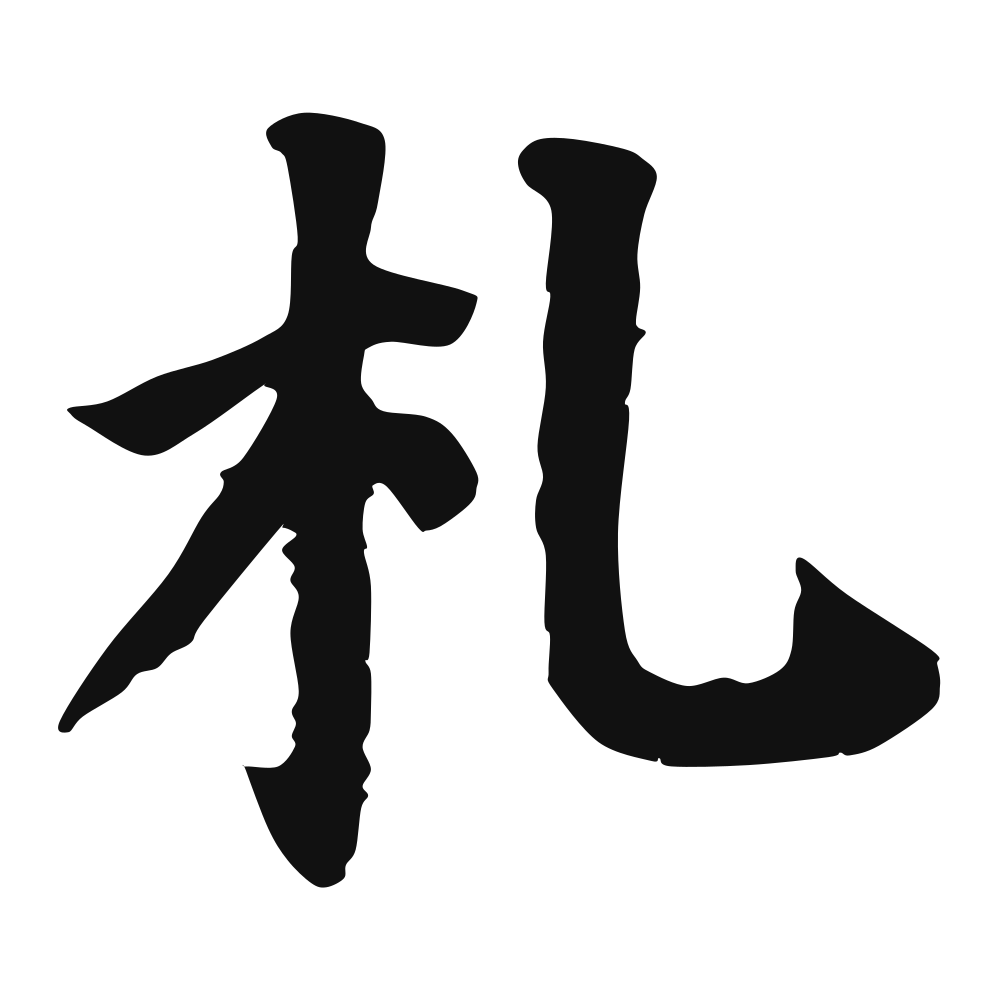
札
thin piece of wood used a writing tablet (in ancient China); a kind of official document (in former times); letter; note; plague
Closest English meanings
letter·note
The Calligrapher — Yán Zhēnqīng 颜真卿
Tang master of robust regular script; co-creator of the enduring 'Yan style'.
Tang calligrapher (709–784), master of regular script/running script — the Tang moral paragon whose upright, muscular regular script became the model of Chinese integrity in writing. Tang dynasty
Cultural Story
札 was a thin wooden slip, one of the strips bound with cord on which the Han wrote before paper. A 手札 was a letter inked on such slips, and the great calligraphers' surviving 札 — Wang Xizhi's casual notes to friends — are now national treasures. To read a 札 was to hold someone's day in your hand.
Common words & phrases
- 信札 letters · correspondence
- 札记 notes · jottings
- 手札 personal letter · handwritten note
Read the story behind the character
札 survives in bookish compounds: 信札, the collected letters of a scholar; 札记, the margin notes a researcher keeps. You will not say it alone at a post office — 信 has won that job. The character is archival, the word a historian reaches for when sorting a dead writer's correspondence into a box.
Why this character belongs on skin
Before paper, the written word traveled on 札—thin strips of wood, smoothed and split, bound with cord into books and dispatched as letters across the empire. A letter was a physical journey: ink ground that evening, brush loaded, the slip sealed and handed to a rider who might die before the mountain pass. Chinese literary history is a history of 信札—correspondence so fine that a single surviving note by Wang Xizhi, three lines about peaches and a friend's absence, is a national treasure seventeen centuries on. The form is small and therefore serious: what you write on a wooden slip, you mean. In an age of messages that evaporate, 札 is a vow to weightier correspondence—to the letter, the note left on the pillow, the sentence written by hand because the hand should be there. Ink it along the inner forearm, the writer's side, where the pulse runs close. Some words should leave a mark on both ends.
Own this character
Purchase delivers the original SVG of this glyph, brushed by Yán Zhēnqīng 颜真卿, ready to place on skin, paper, or screen.