
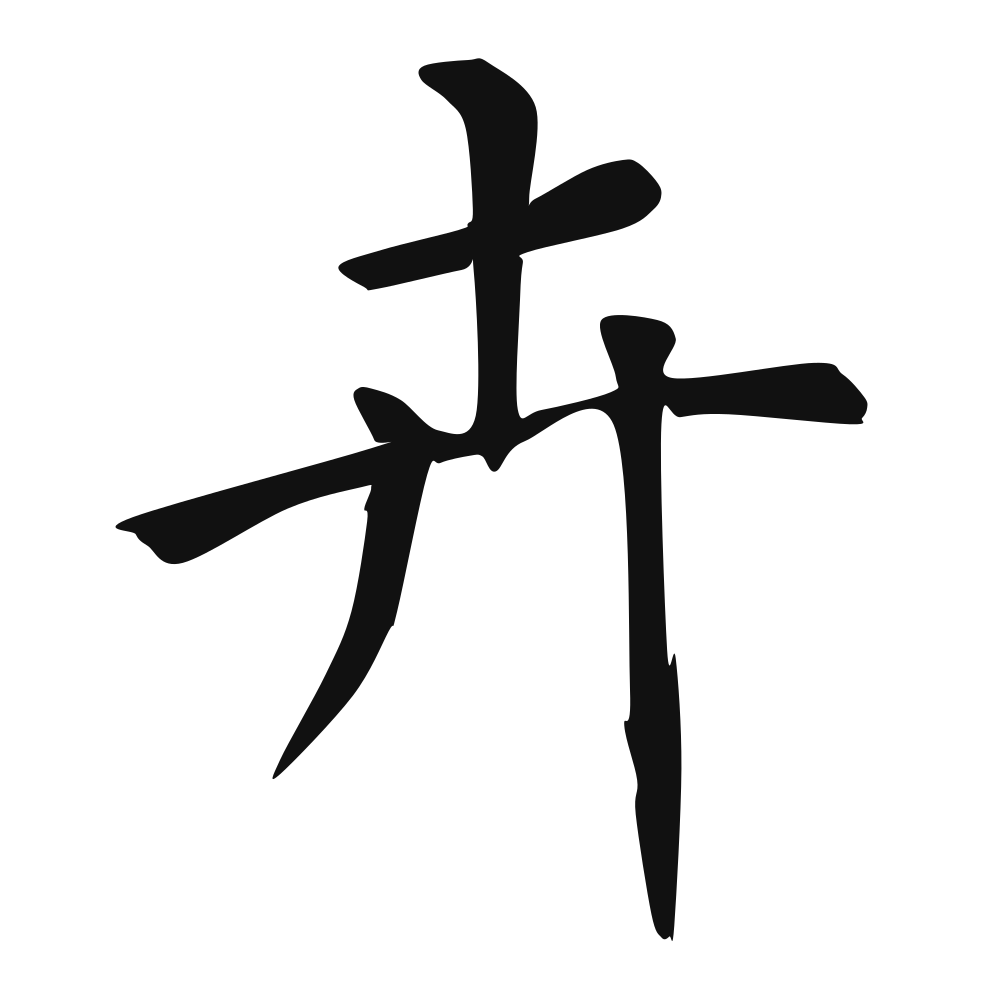
The Calligrapher — Chǔ Suíliáng 褚遂良
Tang chancellor and regular-script master of elegant, balanced strokes.
Tang calligrapher (596–658), master of regular script — Tang master of graceful, tensile regular script favored by the imperial court. Tang dynasty
Cultural Story
The Odes gather the field's growth as 百卉 — the hundred plants that flower and, in a bad year, “具腓,” all wilt. 卉 was the sum of the green world, herbs against trees; 卉木 the planting a lord's park kept. The word is the quiet commonwealth of leaf and stem.
Common words & phrases
- 花卉 flowers · plants and flowers
- 百卉 hundred plants · all flowers
- 卉木 plants and trees
Read the story behind the character
A 花卉 market fills a corner of the city each dawn; 百卉 is the line a park sign uses for its wildflower bed. 卉木 shades the lane a resident plants, and the character meets most readers only in a nursery tag or a botany quiz. The word now names the potted trade more than the wild field.
Why this character belongs on skin
卉 is the collective of growing things — grass, flowers, the green multitude that covers the earth without asking permission. One stalk is nothing; 卉 is the whole field, the wild chorus. The ancients used it for any plant that rises and bends and returns each spring, a quiet argument against despair. To wear 卉 is to align yourself with the unremarkable persistence of life — not the hero flower but the ground itself, greening after everything. It is a humble mark, and that is its power. We are told to be exceptional; this character says be alive, be many, be rooted. Let it sprawl where your own wildness lives. It promises no glory. It promises only that you will keep rising, season after season, until the season you do not. That is enough. The field does not apologize for its abundance.
Own this character
Purchase delivers the original SVG of this glyph, brushed by Chǔ Suíliáng 褚遂良, ready to place on skin, paper, or screen.