
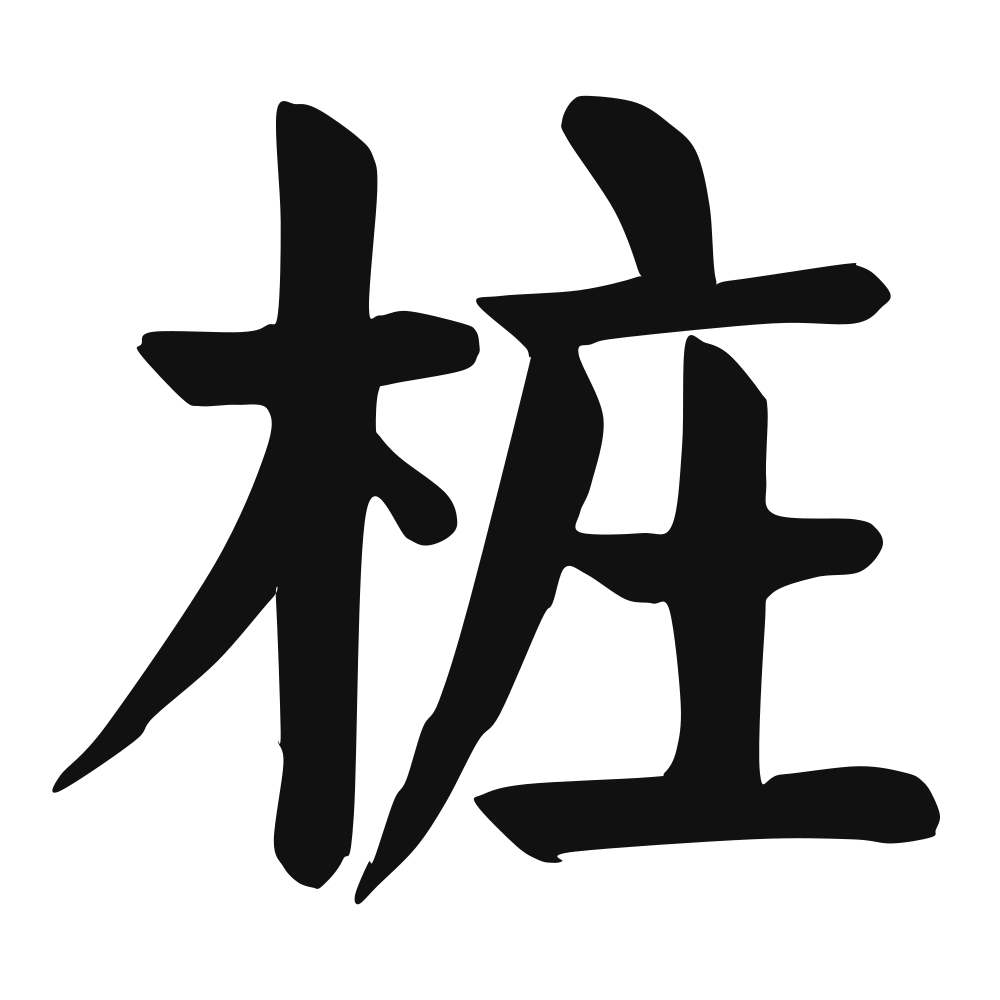
The Calligrapher — Yán Zhēnqīng 颜真卿
Tang master of robust regular script; co-creator of the enduring 'Yan style'.
Tang calligrapher (709–784), master of regular script/running script — the Tang moral paragon whose upright, muscular regular script became the model of Chinese integrity in writing. Tang dynasty
Cultural Story
桩 is a stake driven into the ground — the 木 hammered to mark, tie, or found. The character is the anchor of the temporary and the permanent alike: the tent peg and the bridge pile, the thing you beat down so something else can stand. It is foundation as violence, the wood that takes the hammer's anger.
Common words & phrases
- 木桩 wooden stake · post
- 打桩 drive piles · pile driving
- 桩子 stake · post · pile
- 桥桩 bridge pile
Read the story behind the character
桩 is the pile and the deed: 木桩 the marker a surveyor drives, 打桩 the rig pounding a skyscraper's base, 桥桩 the support a river hides. The character is also a matter in speech — 一桩事, a thing that happened. It is the post in the earth and the event on the books, both driven hard.
Why this character belongs on skin
A stake driven into the earth is a sentence the ground cannot argue with — here, it says, this is where I stand. 桩 is that post, the pile a bridge or a tent is tied to, the first honest mark a builder makes on empty land. There is a warrior's finality in it, a refusal to be moved once the hammer has fallen. To tattoo 桩 is to name the places you planted yourself and would not yield. It is the architecture of conviction. Let it sit where you are rooted — the calf, the base of the spine — a mark that says I drove myself in, and the wind has tried. You are the fixed point others measure their wandering against, the post the whole temporary structure leans on, silent, load-bearing, unacknowledged, essential.
Own this character
Purchase delivers the original SVG of this glyph, brushed by Yán Zhēnqīng 颜真卿, ready to place on skin, paper, or screen.