
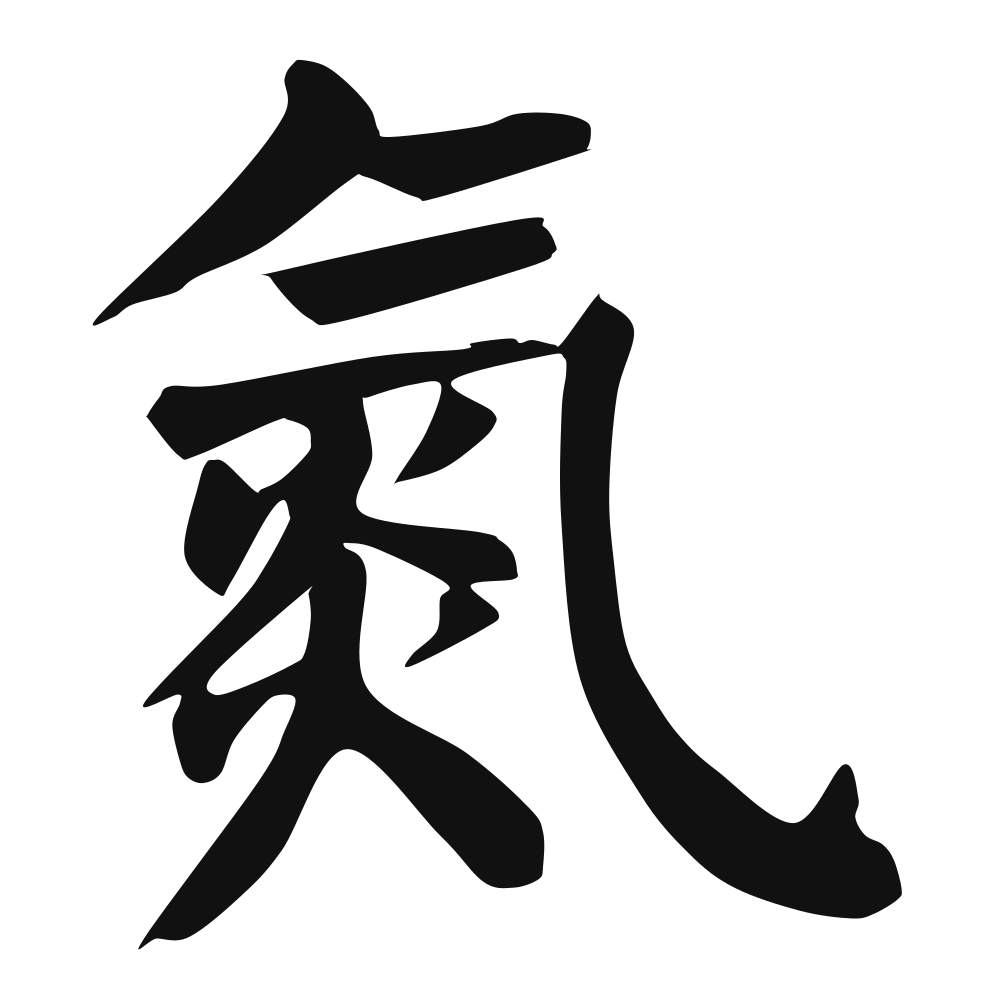
The Calligrapher — Yán Zhēnqīng 颜真卿
Tang master of robust regular script; co-creator of the enduring 'Yan style'.
Tang calligrapher (709–784), master of regular script/running script — the Tang moral paragon whose upright, muscular regular script became the model of Chinese integrity in writing. Tang dynasty
Cultural Story
氮 is a modern coinage from 气 (gas) and 炎 (flame) as phonetic — 'nitrogen gas.' It has no classical existence; the character was created for science in the 19th century. Its name reflects a gas that makes up most of the air yet barely reacts — the quiet, inert majority of the atmosphere.
Common words & phrases
- 氮气 nitrogen gas
- 氮肥 nitrogen fertilizer
- 氨氮 ammonia nitrogen
Read the story behind the character
氮 is the air we barely notice: 氮氣 (nitrogen gas) is 78% of what we breathe. Farmers spread 氮肥 (nitrogen fertilizer) to grow rice and wheat; inspectors measure 氨氮 (ammonia nitrogen) in polluted water. The character names the calm, unreactive gas that holds up the sky without ever catching fire.
Why this character belongs on skin
The invisible abundance: 氮, nitrogen—built on 气, the radical for air and breath, the newest layer of Chinese writing carrying the oldest subject. Four-fifths of every breath you take is nitrogen, and almost none of it stays; it passes through the lungs unnoticed, the great indifferent ocean we swim in. Yet in the soil, transformed, it becomes the green of every field and the protein of every body. Alchemists would have understood: the spirit in the air must be fixed—bound into living form—before it feeds anything. There is a quiet myth in that, a modern one: the unseen becoming flesh, breath becoming blood. To wear 氮 is to carry a scientist's humility with a mystic's ending—every inhale is an ocean, and you were built from what you couldn't see.
Own this character
Purchase delivers the original SVG of this glyph, brushed by Yán Zhēnqīng 颜真卿, ready to place on skin, paper, or screen.