
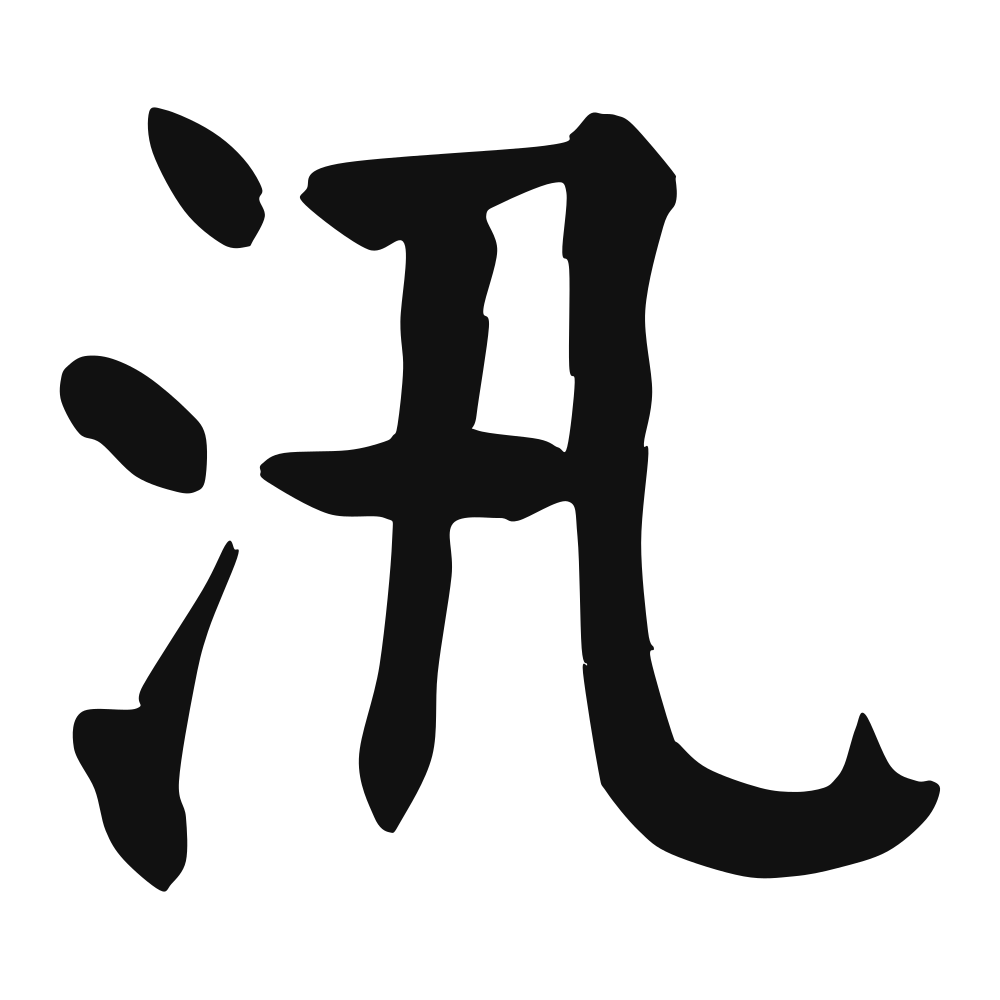
汛
high water; flood; to sprinkle water
Closest English meanings
flood·high water
The Calligrapher — Yán Zhēnqīng 颜真卿
Tang master of robust regular script; co-creator of the enduring 'Yan style'.
Tang calligrapher (709–784), master of regular script/running script — the Tang moral paragon whose upright, muscular regular script became the model of Chinese integrity in writing. Tang dynasty
Cultural Story
汛 is the seasonal rise of water — the flood season when rivers swell; the 說文解字 gives '水疾也', water moving fast. It named the regular high waters that ancient farmers both feared and needed. 汛 was the river's yearly temper, the time of danger and of renewed, fertile fields after the waters receded.
Common words & phrases
- 防汛 flood control
- 汛期 flood season
- 潮汛 tide · flood tide
Read the story behind the character
汛 means flood season: towns organize 防汛 (flood control) teams, the 汛期 (flood season) closes riverside parks, and 潮汛 (tide, flood tide) governs coastal life. News reports track rising levels each summer. The character names the anxious, annual moment when water threatens the land and communities prepare.
Why this character belongs on skin
When the snows melt and the heavens open, the river remembers it was once a sea—this is 汛, the flood season, the time the waters rise beyond their banks and the careful world goes underwater. The character is water and a sign of tidings, as if the rising were a message the land could not ignore, a recurring announcement that nature keeps its own calendar. We build levees against such seasons in our lives too: the grief that floods, the joy that overwhelms, the year that suddenly breaks its banks. To carry 汛 is to stop fearing the high water. Let it mark you as one who knows the season comes, who sandbags what matters and lets the rest float. The flood is not the enemy. It is the river, telling the truth about how much it loves the earth.
Own this character
Purchase delivers the original SVG of this glyph, brushed by Yán Zhēnqīng 颜真卿, ready to place on skin, paper, or screen.