
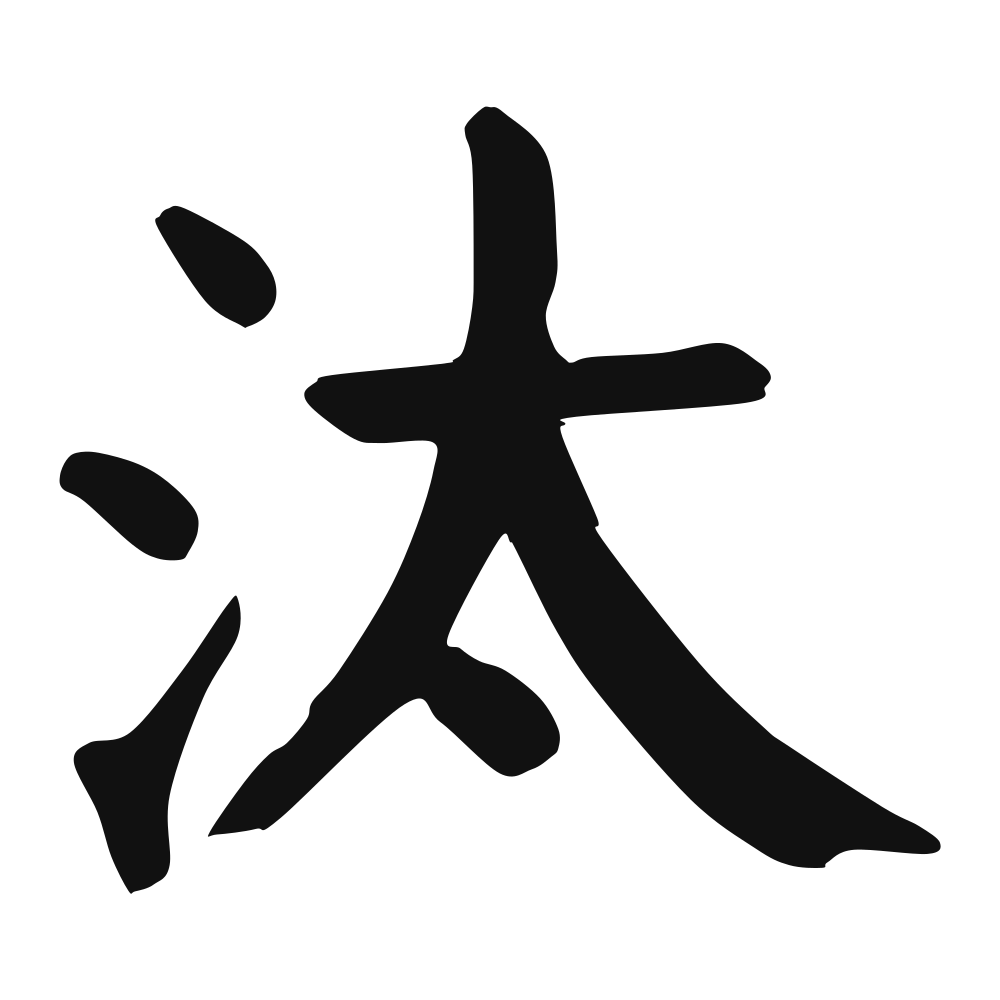
汰
to discard; to eliminate
Closest English meanings
discard·eliminate·wash
The Calligrapher — Yán Zhēnqīng 颜真卿
Tang master of robust regular script; co-creator of the enduring 'Yan style'.
Tang calligrapher (709–784), master of regular script/running script — the Tang moral paragon whose upright, muscular regular script became the model of Chinese integrity in writing. Tang dynasty
Cultural Story
汰 means to wash away, to discard; the 說文解字 gives '淅淅也', rinsing. In the 左傳 it appears as 汰侈, extravagant and wasteful. 汰 was the excess swept out — the dross washed from grain, the superfluous removed. It carried the sense of cleansing by removal, keeping only what truly holds value.
Common words & phrases
- 淘汰 eliminate · wash out · be eliminated
- 裁汰 cut down · dismiss
Read the story behind the character
汰 is about cutting out: weak teams are 淘汰 (eliminated, washed out) from the tournament, and a company may 裁汰 (cut down, dismiss) staff in hard times. The character names the sieve of competition — what survives the wash and what is swept away as excess, in sports and in business alike.
Why this character belongs on skin
The river takes what is useful and carries the rest away; this is 汰, to wash, to sift, to cast off the superfluous. From it comes the weeding-out by which the weak fall and the worthy remain, nature's cold and honest sieve. The Daoists called it wu-wei's mirror: stop grasping, and the unnecessary drowns on its own. To ink 汰 is to make peace with the culling, to trust that what is false in you will be washed loose and borne off downstream. It is not cruelty but clarity—a mark for the one who has lost much and found, in the losing, a cleaner self. Wear it where you have been broken and rebuilt. Let it say: I was sifted, and I remained. The current does not explain. It only moves on, and takes the dross with it, leaving the weight that was always meant to stay.
Own this character
Purchase delivers the original SVG of this glyph, brushed by Yán Zhēnqīng 颜真卿, ready to place on skin, paper, or screen.