
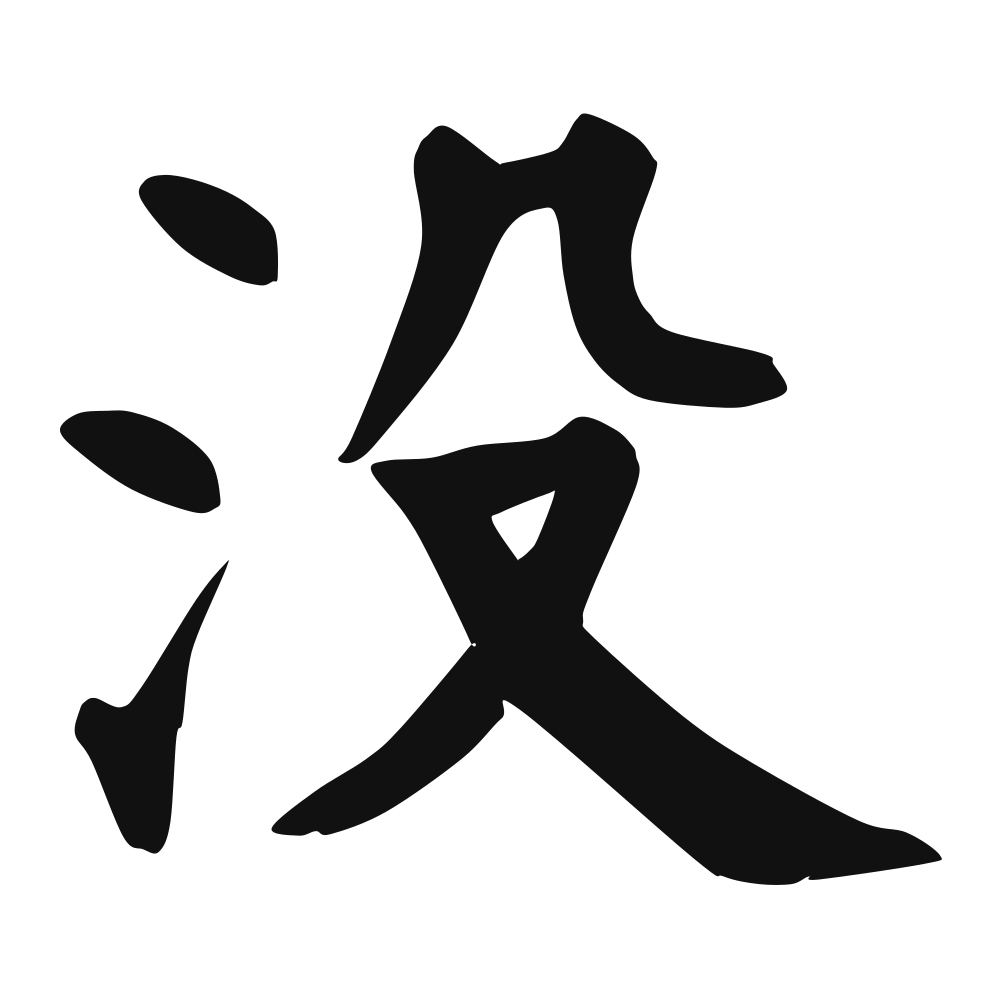
没
(negative prefix for verbs) have not; not; drowned; to end; to die; to inundate
Closest English meanings
not have·sink
The Calligrapher — Yán Zhēnqīng 颜真卿
Tang master of robust regular script; co-creator of the enduring 'Yan style'.
Tang calligrapher (709–784), master of regular script/running script — the Tang moral paragon whose upright, muscular regular script became the model of Chinese integrity in writing. Tang dynasty
Cultural Story
没 originally showed a man sinking beneath the waves; the 說文 gives submerge. It grew to mean not have. Historians lament a noble house that has 没落, its glory gone, or a talent 埋没 by indifferent times and forgotten by the forgetful court.
Common words & phrases
- 没有 not have · no
- 淹没 submerge · flood
- 没事 nothing wrong
- 没落 decline
- 埋没 neglect · bury
Read the story behind the character
“你 没有 (not have, no) 钱吗?” a friend asks at the counter. Summer floods 淹没 (submerge, flood) the lower town each year. “没事 (nothing wrong),” says someone brushing off a scrape. A once-famous brand has 没落 (decline), its name 埋没 (neglected) in dusty archives.
Own this character
Purchase delivers the original SVG of this glyph, brushed by Yán Zhēnqīng 颜真卿, ready to place on skin, paper, or screen.