
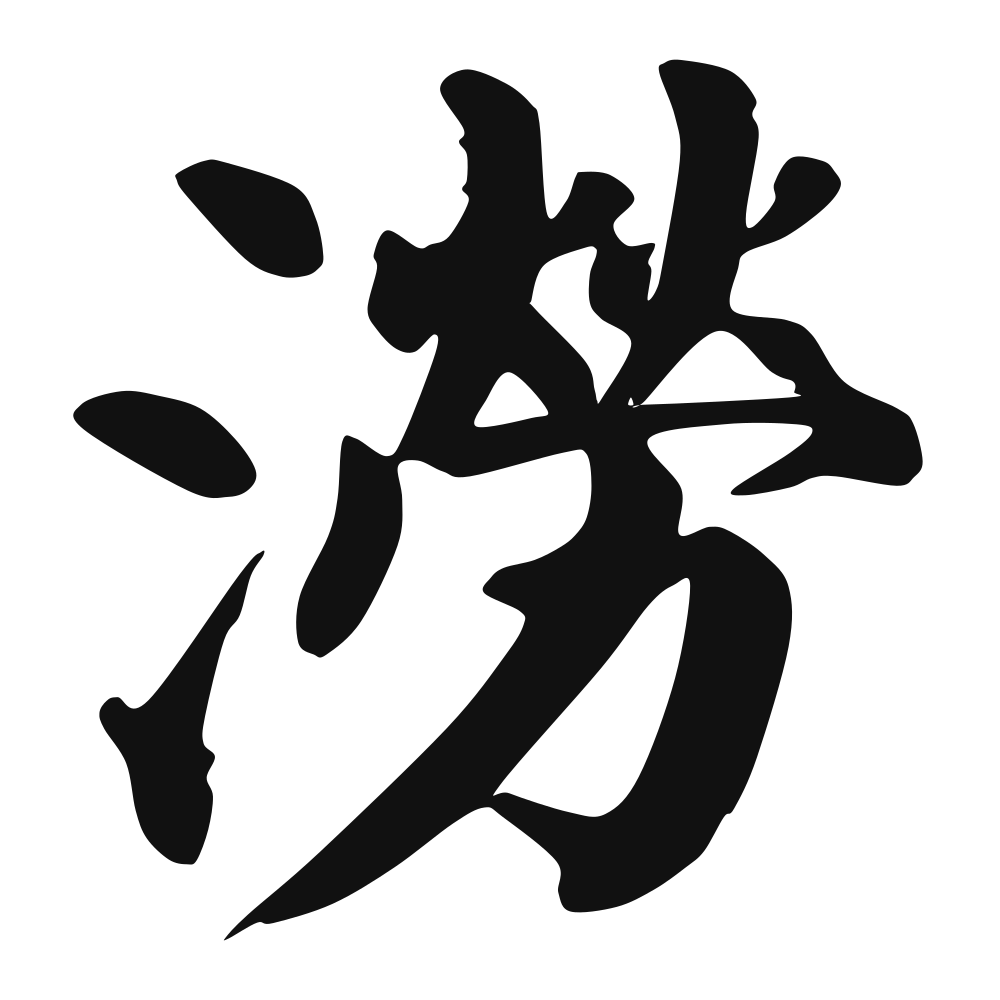
The Calligrapher — Yán Zhēnqīng 颜真卿
Tang master of robust regular script; co-creator of the enduring 'Yan style'.
Tang calligrapher (709–784), master of regular script/running script — the Tang moral paragon whose upright, muscular regular script became the model of Chinese integrity in writing. Tang dynasty
Cultural Story
涝 means waterlogging, fields drowned by too much rain. The Guan zi ranks 涝 against drought as the two great farm perils, and local histories tally 涝 years that emptied granaries. To suffer 涝 was to watch ripe grain rot at the stalk. The word is the farmer's dread of water that will not retreat.
Common words & phrases
- 涝灾 flood damage · waterlogging disaster
- 洪涝 flooding · inundation
Read the story behind the character
After weeks of rain the county declares a 涝灾 (flood damage, waterlogging disaster), and 洪涝 (flooding, inundation) forces families onto higher ground. Though city drains cope better now, a bad summer still brings 涝 that submerges the low fields and leaves farmers counting the lost harvest.
Why this character belongs on skin
When the rain will not stop and the fields become mirrors, when the earth has taken all it can hold and the surplus has nowhere to go, that is 涝—the flood that comes not from the river but from the sky's excess, water that lingers where it should have drained. It is the sorrow that pools after too much, the grief that has no outlet, the season that overstays. The farmer fears it; the sage names it and waits, knowing the sun returns. To wear this is to honor the times you were flooded, when feeling rose past the banks and would not recede. Let the mark sit low, where water would settle, a quiet acknowledgment that you have been submerged and surfaced. The ink is the one flood that became permanent, a small dark pool beneath the skin, proof you held more than you thought you could.
Own this character
Purchase delivers the original SVG of this glyph, brushed by Yán Zhēnqīng 颜真卿, ready to place on skin, paper, or screen.