
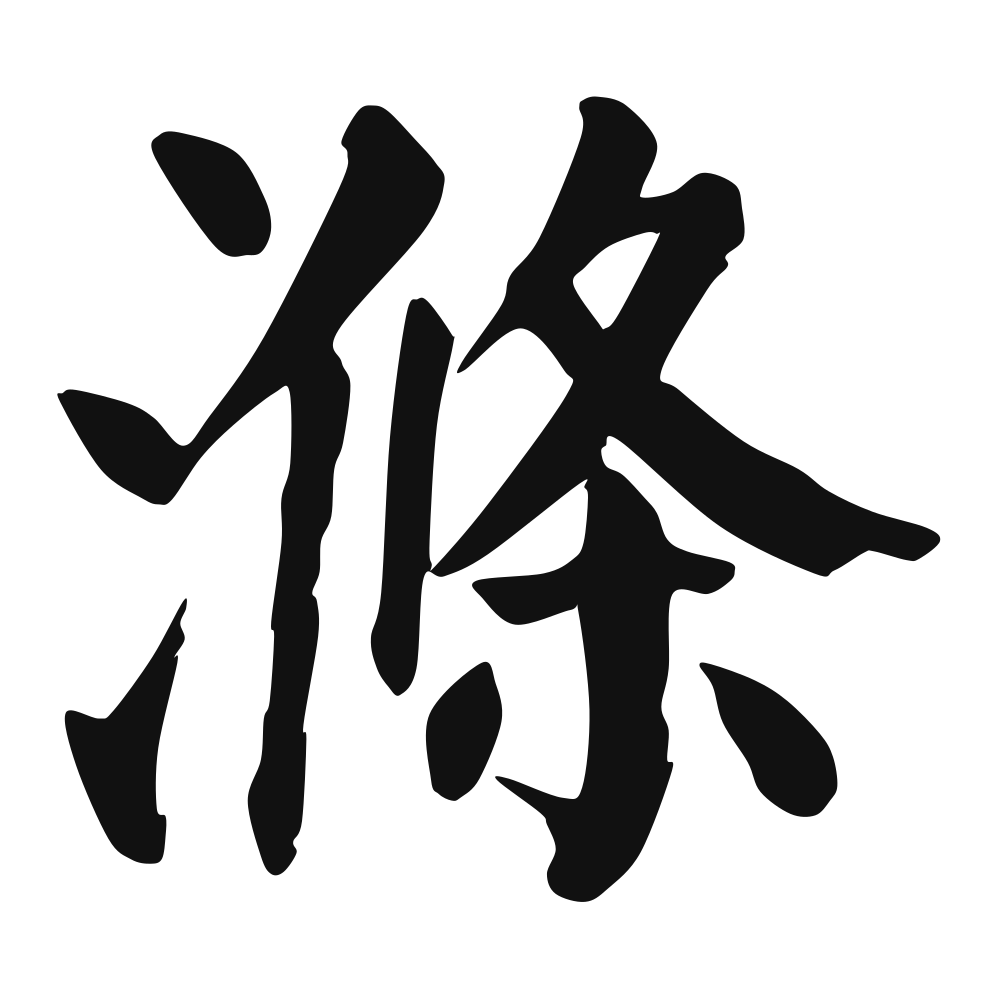
The Calligrapher — Yán Zhēnqīng 颜真卿
Tang master of robust regular script; co-creator of the enduring 'Yan style'.
Tang calligrapher (709–784), master of regular script/running script — the Tang moral paragon whose upright, muscular regular script became the model of Chinese integrity in writing. Tang dynasty
Cultural Story
涤 means to wash and cleanse, often the ritual clearing of vessels and the heart. The Shi jing tells of 涤 the sacrificial jars, and Daoists spoke of 涤 the mind of dust. 涤 carries purification, not mere wetting but a stripping-away, leaving the vessel, or the person, fit for what is sacred.
Common words & phrases
- 洗涤 wash · cleanse
- 涤荡 cleanse · purge
- 涤纶 polyester
- 荡涤 wash away
Read the story behind the character
We 洗涤 (wash, cleanse) the dishes after dinner and hope reform will 涤荡 (cleanse, purge) old corruption. Closets hold 涤纶 (polyester) shirts that wash easily, and a hard rain seems to 荡涤 (wash away) the city's grime. The word keeps its old promise, a clean surface, a clearer conscience.
Why this character belongs on skin
Not the bath that soothes but the scrub that strips—this is 涤, the thorough cleansing, the rinsing out of what has stained, the washing of the vessel until it is fit for what comes next. The word rides with water and a meaning of purification, the clearing of the temple, the sweeping of the mind before prayer. To be 涤 is to be made new by force of intention, the old film lifted by honest effort. The Daoist clears the mirror of the heart; the disciplined soul sweeps the house. To be marked by this is to confess you have done the hard rinsing, the work no one sees. Let the ink sit where you most need the clean, a pledge to begin unstained. It says you washed the cup and set it down empty, ready. The ink is the clean itself, kept.
Own this character
Purchase delivers the original SVG of this glyph, brushed by Yán Zhēnqīng 颜真卿, ready to place on skin, paper, or screen.