
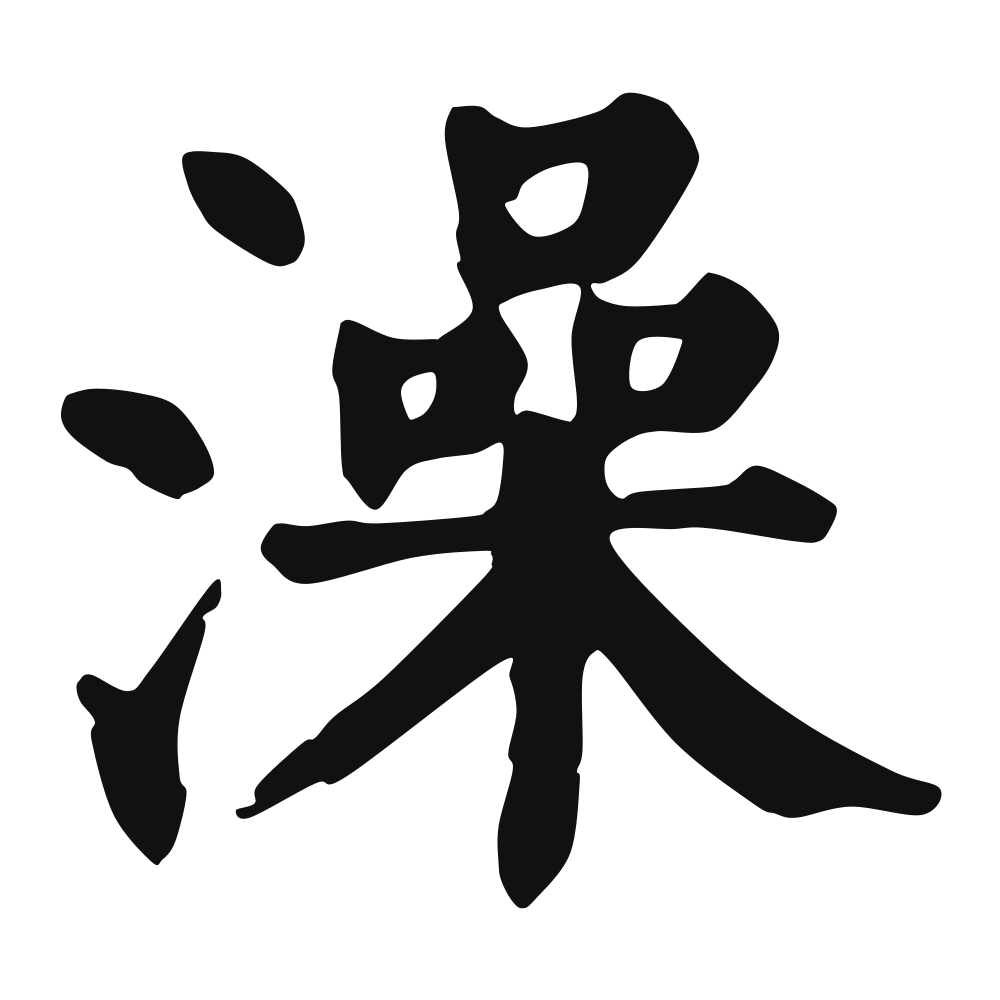
The Calligrapher — Yán Zhēnqīng 颜真卿
Tang master of robust regular script; co-creator of the enduring 'Yan style'.
Tang calligrapher (709–784), master of regular script/running script — the Tang moral paragon whose upright, muscular regular script became the model of Chinese integrity in writing. Tang dynasty
Cultural Story
澡 joins water with 喿 (noise), meaning to wash the body, the Shuowen gives 洒足也, to rinse the feet, later extended to the whole person. In the Rites and medical texts, regular 澡 was part of ritual and bodily hygiene; the 澡浴 (bathing) of monks and the warm baths of the elite appear in Tang accounts. A clean body mirrored a clean rite. Though modest, the word anchored the daily boundary between the soiled day and the restored, presentable self in classical life.
Common words & phrases
- 洗澡 bathe · take a bath
- 澡堂 bathhouse
- 澡盆 bathtub
Read the story behind the character
澡 is a daily verb. You 洗澡 (bathe, take a bath) after the gym, and in older neighborhoods people visit a 澡堂 (bathhouse) to soak and chat, a social ritual still alive in the north. At home a 澡盆 (bathtub) holds the kids' evening splash. A parent calls up the stairs, go take a bath. The character is pure routine comfort: the warm reset that ends a long day, whether it is a quick shower, a public soak, or a toddler's noisy tub time.
Why this character belongs on skin
Water held in a vessel, the body lowered into it, the day's grime and temper both dissolving—澡 is the character of bathing, and Chinese treats it as renewal, not mere hygiene. 浴 and 澡 appear in ancient ritual texts: before addressing heaven or the ancestors, one washed—not because heaven demands cleanliness, but because humans cannot pray well carrying yesterday. Baptism understood the same truth in another river: immersion as rebirth, the old self floating away. There is sensuality in it too, unashamed—the heat loosening the shoulders, water finding every curve, the animal pleasure of being simply a clean body with no appointments. And there is the moral kind: 洗心, washing the heart, the phrase for remorse that actually works. To wear 澡 is to commit to the daily resurrection—sleep off the failure, rinse off the resentment, begin again warm. A small character with a large promise: every single day, I come back to myself clean.
Own this character
Purchase delivers the original SVG of this glyph, brushed by Yán Zhēnqīng 颜真卿, ready to place on skin, paper, or screen.