
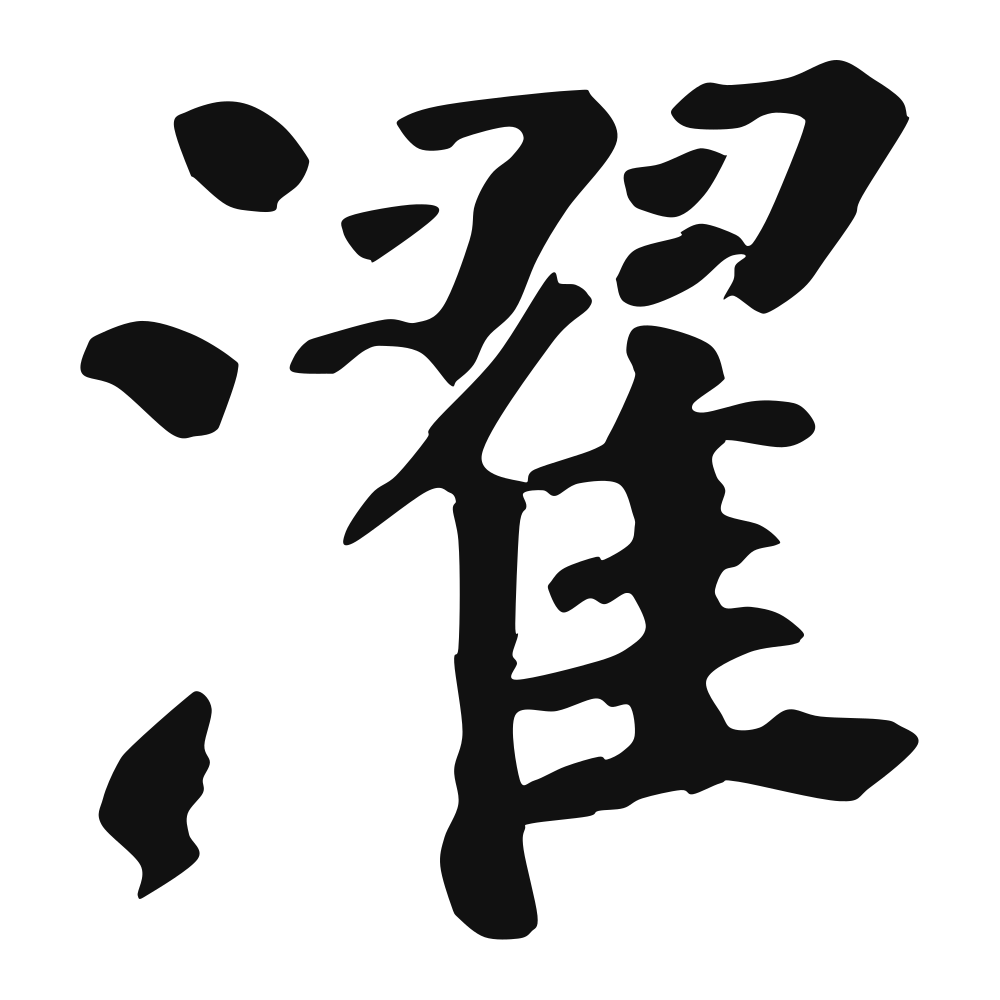
濯
to wash; to cleanse of evil
Closest English meanings
wash·rinse
The Calligrapher — Yán Zhēnqīng 颜真卿
Tang master of robust regular script; co-creator of the enduring 'Yan style'.
Tang calligrapher (709–784), master of regular script/running script — the Tang moral paragon whose upright, muscular regular script became the model of Chinese integrity in writing. Tang dynasty
Cultural Story
濯 is an old, clean verb: water plus 翟 (a long-tailed bird), meaning to wash and rinse until bright, the Shuowen gives 瀚也, to cleanse. The Songs of Chu sing 沧浪之水清兮, 可以濯吾缨; 濯足 when the water is foul, wash your cap-string in clear water, your feet in dirty, a parable of choosing purity by circumstance. The paired 洗濯 (wash, rinse) was daily labor; 濯足 (wash feet) a traveler's relief. The character carries the classical esteem for cleansing as a moral as well as physical act.
Common words & phrases
- 洗濯 wash · rinse
- 濯足 wash feet
Read the story behind the character
濯 is mostly literary now, but its phrases linger. The old line about washing the cap-string versus 濯足 still teaches kids to keep themselves clean by choosing the right company and moment. At home people say 洗濯 (wash, rinse) the vegetables or the clothes, and a tired hiker 濯足 (washes feet) in a stream. You will not hear 濯 alone at the mall, but it keeps alive a beautiful idea, that washing is also about knowing what is worth keeping pure in a messy world.
Own this character
Purchase delivers the original SVG of this glyph, brushed by Yán Zhēnqīng 颜真卿, ready to place on skin, paper, or screen.