
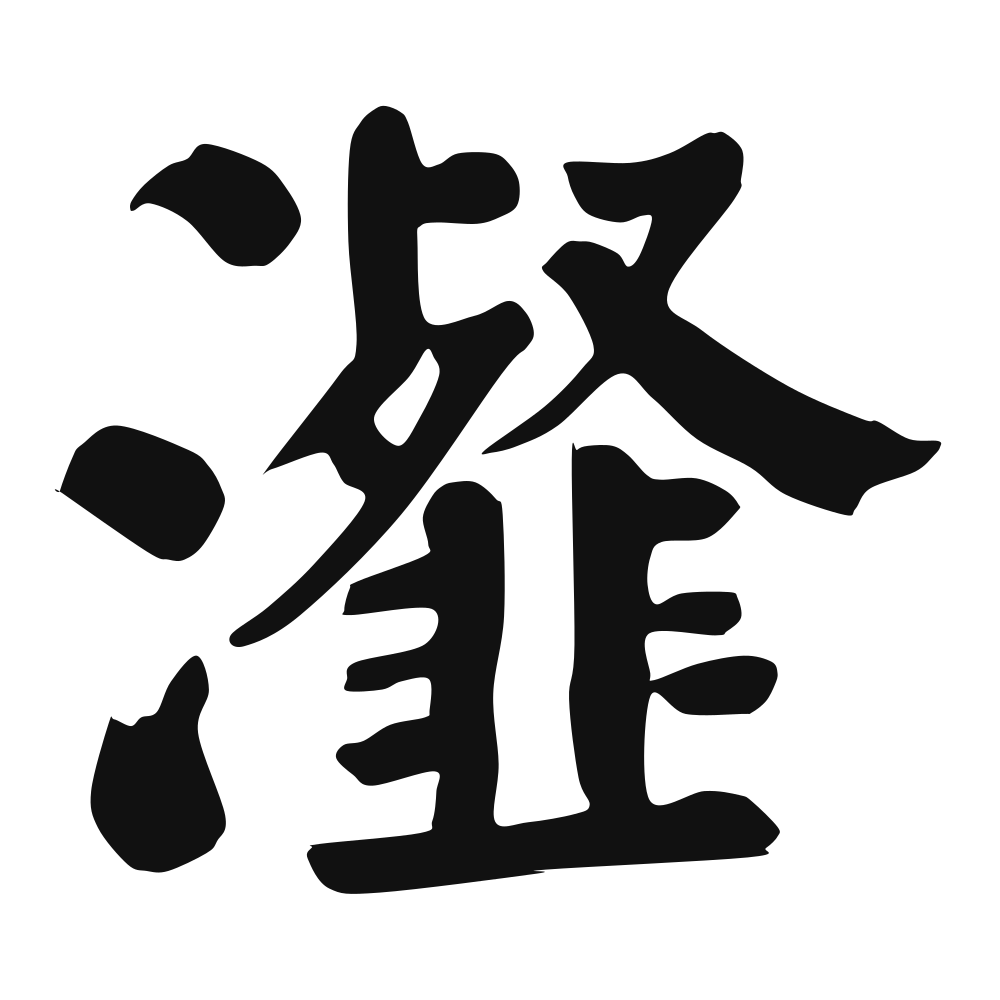
The Calligrapher — Yán Zhēnqīng 颜真卿
Tang master of robust regular script; co-creator of the enduring 'Yan style'.
Tang calligrapher (709–784), master of regular script/running script — the Tang moral paragon whose upright, muscular regular script became the model of Chinese integrity in writing. Tang dynasty
Cultural Story
瀣 is a rare, atmospheric character: water with 廨, meaning the night vapor that rises from marshes and water at dusk, the Shuowen pairs it with 沆 as 沆瀣, the mist of evening. In the Chu Ci and Han fu it names the cool, luminous haze the immortals breathe. From this came the famous idiom 沆瀣一气 (in cahoots, colluding), first used of an examiner and his candidate who shared a vapor of like mind, then turning derisive: two people breathing the same mist of corruption. A misty graph with a sharp modern sting.
Common words & phrases
- 沆瀣 vapors · mist
- 沆瀣一气 in cahoots (collude)
Read the story behind the character
瀣 survives almost only in one biting idiom. When an official and a businessman fix a bid, commentators say they are 沆瀣一气 (in cahoots, colluding), sharing the same foul mist. The original 沆瀣 (vapors, mist) of night air is now purely poetic, found in classical quotations. You will never text 瀣 alone, but the idiom is a favorite of investigative headlines, the perfect phrase for two people so aligned in wrongdoing that they seem to breathe the same corrupt air.
Own this character
Purchase delivers the original SVG of this glyph, brushed by Yán Zhēnqīng 颜真卿, ready to place on skin, paper, or screen.