
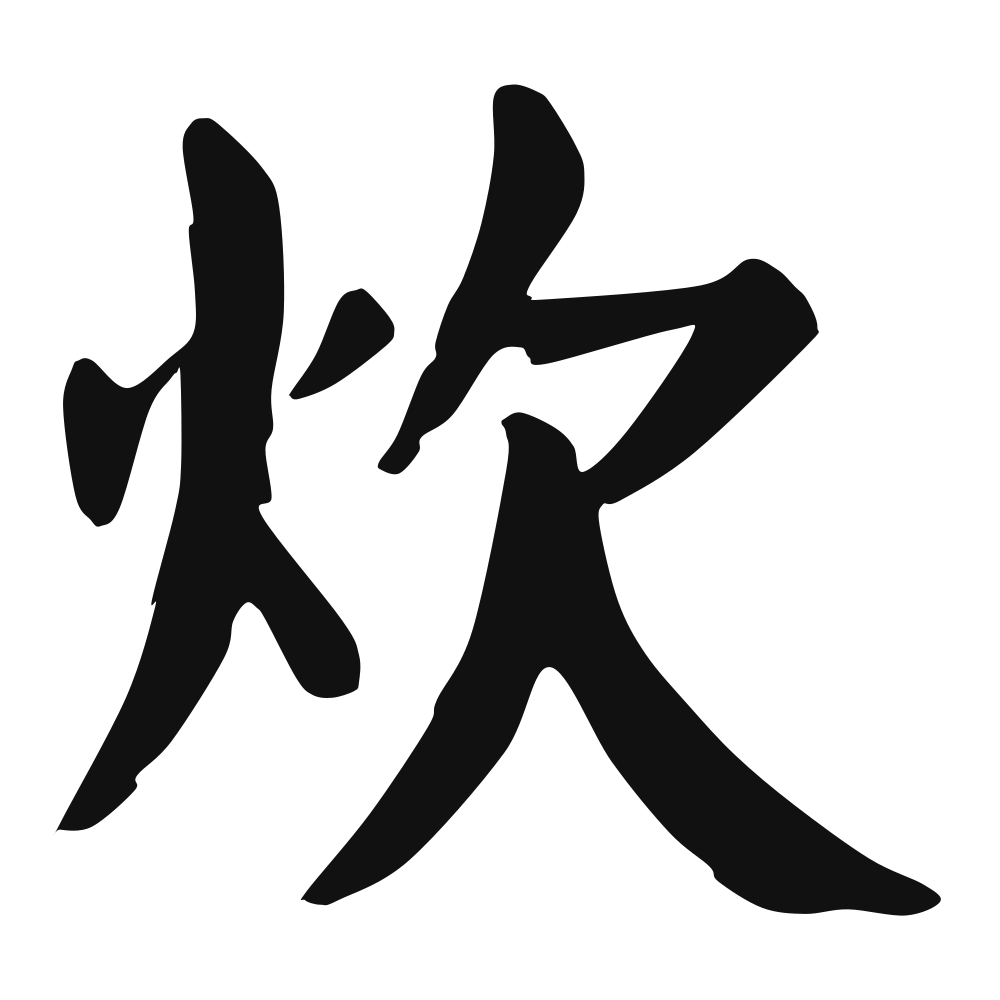
The Calligrapher — Yán Zhēnqīng 颜真卿
Tang master of robust regular script; co-creator of the enduring 'Yan style'.
Tang calligrapher (709–784), master of regular script/running script — the Tang moral paragon whose upright, muscular regular script became the model of Chinese integrity in writing. Tang dynasty
Cultural Story
炊 meant the daily art of building a fire to cook, the oldest household rhythm in the Book of Songs where women rose at dawn to 炊. Mencius used 炊 to mark the boundary between civilization and want. The curl of 炊烟 from a village at dusk became poetry itself, a signal of home, safety, and the simple warmth of belonging.
Common words & phrases
- 炊烟 smoke from kitchen chimney
- 炊具 cookware · kitchenware
- 炊事 cooking · kitchen work
- 野炊 camp cooking · outdoor cooking
Read the story behind the character
Every evening the 炊烟 rises again as families cook dinner across the city. Your 炊具 drawer holds the pots and knives, and 炊事 duty rotates among roommates. On holiday you might go 野炊 by the lake, boiling noodles over a camping stove — a modern echo of the ancient fire that still feeds us.
Why this character belongs on skin
The fire is lit and the pot begins to sing — 炊 is to cook, the daily miracle of turning cold grain into a meal that gathers the family home. 炊烟, the cooking smoke, rises from a thousand roofs at dusk and tells the traveler which village is his. To 炊 is to tend the humble fire that keeps people alive and near; no feast, no empire, begins without it. The West orders dinner; the character lifts the lid and breathes the steam. Wear 炊 where warmth begins in you, the belly, the palm that feeds another. Let it mark the quiet labor of love, the meal made without applause. The ink is a thread of smoke drawn on skin, a quiet pull toward the hearth you carry, and the ones who smell it and know they are home.
Own this character
Purchase delivers the original SVG of this glyph, brushed by Yán Zhēnqīng 颜真卿, ready to place on skin, paper, or screen.