
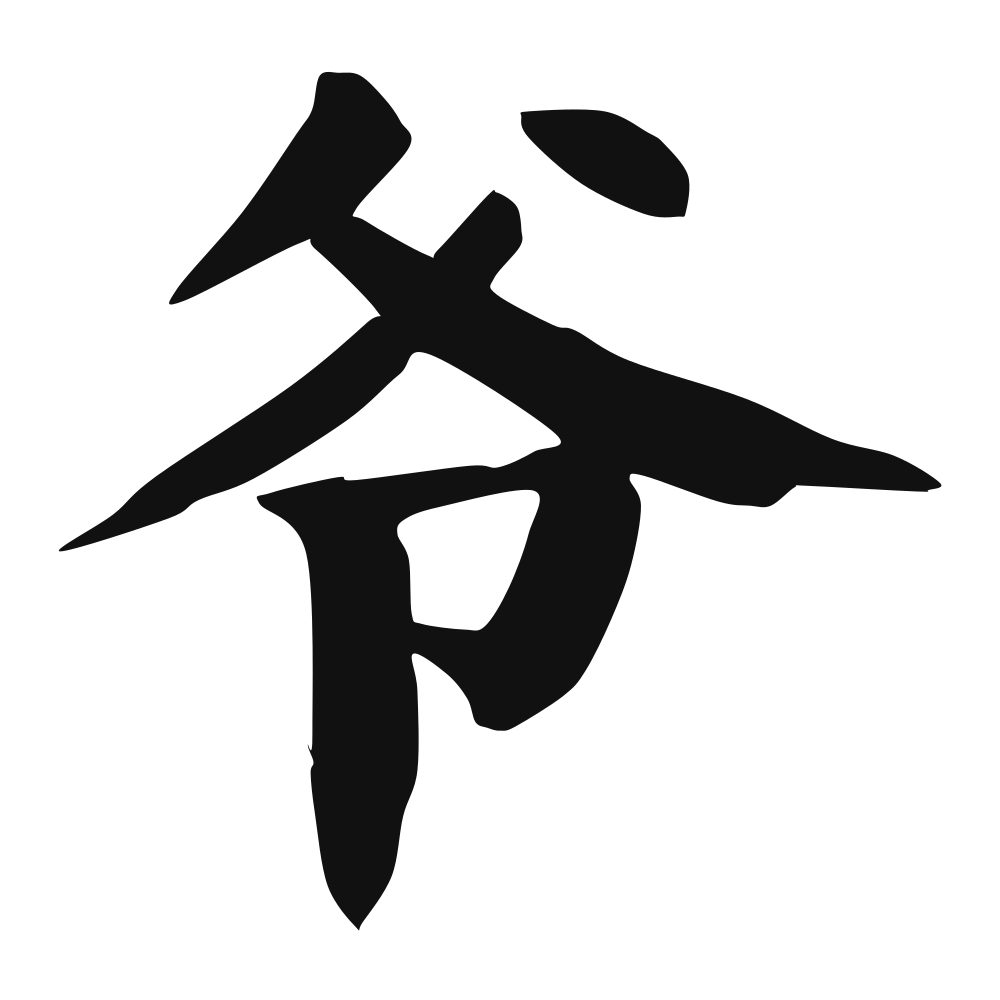
The Calligrapher — Yán Zhēnqīng 颜真卿
Tang master of robust regular script; co-creator of the enduring 'Yan style'.
Tang calligrapher (709–784), master of regular script/running script — the Tang moral paragon whose upright, muscular regular script became the model of Chinese integrity in writing. Tang dynasty
Cultural Story
爷 began as 'father' and grew into 'grandfather' and a term of respectful address for masters and lords. The Hongloumeng's 老爷 masters ruled great households; common folk cried 大爷 for an elder man. A 爷爷 grandfather became the warm, indulgent elder by the hearth. The char rose from intimate family warmth to the pomp of titled men.
Common words & phrases
- 爷爷 grandfather · grandpa
- 老爷 lord · master · old man
- 大爷 uncle · elderly man
- 爷们 man · fellows
Read the story behind the character
Kids climb onto 爷爷 grandfather's lap for pocket money, and shout 爷爷 at the park elder. We still say 老爷 for the 'master' of an old estate, or call a gruff 大爷 elderly man on the corner. 爷们 means fellows, real men, friends clink cups crying '咱们爷们.' The word travels from family warmth to rough camaraderie.
Why this character belongs on skin
The character is father's father — 爷 is the grandfather, the old master, the sir who commands the courtyard with a wave and a silence. It carries the weight of seniority, the man whose years bought him the right to be obeyed without explanation. In the streets it became a term for any master, any boss, any feared and loved authority. To the Western mind it is the patriarch, the don, the grandfather whose stories are law. A tattoo of 爷 is for the elder honored, the line respected, the man you became despite yourself. Wear it as tribute — to the one who came before, or to the authority you have finally earned. It is a mark of standing, given grudgingly by the world and worn with a slight, knowing smile.
Own this character
Purchase delivers the original SVG of this glyph, brushed by Yán Zhēnqīng 颜真卿, ready to place on skin, paper, or screen.