
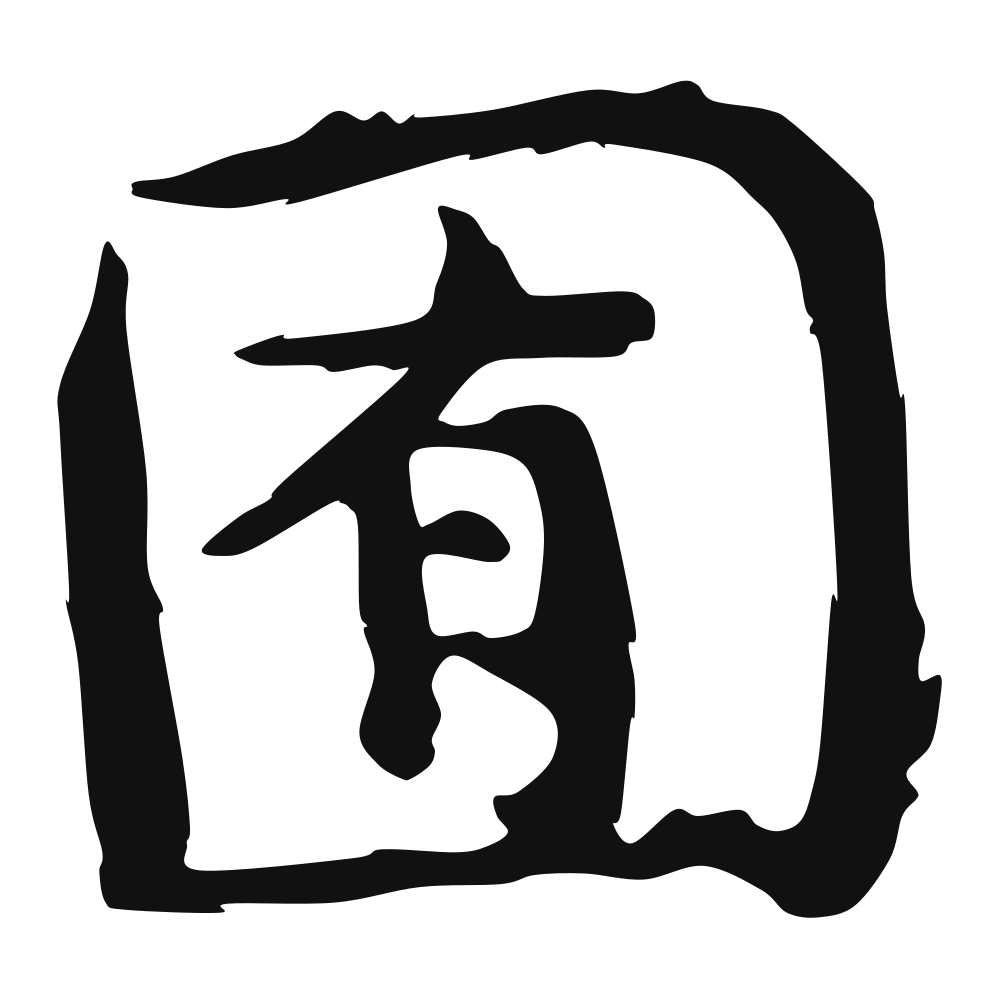
囿
park; to limit; be limited to
Closest English meanings
enclosed garden·limited·confined
The Calligrapher — Chǔ Suíliáng 褚遂良
Tang chancellor and regular-script master of elegant, balanced strokes.
Tang calligrapher (596–658), master of regular script — Tang master of graceful, tensile regular script favored by the imperial court. Tang dynasty
Cultural Story
The Zhou kept 囿 — walled hunting parks — where kings shot deer and read the health of the realm in its game. The philosopher Zhuangzi mocked the frog 囿 in its well, unable to imagine the sea. To be 囿于 habit is to pace the same small enclosure the ancients knew by heart.
Common words & phrases
- 园囿 garden · enclosure
- 囿于 confined to · limited by
Read the story behind the character
A small 园囿 of office gossip keeps the team 囿于 old grudges. The researcher admits he is 囿于 his own dataset. The gated community is a modern 囿, pleasant and enclosed. A thinker warns we grow 囿 when every feed shows the same opinion back to us.
Why this character belongs on skin
囿 is a garden with walls — the ancient royal preserve where kings kept deer and pheasants, wild things gathered inside an enclosure, half wilderness, half possession. The character draws its own picture: 囗, the fence radical, holding 在, to exist, inside it. Confucius used the word to diagnose the mind: 囿于 — trapped within, confined by one's own views, the sage warning that we are all gamekeepers of a very small park. And yet the original 囿 was beautiful: the king's garden of King Wen was so open, Mencius marveled, that the people were permitted in, and the deer were unafraid. So the enclosure has two destinies — a prison for opinions, or a sanctuary where the wild consents to stay near you. To tattoo 囿 is to hold both truths against your skin: I am bounded, I am mortal, my horizon is a fence — and inside it, something alive and horned still walks, and it is not afraid of me.
Own this character
Purchase delivers the original SVG of this glyph, brushed by Chǔ Suíliáng 褚遂良, ready to place on skin, paper, or screen.