
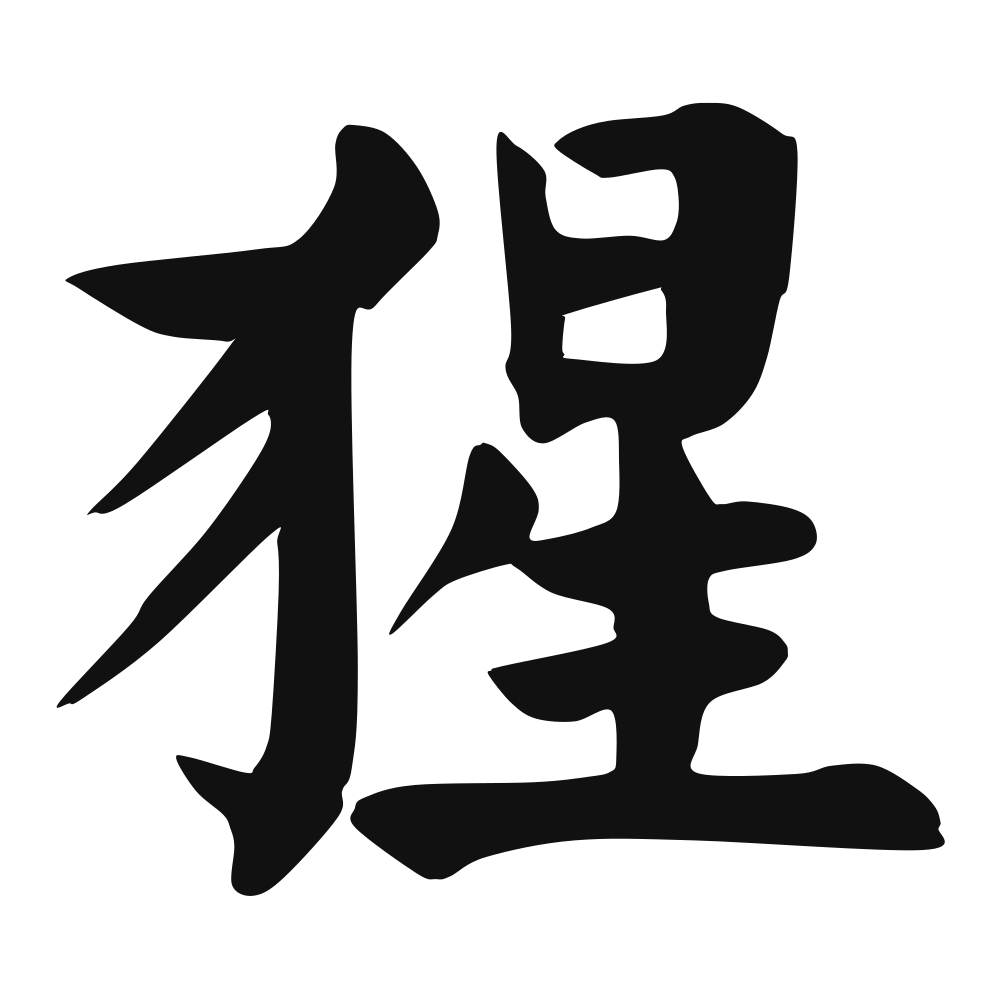
The Calligrapher — Yán Zhēnqīng 颜真卿
Tang master of robust regular script; co-creator of the enduring 'Yan style'.
Tang calligrapher (709–784), master of regular script/running script — the Tang moral paragon whose upright, muscular regular script became the model of Chinese integrity in writing. Tang dynasty
Cultural Story
猩 names the orangutan and great ape; the 說文 calls it 'a large ape, red-faced.' Ancient tribute brought strange apes to court, and 山海經 marvels at such creatures of the southern forests. The character's red link survives in 猩红, the scarlet dye once reserved for nobles and later for warning.
Common words & phrases
- 猩猩 ape · orangutan
- 猩红 scarlet · red
- 猩红热 scarlet fever
Read the story behind the character
Zoos show 猩猩 (ape) swinging in their enclosures, delighting children. Doctors warn that 猩红热 (scarlet fever) once killed kids before vaccines, and a 猩红 (scarlet) banner marks a sale or a danger zone. The word bridges a jungle animal with the bright red of alarms and fever.
Why this character belongs on skin
Deep in the mountain mist, something watches that looks unsettlingly like you. 猩 is the ape, the great ape — the dog-animal radical beside the character for stars, as if the beast itself were a fallen constellation, cousin to the heavens. Chinese lore told of 猩猩 creatures who could speak human words and knew the names of the past, slaughtered for their blood because drinking it granted a man the power to walk surefooted through confusion — knowledge, always, at a creature's cost. There's something mythic in that: the ape as our double, the mirror standing on two legs, kinship we spend centuries denying and seconds recognizing. To ink 猩 is to nod at your own animal — the ancient inheritance beneath the suit and the sentences, the strength and grief we share with the forest's dark ones. Place it on the upper arm, where the muscle remembers climbing. You were wild once. Part of you still is.
Own this character
Purchase delivers the original SVG of this glyph, brushed by Yán Zhēnqīng 颜真卿, ready to place on skin, paper, or screen.