
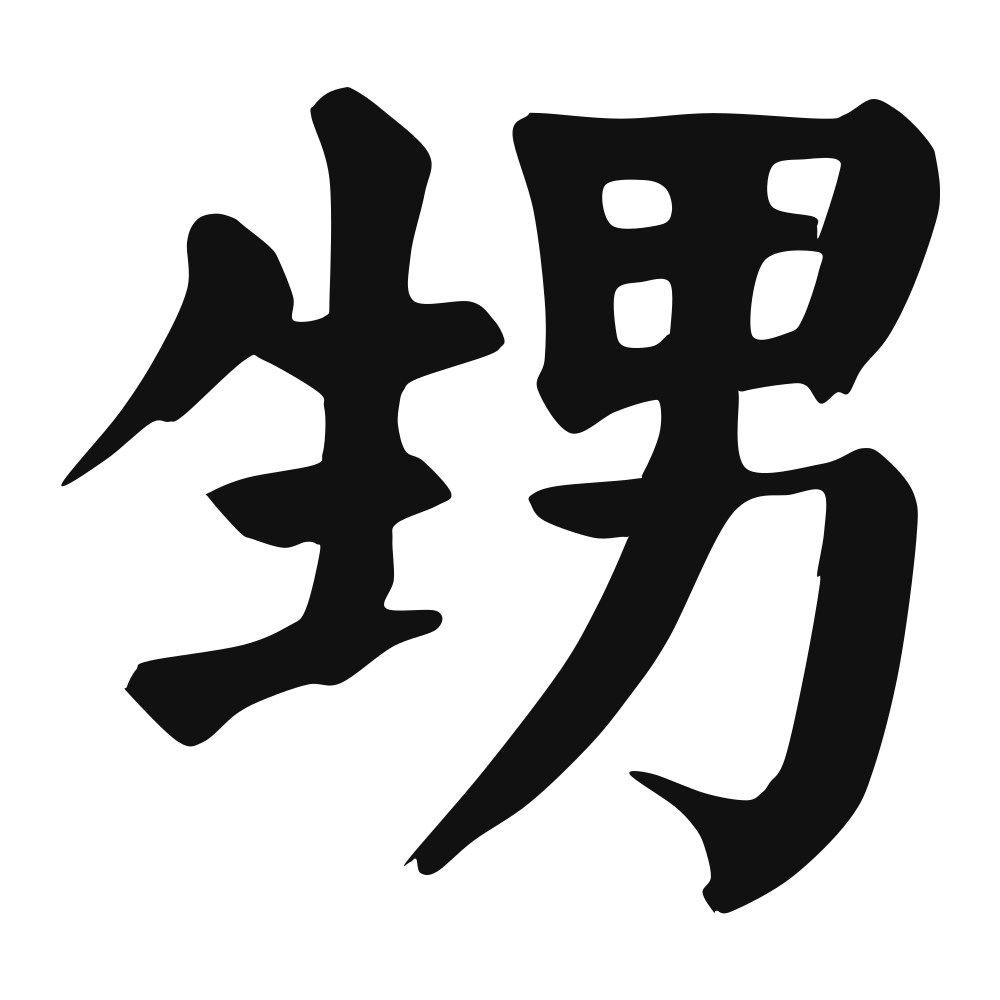
甥
(bound form) sister's son; nephew
Closest English meanings
nephew·sister's son
The Calligrapher — Yán Zhēnqīng 颜真卿
Tang master of robust regular script; co-creator of the enduring 'Yan style'.
Tang calligrapher (709–784), master of regular script/running script — the Tang moral paragon whose upright, muscular regular script became the model of Chinese integrity in writing. Tang dynasty
Cultural Story
Sheng names the sister's son — a kin whose status ancient law tracked carefully, since maternal uncles carried real obligations. Riddle-lovers preserved the tie in a classic xiehouyu: a maternal nephew carries a lantern — 外甥打灯笼 — 照旧(舅), 'same as before', because the lantern 'shines the uncle'.
Common words & phrases
- 外甥 nephew · sister's son
- 甥女 niece
- 外甥女 niece
Read the story behind the character
At Spring Festival tables the 外甥, nephew, still queues for red envelopes from uncles and aunts, and a doting aunt boasts of her 外甥女, niece, on WeChat Moments. Bureaucratic forms file them as 甥女, but the dumpling-sharing is the same as ever.
Why this character belongs on skin
Life, written through kinship: 甥, the nephew, sister's son—生, 'to be born,' set beside a radical of the male line. The character is a small map of how families actually work, blood arriving sideways as well as straight. Every culture has a name for the one who is family without the weight of fatherhood: the uncle's conspirator, the aunt's favorite, the boy who inherits his grandmother's laugh through his mother. Romans raised their sisters' sons; the old clans counted them as their own. There is freedom in that position—love without the heaviest obligations, loyalty chosen as much as owed. To wear 甥 is to honor a specific bond, a particular face behind the character. Kinship is a story we agree to keep telling. This is one chapter of it, in ink.
Own this character
Purchase delivers the original SVG of this glyph, brushed by Yán Zhēnqīng 颜真卿, ready to place on skin, paper, or screen.