
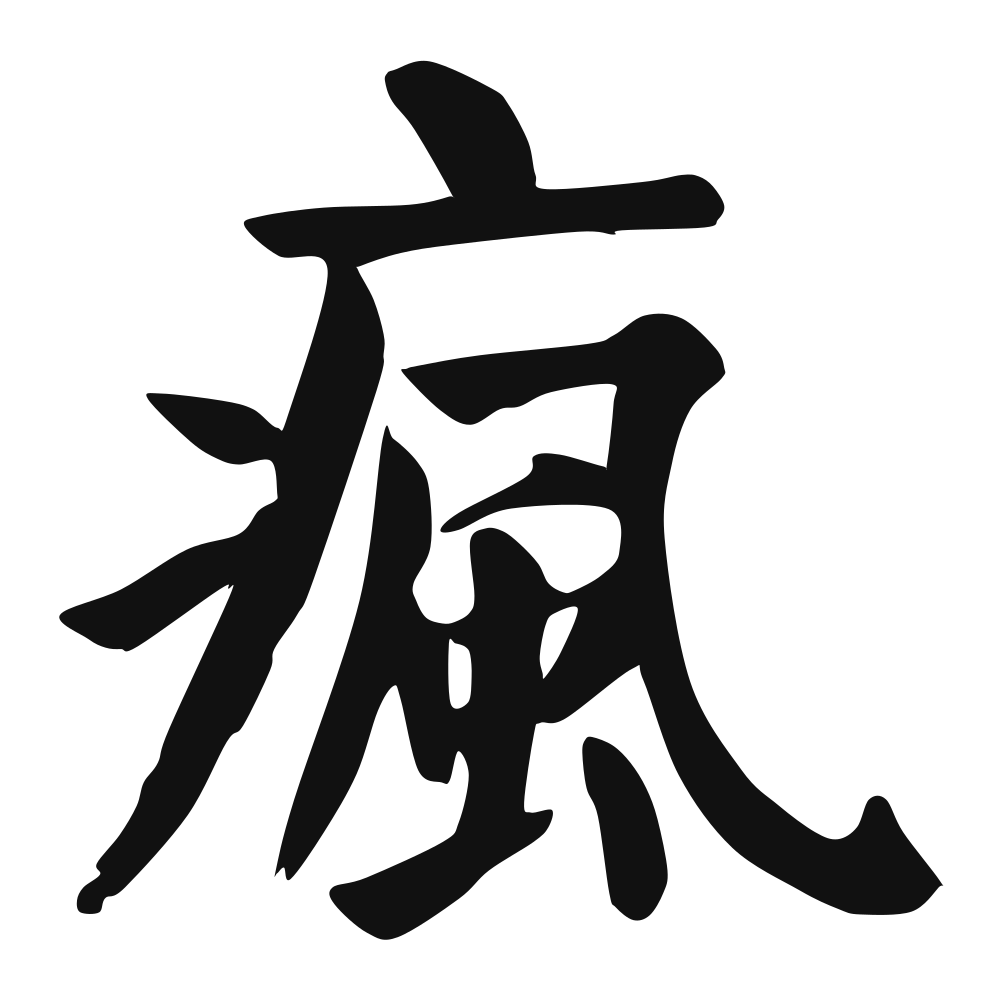
The Calligrapher — Yán Zhēnqīng 颜真卿
Tang master of robust regular script; co-creator of the enduring 'Yan style'.
Tang calligrapher (709–784), master of regular script/running script — the Tang moral paragon whose upright, muscular regular script became the model of Chinese integrity in writing. Tang dynasty
Cultural Story
疯 joins sickness with 风, wind — classical medicine blamed madness on wind invading the channels of the body. Court physicians treated 风疾 in emperors and princes, while storytellers let their 疯癫 characters wander the marketplace, uttering truths no sane man dared to say aloud.
Common words & phrases
- 疯狂 crazy · mad
- 疯子 madman
- 发疯 to go mad
- 疯癫 insane
Read the story behind the character
Modern speech uses 疯 with wild affection: 疯狂 (crazy) shopping festivals, a new song that makes everyone 发疯 (go mad), friends shouting 疯子 (madman) across a karaoke room. Yet family whispers still hush the word when someone's 疯癫 (insanity) is genuinely clinical and needs a doctor.
Why this character belongs on skin
The wind enters the sick room and the mind takes flight on it—this is madness named for the weather, the sanity blown loose by a gale no one else can feel. To be mad is to be ruled by a wind of your own, uncontainable, perhaps holy. The poets knew it: the sage and the madman share one roof, and the line between vision and ruin is a thread. There is a dangerous freedom here, the kind that writes the poem no sane man would dare. To ink this character is to honor the storm inside you, the part that would not be domesticated by the world's small rules. It is the tattoo of the one who has been called crazy and lived to laugh. Let it mark you as a weather system, not a settled thing—proof that something in you answers to a wind the careful cannot hear. Wear it where it shows, a quiet challenge to anyone who mistook your fire for fever.
Own this character
Purchase delivers the original SVG of this glyph, brushed by Yán Zhēnqīng 颜真卿, ready to place on skin, paper, or screen.