
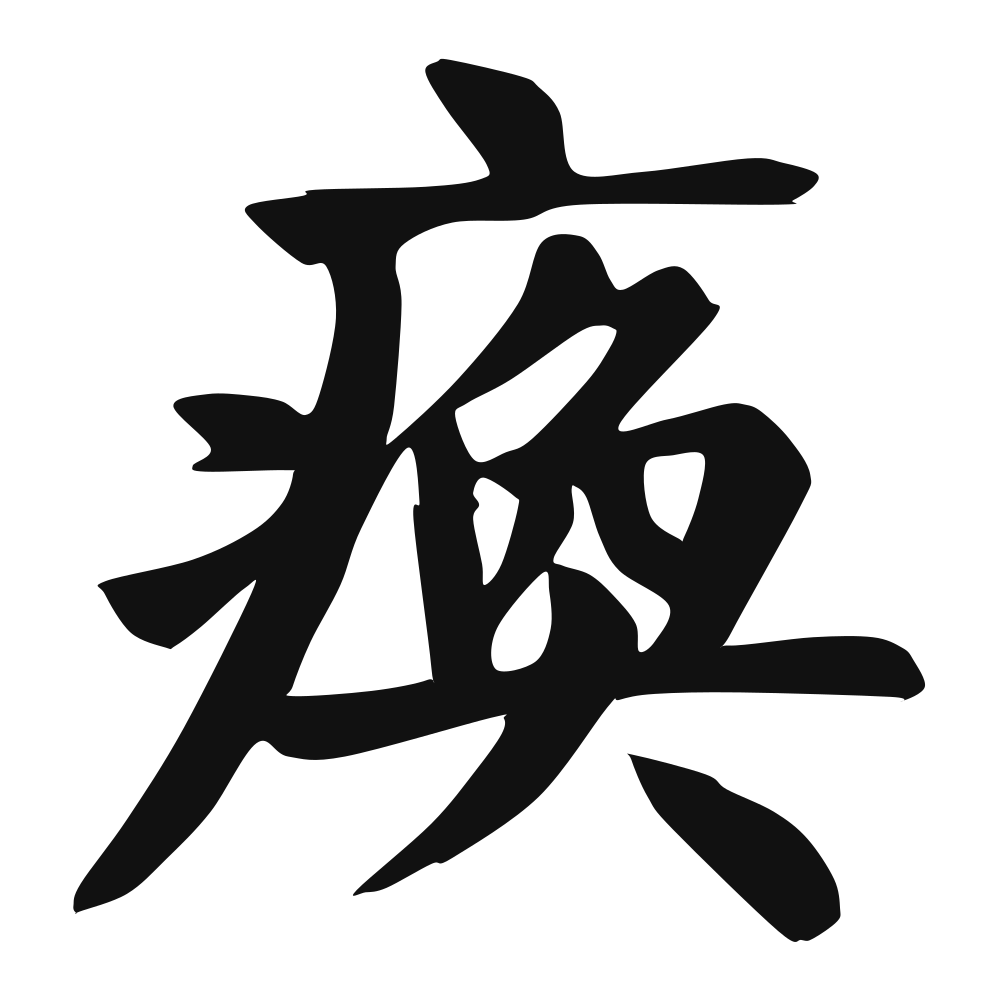
痪
usually seen in: (medicine) to suffer paralysis (瘫痪); to be paralyzed; to come to a standstill (陷于瘫痪)
Closest English meanings
paralysis
The Calligrapher — Yán Zhēnqīng 颜真卿
Tang master of robust regular script; co-creator of the enduring 'Yan style'.
Tang calligrapher (709–784), master of regular script/running script — the Tang moral paragon whose upright, muscular regular script became the model of Chinese integrity in writing. Tang dynasty
Cultural Story
痪 is a late, narrowly medical graph — sickness plus 奂 — devoted wholly to paralysis. Ming and Qing case records describe wind-stroke victims left 瘫痪 down one side of the body, families hiring bonesetters and monks in equal measure, and physicians debating whether needle, drug or sheer will might summon the limbs back.
Common words & phrases
- 瘫痪 paralysis · to be paralyzed
Read the story behind the character
Modern usage grew witty: a crashed app is 瘫痪 (paralyzed), rush-hour traffic is 瘫痪, the bank's payment system 瘫痪 on Singles' Day. After a twelve-hour shift, workers drag home 瘫软 (limp, weak), too spent even to complain about the elevator being out.
Why this character belongs on skin
The word carries the sickbed radical over a sound meaning weary, wasted — the body turned to stone from within. We all know smaller versions of it: the morning grief refuses to let you rise, the fear that pins you at the threshold of a room, a phone, a decision. Paralysis is the body's honest language; it tells the truth about limits. But here is what the character cannot say, and what you can: the moment after, when the will moves anyway. Every physical therapist knows it; every survivor does. Muscle remembers before the mind believes — one twitch, one step, one returned phone call at a time. Inking this is not a surrender to what stopped you; it is a flag planted on the far side of it. Proof that you got up when rising was the hardest sentence in the language, and that you can, and did, and will again.
Own this character
Purchase delivers the original SVG of this glyph, brushed by Yán Zhēnqīng 颜真卿, ready to place on skin, paper, or screen.