
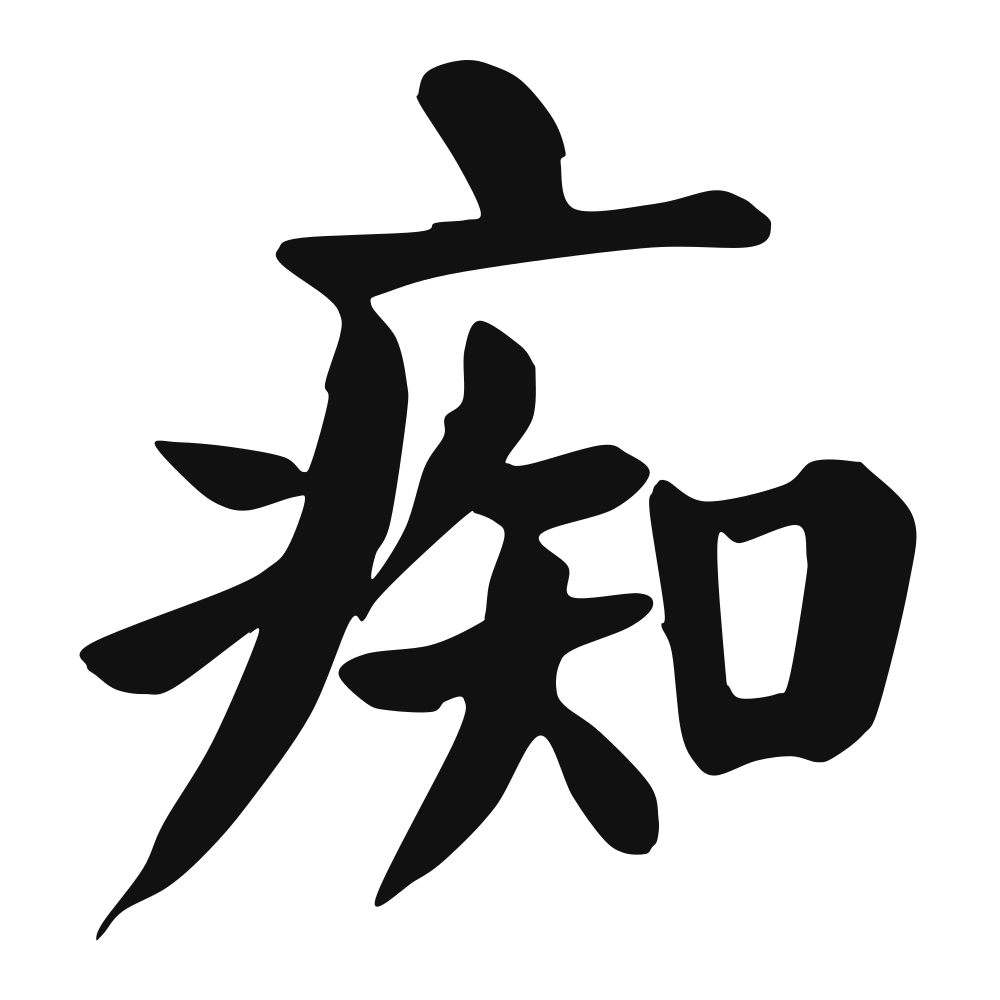
痴
imbecile; sentimental; stupid; foolish; silly
Closest English meanings
foolish·obsessed·idiotic
The Calligrapher — Yán Zhēnqīng 颜真卿
Tang master of robust regular script; co-creator of the enduring 'Yan style'.
Tang calligrapher (709–784), master of regular script/running script — the Tang moral paragon whose upright, muscular regular script became the model of Chinese integrity in writing. Tang dynasty
Cultural Story
Written 癡, it once meant simple-minded — but China grew fond of its fools. The great painter Gu Kaizhi was teased as 痴绝, supremely "foolish," one of his three perfections; Tang poets embraced 痴 for blossom-drunk eccentrics and lovers whose obsession the merely sane could never afford.
Common words & phrases
- 痴呆 dementia · idiocy
- 痴迷 obsessed · infatuated
- 痴情 deeply affectionate
Read the story behind the character
Fans proudly call themselves 痴迷 (obsessed) — with a band, a game, a bubble-tea chain. Romance dramas trade on 痴情 (devoted love), the loyal lover who waits ten years without complaint. Yet 痴呆 (dementia) carries real weight: memory clinics, GPS pendants, families learning patience one repeated question at a time.
Why this character belongs on skin
痴 is the devotion they mocked as foolish — 痴情, a love so loyal it forgets to be strategic. The Daoists called unchecked attachment a delusion, but the heart has never cared about doctrine. There is a holiness in staying. In the stories, 痴 is the lover who waits three lifetimes, who crosses the river again and again because the other shore is worth it. You have been called too much, too intense, too willing to feel the full weight of a thing. Good. Let them call your devotion a flaw while you build something that outlasts their comfort. To wear 痴 is to honor the part of you that loves without an exit plan. Some of us were born to stay. Carry it like a vow written under the skin.
Own this character
Purchase delivers the original SVG of this glyph, brushed by Yán Zhēnqīng 颜真卿, ready to place on skin, paper, or screen.