
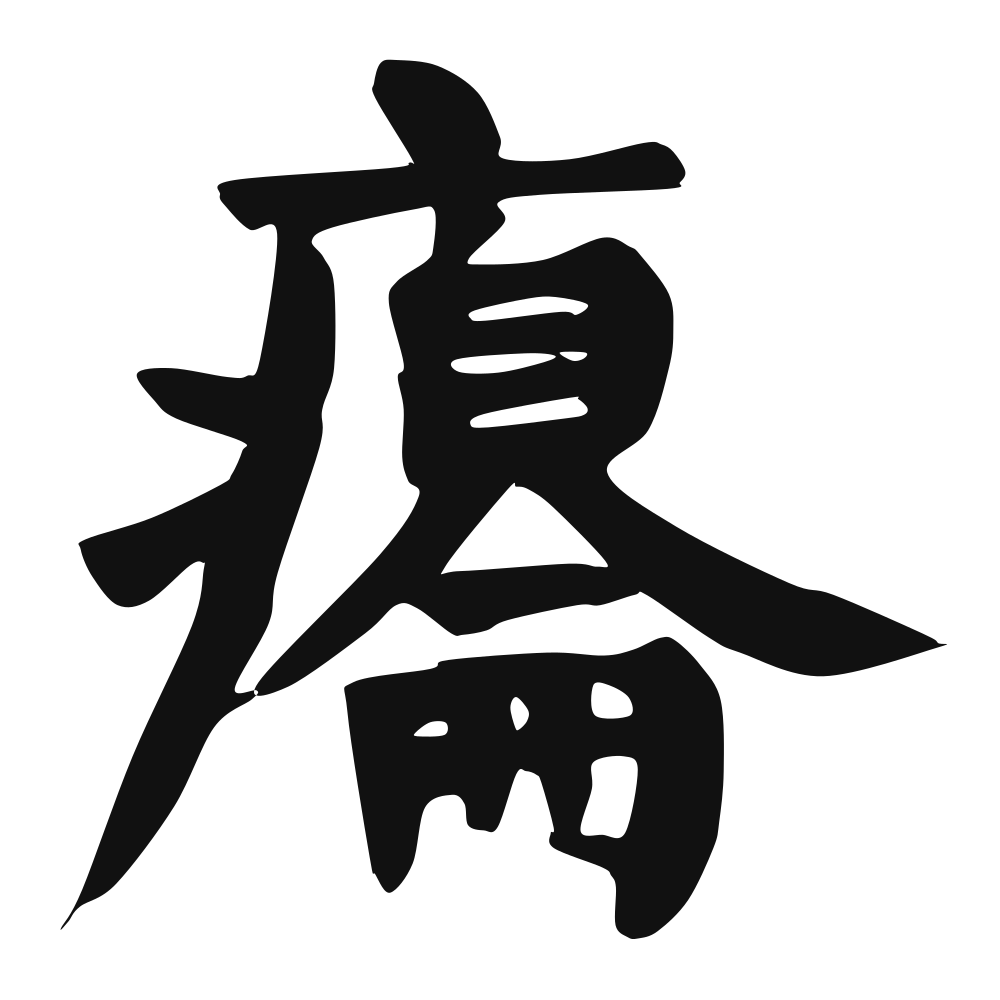
瘪
deflated; shriveled; sunken; empty
Closest English meanings
shriveled·flat·hollow
The Calligrapher — Yán Zhēnqīng 颜真卿
Tang master of robust regular script; co-creator of the enduring 'Yan style'.
Tang calligrapher (709–784), master of regular script/running script — the Tang moral paragon whose upright, muscular regular script became the model of Chinese integrity in writing. Tang dynasty
Cultural Story
瘪 is pure vernacular — no oracle bone, no Shuowen entry — a word for the disappointed deflation of things: shriveled fruit, a punched-in ball, empty pockets on market day. Novelists loved its deflating sound; fruit criers used it apologetically for winter apples gone 干瘪.
Common words & phrases
- 干瘪 dry and shriveled · wizened
- 瘪嘴 pursed lips · toothless
Read the story behind the character
Bike-share users return to find the tire 瘪了 (flat); chefs reject 干瘪 (dry, shriveled) chilies at the market; grandpas smile 瘪嘴 (pursed, toothless lips) over morning congee. Figuratively, shoppers sigh that a weak discount leaves their wallet 瘪 and their mood considerably worse.
Why this character belongs on skin
Not every character is a compliment, and that is its honesty. 瘪 is the flat tire, the sunken cheek, the lung that will not fill—the specific humiliation of emptiness where fullness was promised. Modern slang turns it inward: 受瘪, to be deflated by defeat, to eat the air out of your own pride. There is no mythology here, no dragon. Just the universal experience of running out of breath, money, argument, or luck, and the strange clarity that follows. Because here is the secret: things must be emptied to be refilled. The wrinkled fruit is the one that will drop its seed. If you have been deflated—and everyone has, somewhere, badly—this character is a scar worn as a signature. You know exactly what it feels like to go flat. You also know the pump is in your own hand.
Own this character
Purchase delivers the original SVG of this glyph, brushed by Yán Zhēnqīng 颜真卿, ready to place on skin, paper, or screen.