
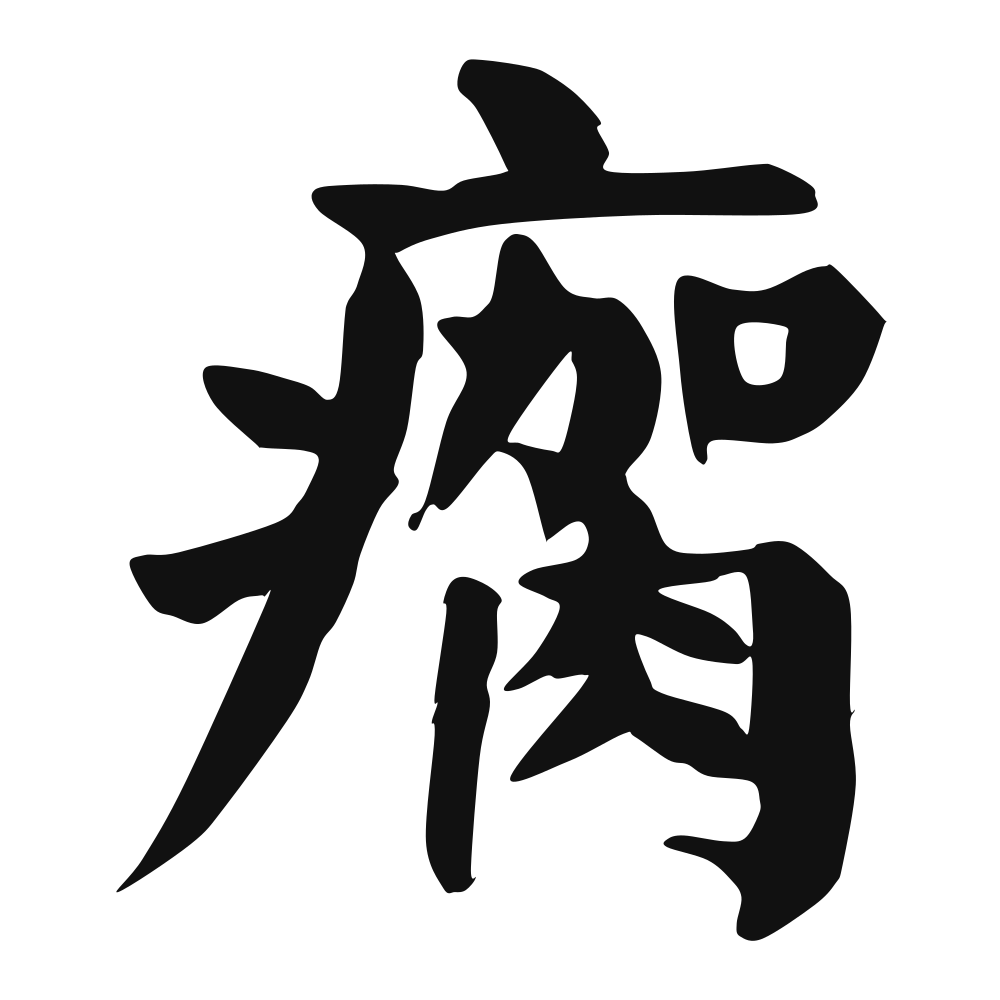
The Calligrapher — Yán Zhēnqīng 颜真卿
Tang master of robust regular script; co-creator of the enduring 'Yan style'.
Tang calligrapher (709–784), master of regular script/running script — the Tang moral paragon whose upright, muscular regular script became the model of Chinese integrity in writing. Tang dynasty
Cultural Story
瘸 belongs to the marketplace, not the classics — a blunt vernacular word with little patience for euphemism. Tale collections and Ming-Qing courtroom stories relied on it for instant character: the 瘸腿 beggar who witnesses the murder, the porter whose limp slows the midnight chase.
Common words & phrases
- 瘸子 lame person · cripple
- 瘸腿 lame leg
Read the story behind the character
Playgrounds still hear kids shout 瘸子 (lame person) before adults gently correct them; sports medicine prefers softer phrasing. After a sprain, friends tease the 瘸腿 (lame leg) hobbling toward the milk-tea shop, and every limp eventually earns its proud walking-boot selfie.
Why this character belongs on skin
The sickness radical marks 瘸 plainly: the limping leg, the gait that lists, the body that arrives in two rhythms instead of one. No one would choose this character for beauty—until they consider what a limp actually testifies. Every limping person has already survived the thing that caused it: the fall, the break, the war, the fever that took and did not finish taking. Homer's greatest gods walk with a limp, and his mortals limp home from Troy more alive than the beautiful dead. A limp is proof of return. It is also, uncannily, proof of rhythm—the uneven beat that jazz calls syncopation, the hitch that makes a walk unmistakably yours. To wear 瘸 is to refuse the tyranny of the flawless stride. It sits well on a calf, over the muscle that actually carries you: a small, wry medal for everyone who has ever crossed a room unevenly and arrived anyway.
Own this character
Purchase delivers the original SVG of this glyph, brushed by Yán Zhēnqīng 颜真卿, ready to place on skin, paper, or screen.