
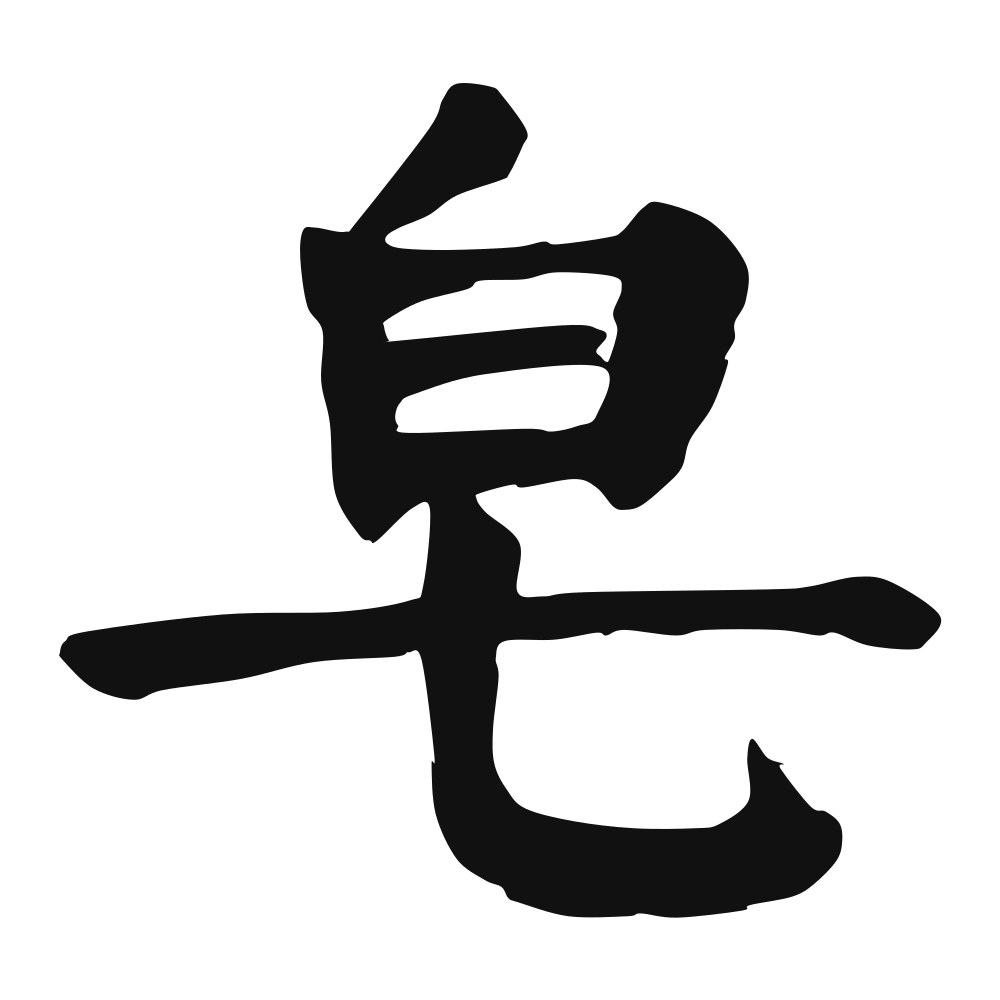
The Calligrapher — Yán Zhēnqīng 颜真卿
Tang master of robust regular script; co-creator of the enduring 'Yan style'.
Tang calligrapher (709–784), master of regular script/running script — the Tang moral paragon whose upright, muscular regular script became the model of Chinese integrity in writing. Tang dynasty
Cultural Story
Before soap bars, 皂 meant deep black — and the tree that washed: 皂角, honey-locust pods pounded into suds for laundry and hair alike. Yamen's black-clad 皂隶 runners took the color as their uniform, and so the word became a byword for petty, bullying officialdom in vernacular fiction.
Common words & phrases
- 肥皂 soap
- 皂角 soap pod (Chinese honey locust)
- 皂白 right and wrong · black and white
- 青红皂白 right and wrong
- 皂隶 yamen runner
Read the story behind the character
Every bathroom shelf holds 肥皂 (soap), and handmade goat-milk soap shops gift-wrap bars like jewelry. Arguing couples are told to distinguish 青红皂白 — right from wrong — before slamming doors; historians mention 皂隶 (yamen runners) when explaining how petty clerks earned their lasting bad reputation.
Why this character belongs on skin
There is a darkness that is not shame but origin. In old Chinese speech, zào meant the deep black of unbleached cloth, the shade against which every other color confesses itself. To fail to tell zào from bái—black from white—was to be morally blind, unable to sort truth from lie. Yet zào also gave us the soap that lifts the day's grime from skin. So the mark asks a quiet question: what must you darken to see clearly, and what must you wash away to begin again? The Daoists knew the usefulness of the empty, the dark, the unlit vessel. Wear this character as a small nocturnal vow—that you will not fear your own shadows, nor mistake the soap for the soul. Let it sit on your skin like night on water, cleansing, certain, and unafraid.
Own this character
Purchase delivers the original SVG of this glyph, brushed by Yán Zhēnqīng 颜真卿, ready to place on skin, paper, or screen.