
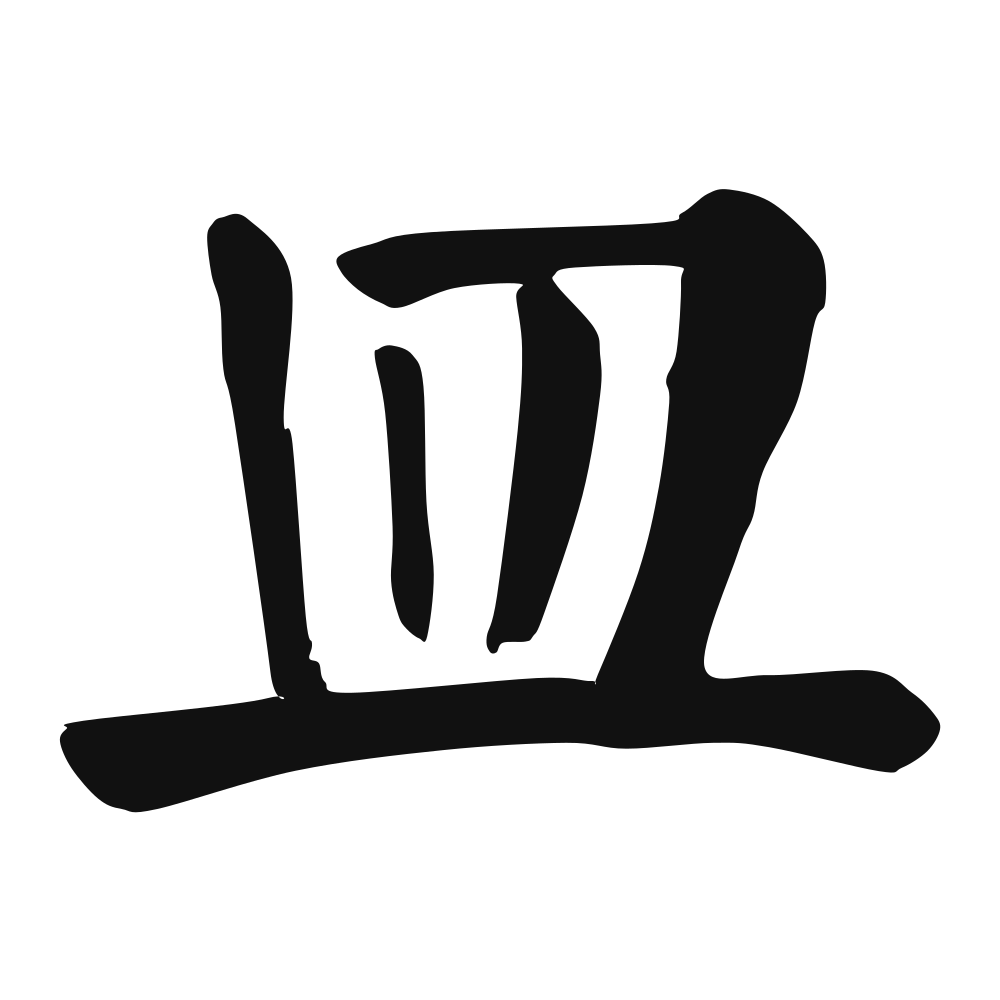
皿
(bound form) dish; vessel; shallow container; radical no. 108
Closest English meanings
vessel·dish
The Calligrapher — Yán Zhēnqīng 颜真卿
Tang master of robust regular script; co-creator of the enduring 'Yan style'.
Tang calligrapher (709–784), master of regular script/running script — the Tang moral paragon whose upright, muscular regular script became the model of Chinese integrity in writing. Tang dynasty
Cultural Story
皿 is the drawn picture of a shallow serving dish, and it became the radical of every vessel-word. The Shuowen calls it the utensil for cooked food. Bronze-age ritual bowls held offerings to ancestors, so dishes, basins, and goblets all still carry this little dish inside them.
Common words & phrases
- 器皿 vessel · ware
- 皿器 utensils
Read the story behind the character
You rarely write 皿 alone now, but you meet it constantly as a component: 器皿 labels the shop shelf of glassware and ceramic bowls, museum captions identify ancient 皿器 of bronze, and any dictionary hunt for cups, plates, or pots starts from this dish radical.
Why this character belongs on skin
Every civilization begins with a bowl. 皿 is that — the open vessel, the dish, the shallow basin a people shaped from clay so they could hold water, grain, the small surplus that meant they would survive the winter. It is the radical under countless words for the things we keep things in. To carry 皿 is to honor containment itself, the humble art of holding. We are vessels, too — of memory, of grief, of the love we pass along. The mark is a reminder that to receive is holy, that what holds is as worthy as what is held. Ink it and you keep the shape of the first bowl, the quiet ancestor of every table, every meal, every careful hand that ever set something down so it would not spill.
Own this character
Purchase delivers the original SVG of this glyph, brushed by Yán Zhēnqīng 颜真卿, ready to place on skin, paper, or screen.