
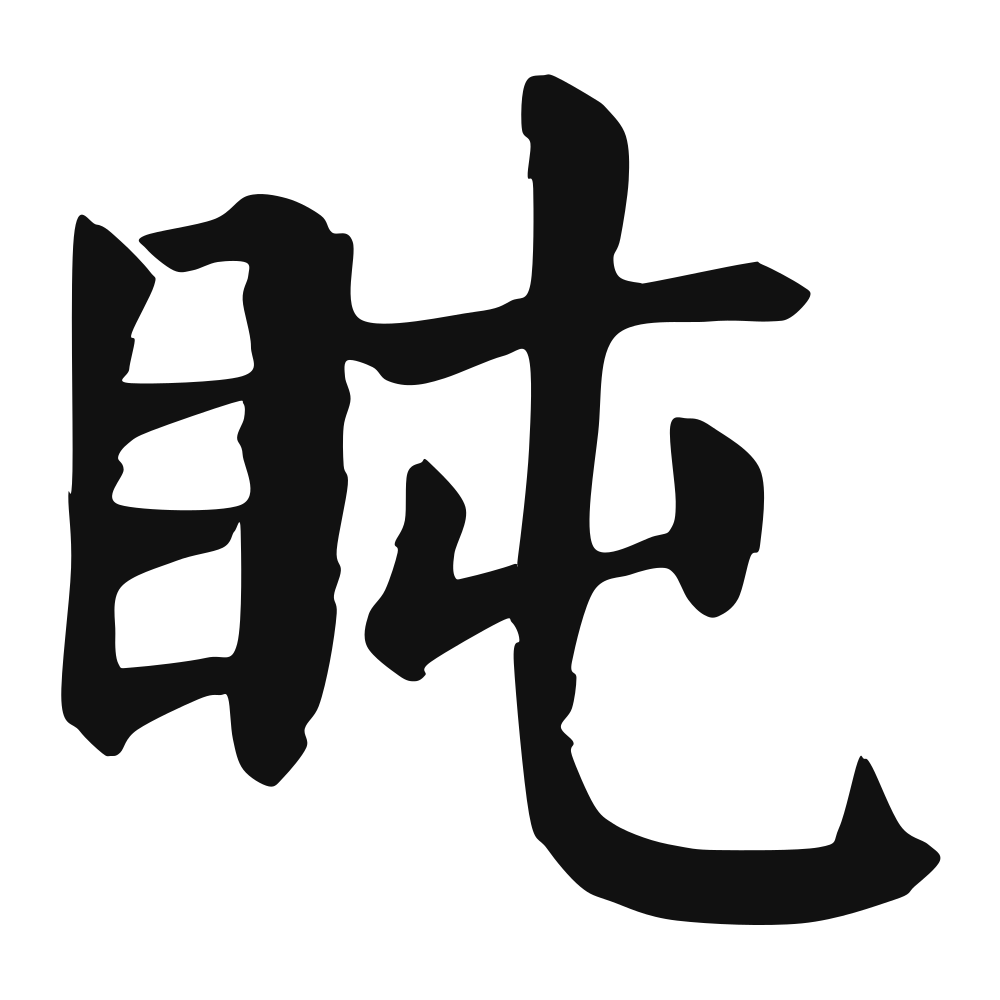
The Calligrapher — Yán Zhēnqīng 颜真卿
Tang master of robust regular script; co-creator of the enduring 'Yan style'.
Tang calligrapher (709–784), master of regular script/running script — the Tang moral paragon whose upright, muscular regular script became the model of Chinese integrity in writing. Tang dynasty
Cultural Story
盹 is the brief, head-nodding nap, a homely vernacular word. Traditional households dozed after lunch through the summer heat, and teachers in old novels catch students 打盹 behind propped-open books, the ink brush slipping from lax and drifting fingers.
Common words & phrases
- 打盹 doze · take a nap
- 盹睡 doze off
Read the story behind the character
打盹 is a survival skill: office workers grab a desk nap at lunch, subway riders 盹 through three stops and overshoot, and night-shift nurses steal ten minutes in the break room. Coffee brands promise to end the afternoon 盹睡 forever, and nobody believes them.
Why this character belongs on skin
The eyelid falls the way a curtain drops in a slow wind — not sleep, not waking, but the soft country between. 盹 is the doze, the brief surrender the body takes without asking permission, the eye tipping toward rest. The old farmer nods over his tea; the soldier dozes against the wall between shells. To wear 盹 is to honor the small mercies, the half-sleep that renews you without your consent or your pride. We are not meant to be vigilant forever. There is wisdom in the lapse, the unguarded moment where the mind sets its burden down. Let this character rest near your temple like a permission slip to stop. Rest is not retreat. Carry the doze, and let your skin remember that even strength needs to close its eyes, now and then, for good.
Own this character
Purchase delivers the original SVG of this glyph, brushed by Yán Zhēnqīng 颜真卿, ready to place on skin, paper, or screen.