
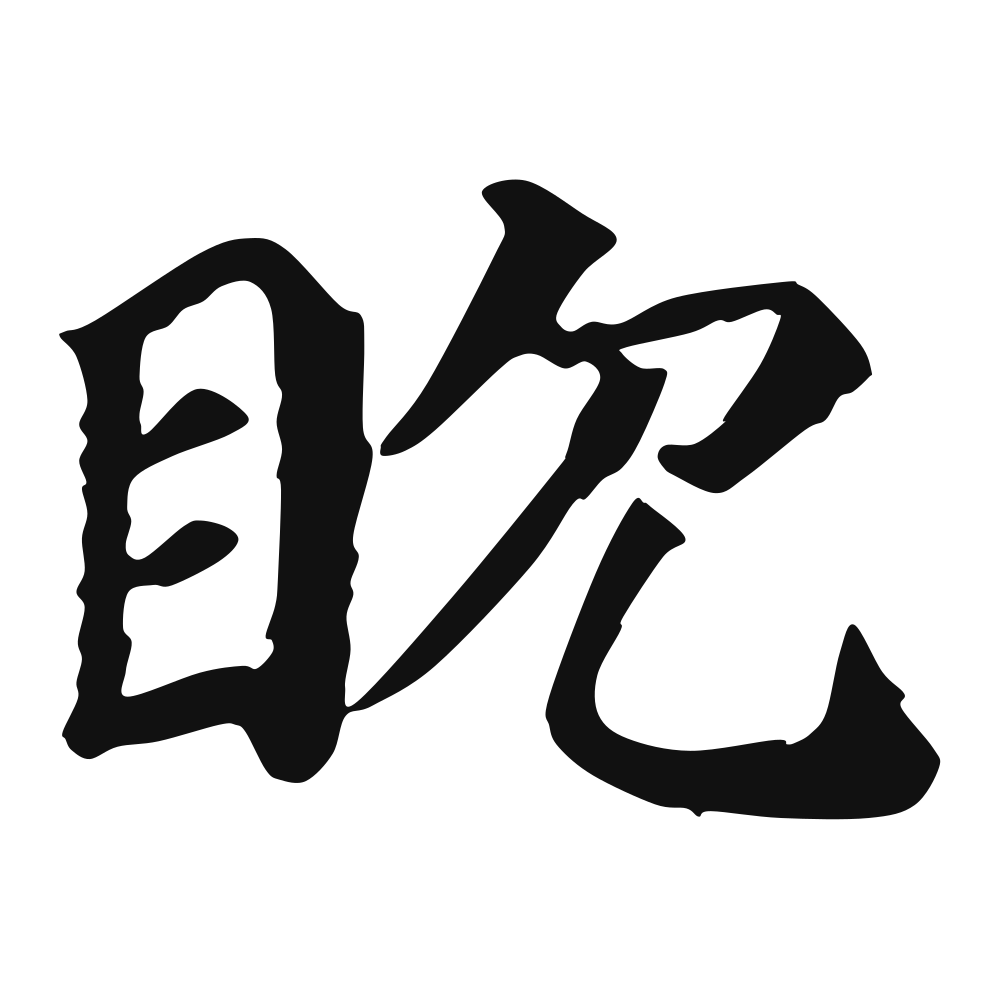
眈
usually seen in: (to gaze) intently (眈眈); (lit.) to fix one's eyes on sth like a tiger watching its prey (idiom) (虎视眈眈)
Closest English meanings
stare·glare
The Calligrapher — Yán Zhēnqīng 颜真卿
Tang master of robust regular script; co-creator of the enduring 'Yan style'.
Tang calligrapher (709–784), master of regular script/running script — the Tang moral paragon whose upright, muscular regular script became the model of Chinese integrity in writing. Tang dynasty
Cultural Story
眈 is the fixed glare of appetite. The Book of Changes already had 虎视眈眈 — a tiger watching its prey, desire pressing forward step by step — and strategists borrowed the image for states eyeing weak neighbors and merchants eyeing a rival's market stall.
Common words & phrases
- 虎视眈眈 glare like a tiger · watch covetously
Read the story behind the character
Financial news loves the tiger: headlines warn that competitors are 虎视眈眈 toward a shrinking company, gamers write it of the sniper waiting on the ridge, and football previews describe strikers circling the box. One old idiom, endlessly recycled, still bares its teeth.
Why this character belongs on skin
From the I Ching comes the phrase 虎视眈眈—the tiger watching, 眈—that fixed, unhurried stare of a predator who has all the time in the world. The character is pure focus: eyes locked, patience absolute, no wasted motion. This is not rage; rage is cheap. This is something rarer—total attention held for hours, the economy of power that has no need to hurry. The great martial traditions teach it: the fight is won in the looking. There is even a dark glamour to being watched that way, the shiver of being the thing the tiger has chosen. To wear 眈 is to claim that quality as your own—the stillness before the strike, the gaze that does not flinch or wander. Ink for the patient ones. The room always knows when you have decided.
Own this character
Purchase delivers the original SVG of this glyph, brushed by Yán Zhēnqīng 颜真卿, ready to place on skin, paper, or screen.