
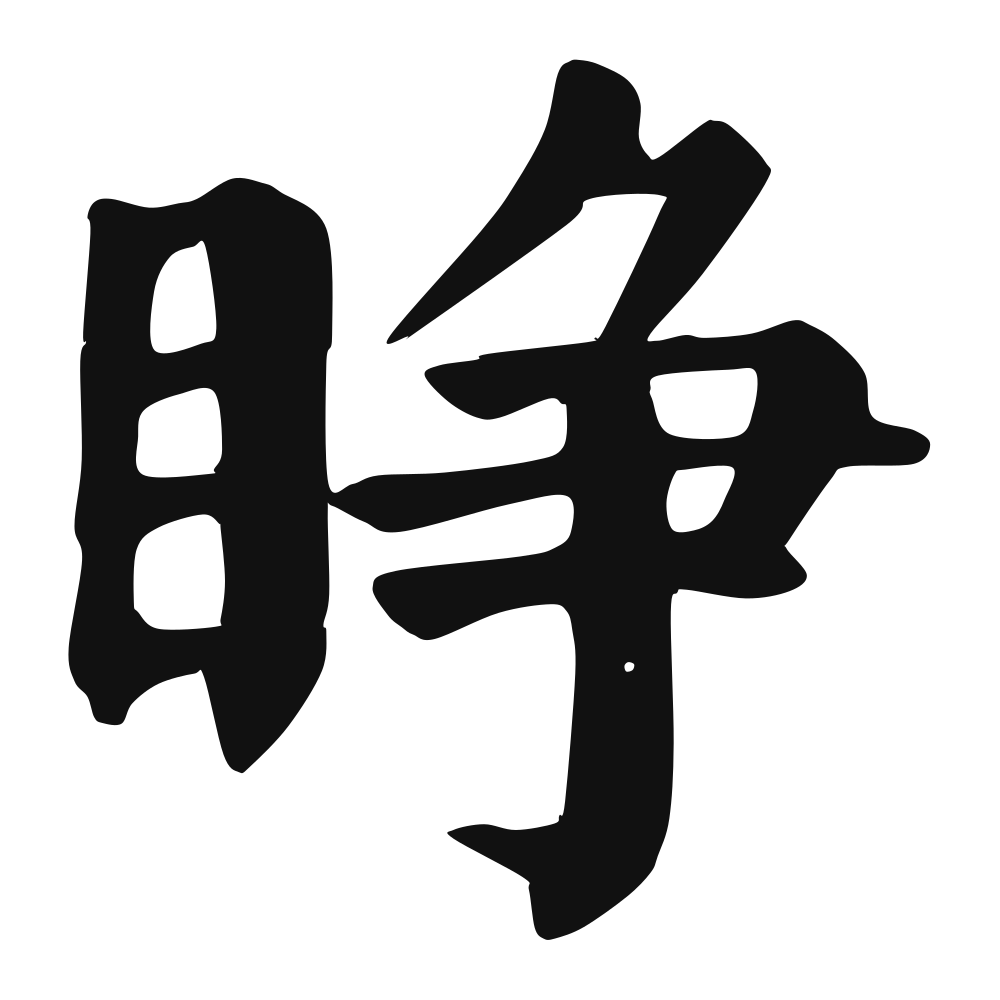
The Calligrapher — Yán Zhēnqīng 颜真卿
Tang master of robust regular script; co-creator of the enduring 'Yan style'.
Tang calligrapher (709–784), master of regular script/running script — the Tang moral paragon whose upright, muscular regular script became the model of Chinese integrity in writing. Tang dynasty
Cultural Story
睁 is the vernacular word for opening the eyes, plain and bodily. Storytellers spent it on waking — he 睁眼 as dawn entered the inn — and on anger, when a hero 睁圆双眼, eyes going round, a breath before the blade left its sheath.
Common words & phrases
- 睁眼 open eyes
- 睁开 open
- 眼睁睁 helplessly watch
Read the story behind the character
睁 opens every day: the alarm rings, you 睁开眼, and the phone is already in hand. Accident footage shows bystanders 眼睁睁 watching helplessly, gyms cue 睁大眼睛 for balance drills, and parents 睁一只眼闭一只眼 over the state of a teenager's room.
Why this character belongs on skin
There is a moment, just before waking, when the lids part and the room returns, and for one second you are purely a witness, innocent of all you will soon remember. The character puts the eye and the opening together, the simple, enormous act of letting the world in. Zen masters struck their students to force this very opening, the sudden seeing past habit into what is actually before you. To choose it is to honor attention as a discipline, the daily decision to look. Wear it where the eye can find it, a talisman against the sleep we walk in. Let it mark the times you truly saw, a lover, a danger, a truth, and let it promise you will open again, that your waking was not an accident but a practice you intend to keep.
Own this character
Purchase delivers the original SVG of this glyph, brushed by Yán Zhēnqīng 颜真卿, ready to place on skin, paper, or screen.