
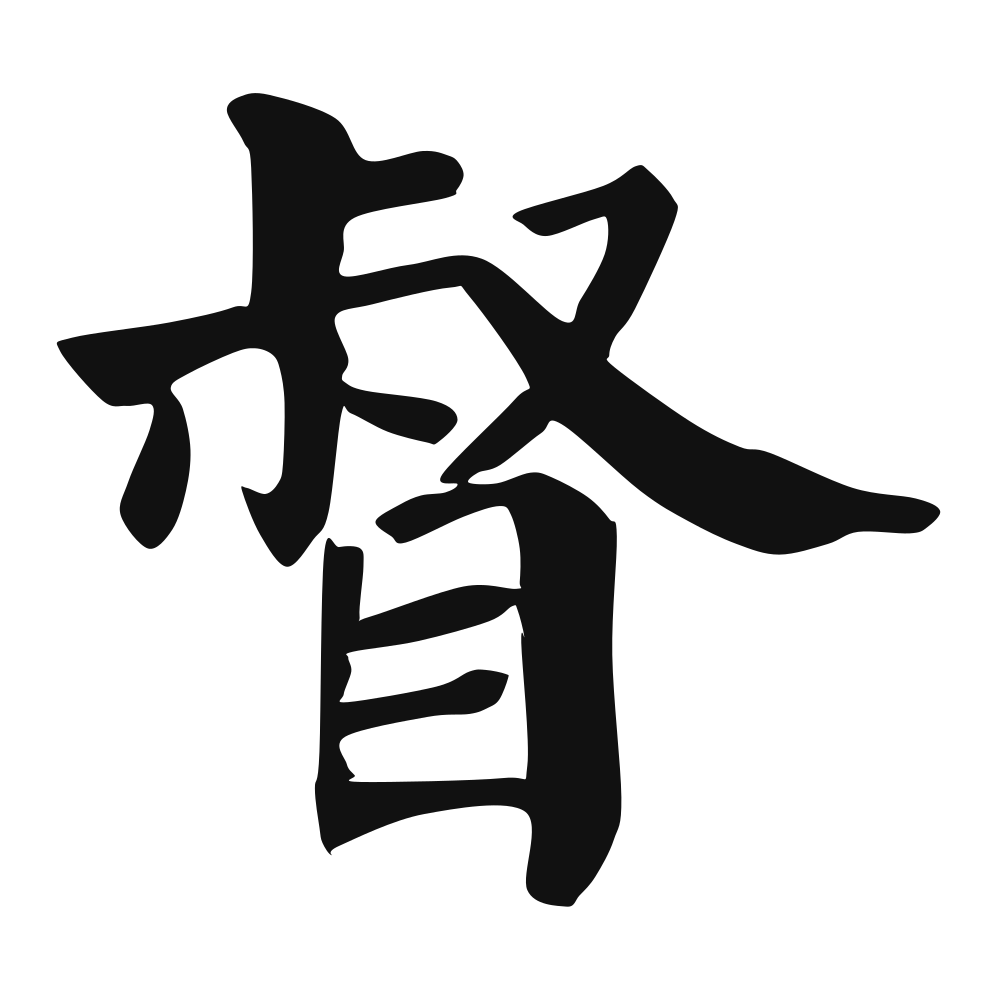
督
(bound form) to supervise
Closest English meanings
supervise·oversee
The Calligrapher — Yán Zhēnqīng 颜真卿
Tang master of robust regular script; co-creator of the enduring 'Yan style'.
Tang calligrapher (709–784), master of regular script/running script — the Tang moral paragon whose upright, muscular regular script became the model of Chinese integrity in writing. Tang dynasty
Cultural Story
督 means to look down and press — oversight with teeth. Han and Three Kingdoms courts named 都督 to command armies, censors 督促 the grain shipments, and the same downward gaze watched workmen, soldiers, and officials across the empire's endless paperwork.
Common words & phrases
- 监督 supervise · monitor
- 督促 urge · press
- 督导 supervise · advise
- 都督 governor · commander
Read the story behind the character
督 drives the calendar: managers 监督 project dashboards, parents 督促 homework past bedtime, education boards 督导 school inspections, and fitness apps 督促 your daily steps. The noun 监督 opens every complaint about officials, and group chats quietly assign who will 督 whom.
Why this character belongs on skin
An eye above a task—督 is the watcher, the supervisor, the one who inspects the work and does not look away. It runs through words like 监督, oversight, and 督促, to press onward—and notice the strange gift hidden in the etymology: the eye that watches is also the eye that urges. In Chinese medicine the 督脉 is the governing vessel, the channel running up the spine, overseeing the whole body's fire from crown to tail. There is a version of you that checks the work while no one else can: the inner examiner at the desk after midnight. This ink is that eye. Place 督 along the spine, in the body's own governing channel, where the posture lives. Let it watch you not with judgment but with expectation—the steady gaze of someone who knows what you're capable of.
Own this character
Purchase delivers the original SVG of this glyph, brushed by Yán Zhēnqīng 颜真卿, ready to place on skin, paper, or screen.