
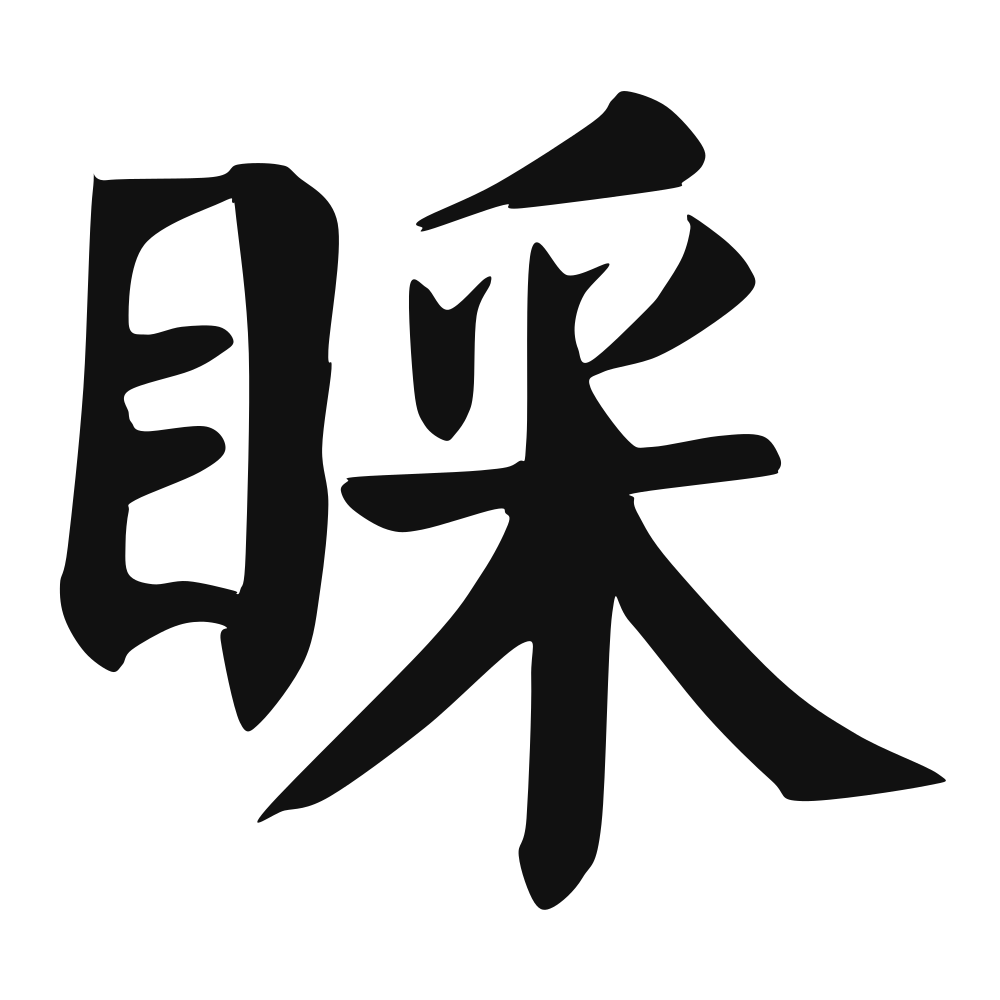
睬
to pay attention; to take notice of; to care for
Closest English meanings
pay attention·heed
The Calligrapher — Yán Zhēnqīng 颜真卿
Tang master of robust regular script; co-creator of the enduring 'Yan style'.
Tang calligrapher (709–784), master of regular script/running script — the Tang moral paragon whose upright, muscular regular script became the model of Chinese integrity in writing. Tang dynasty
Cultural Story
睬 is to notice, to answer — a vernacular word of everyday feeling. Market-and-courtyard fiction made drama of it: a beauty 不理不睬 the persistent suitor, neighbors choose to 睬 a new arrival or pointedly, unforgivably, do not.
Common words & phrases
- 理睬 pay attention to
- 不睬 ignore · pay no heed
Read the story behind the character
Silence is the modern 睬: your message sits on read, friends 不理睬 the group chat for days, and customer service finally 理睬 after three escalations. Parents warn kids never to 睬 strangers online, and making up means simply that one side replied again.
Why this character belongs on skin
A small character with an enormous social weight: 睬 means to respond, to give someone the acknowledgment of your attention. Most of its life in the language is spent in negation — 不理不睬, to refuse even to look, the coldest punishment two people can administer. The ancients understood that attention is currency. To turn toward a person is to pay them; to turn away is to tax them out of existence. Everyone knows the exquisite wound of being left on read, and everyone knows the mercy of being seen when they least deserved it. This is power held in the smallest gesture — the nod across a room, the lifted eyes. To wear 睬 is to admit you know your attention has value, that you bestow it deliberately. It is a mark for those who see clearly, respond when it matters, and keep the rest of their gaze for themselves.
Own this character
Purchase delivers the original SVG of this glyph, brushed by Yán Zhēnqīng 颜真卿, ready to place on skin, paper, or screen.