
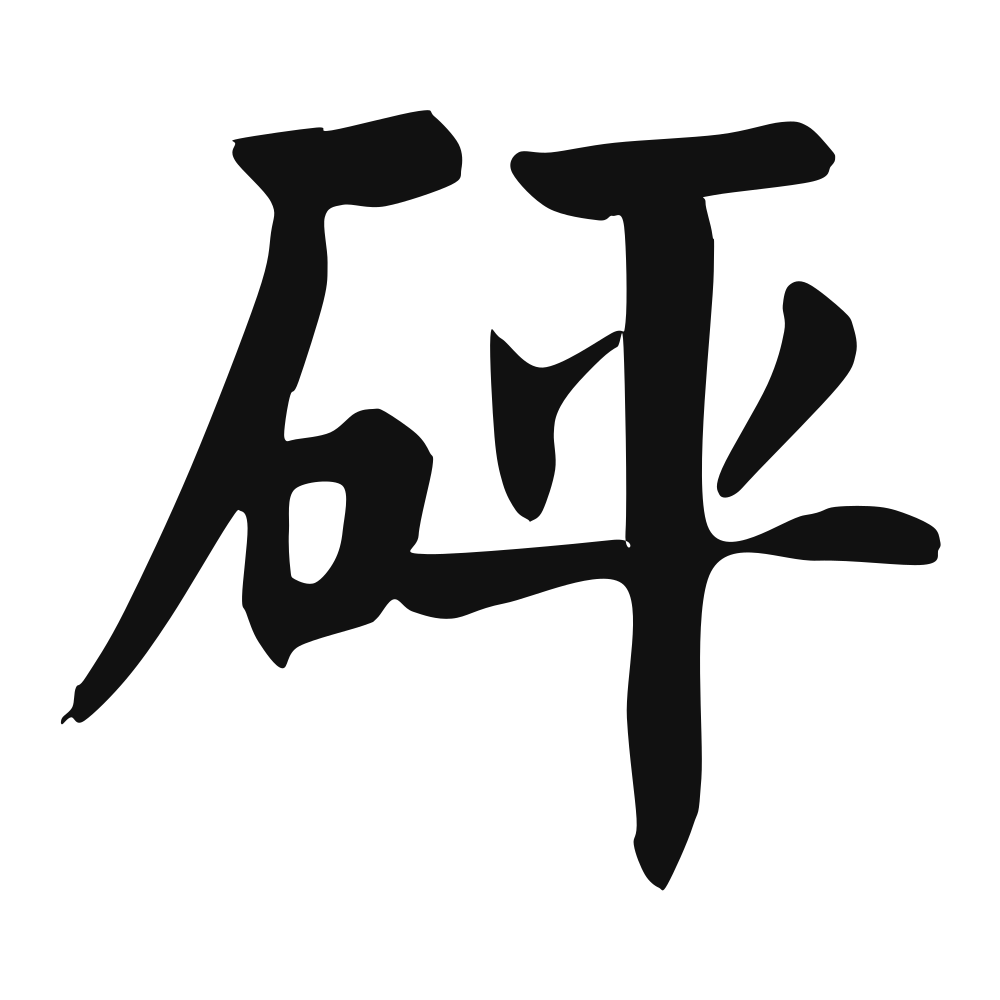
The Calligrapher — Yán Zhēnqīng 颜真卿
Tang master of robust regular script; co-creator of the enduring 'Yan style'.
Tang calligrapher (709–784), master of regular script/running script — the Tang moral paragon whose upright, muscular regular script became the model of Chinese integrity in writing. Tang dynasty
Cultural Story
砰 is pure sound — a mouth imitating a door, a drum, a bursting rock. Classical prose kept a family of such bang-words, 砰然 and 砰訇 among them, for thunder, collapsing towers, and drums in the night; later storytellers slammed their heroes' doors with it and let readers hear the anger without spending a word of description on it.
Common words & phrases
- 砰然 with a bang
- 砰砰 bang bang
Read the story behind the character
The onomatopoeia is tireless. A teenager 砰-bangs the bedroom door after an argument; old novels describe the door shutting 砰然 (with a bang); the doctor asks about a heart going 砰砰 (thump-thump) before the stethoscope. Fireworks 砰 overhead at New Year, and action-film subtitles lean on 砰! 砰! to make silent print loud again.
Why this character belongs on skin
Before the word, there is the blow. This is pure sound — the sudden report of a door kicked open, a gun fired in the dark, a heart that decides. The character is built to be heard, a noise given form on the page with no meaning beyond the moment it lands. The Buddhists teach that the world is sound and vibration, that form itself is fleeting as an echo; this word is the universe reminding you it is still awake. A warrior hears it as the start of everything — the charge, the leap, the instant fear becomes motion. To tattoo it on the body is to keep the threshold moment alive, that split second when nothing had happened yet and then everything did. It is the punctuation mark of a life lived at the edge of the expected. Let it sit like a held breath on your skin, the silent promise that when the moment comes, you will not hesitate.
Own this character
Purchase delivers the original SVG of this glyph, brushed by Yán Zhēnqīng 颜真卿, ready to place on skin, paper, or screen.