
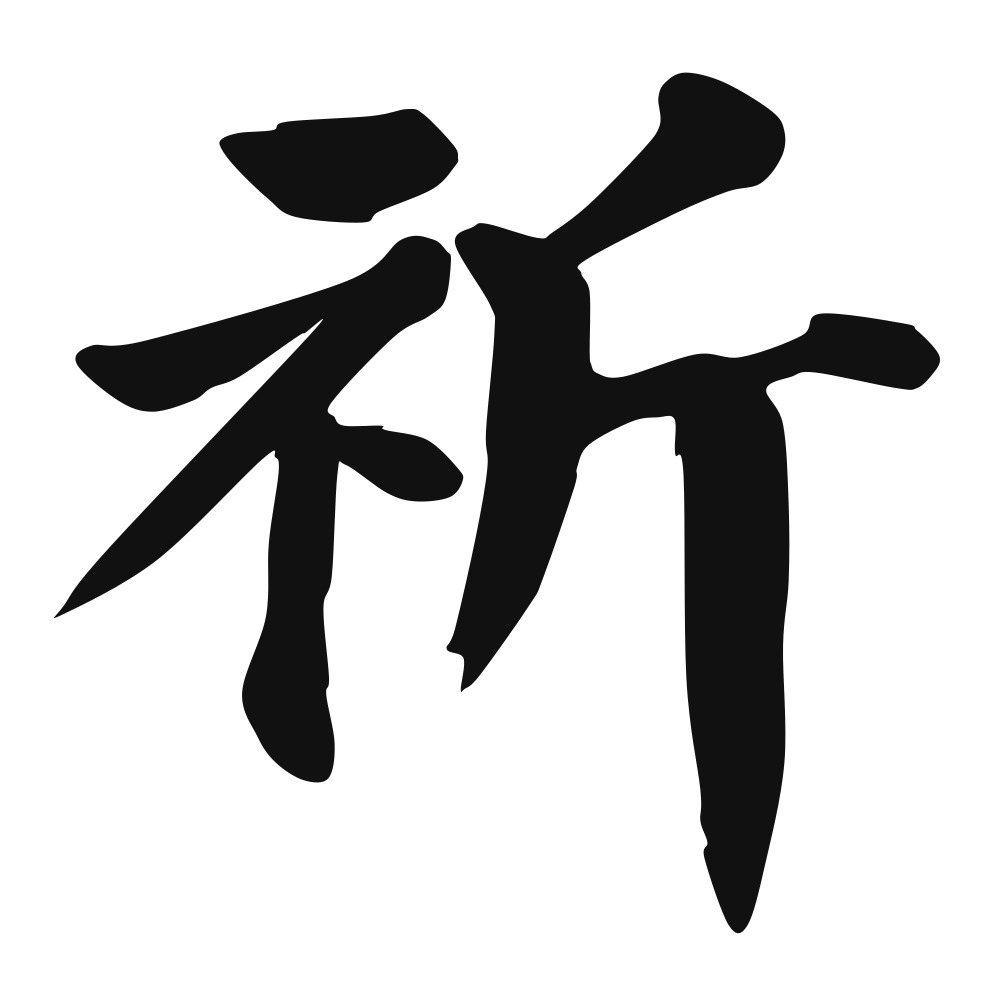
祈
to implore; to pray; to request
Closest English meanings
to pray·beg·hope·to wish
The Calligrapher — Yán Zhēnqīng 颜真卿
Tang master of robust regular script; co-creator of the enduring 'Yan style'.
Tang calligrapher (709–784), master of regular script/running script — the Tang moral paragon whose upright, muscular regular script became the model of Chinese integrity in writing. Tang dynasty
Cultural Story
祈 is older than the script’s mature form: oracle bones show kings praying for rain and harvest. Bronze and canonical texts repeat the posture — hands raised to powers above — and Beijing’s 祈年殿, Hall of Prayer for Good Harvests, still crowns the Temple of Heaven.
Common words & phrases
- 祈祷 to pray · prayer
- 祈求 to pray for · to beg · to entreat
- 祈望 to hope · to wish
- 祈福 to pray for blessing
Read the story behind the character
Everyday speech keeps it gentle: patients 祈祷, pray, before surgery; students 祈求, beg, for luck before results; a letter home carries 祈望, hopes, for the family; and temple visitors buy charms to 祈福, pray for blessing, in the new year.
Why this character belongs on skin
At the altar radical stands 祈, to pray, to entreat, to lift a wish toward whatever listens. The old form joined a supplicant with the sacred post where offerings hung — prayer as something hung out into the wind. A farmer 祈s for rain; a mother 祈s for the son at war. To carry 祈 is to admit you hope, that beneath your earned indifference there is a hand raised. It is the tattoo of the believer in something, even if the something has no name. Let this mark sit where you once folded your hands. The needle is a small prayer pressed into the body — may it be heard, may it stay, and may the asking itself be enough to keep you upright through the long nights.
Own this character
Purchase delivers the original SVG of this glyph, brushed by Yán Zhēnqīng 颜真卿, ready to place on skin, paper, or screen.