
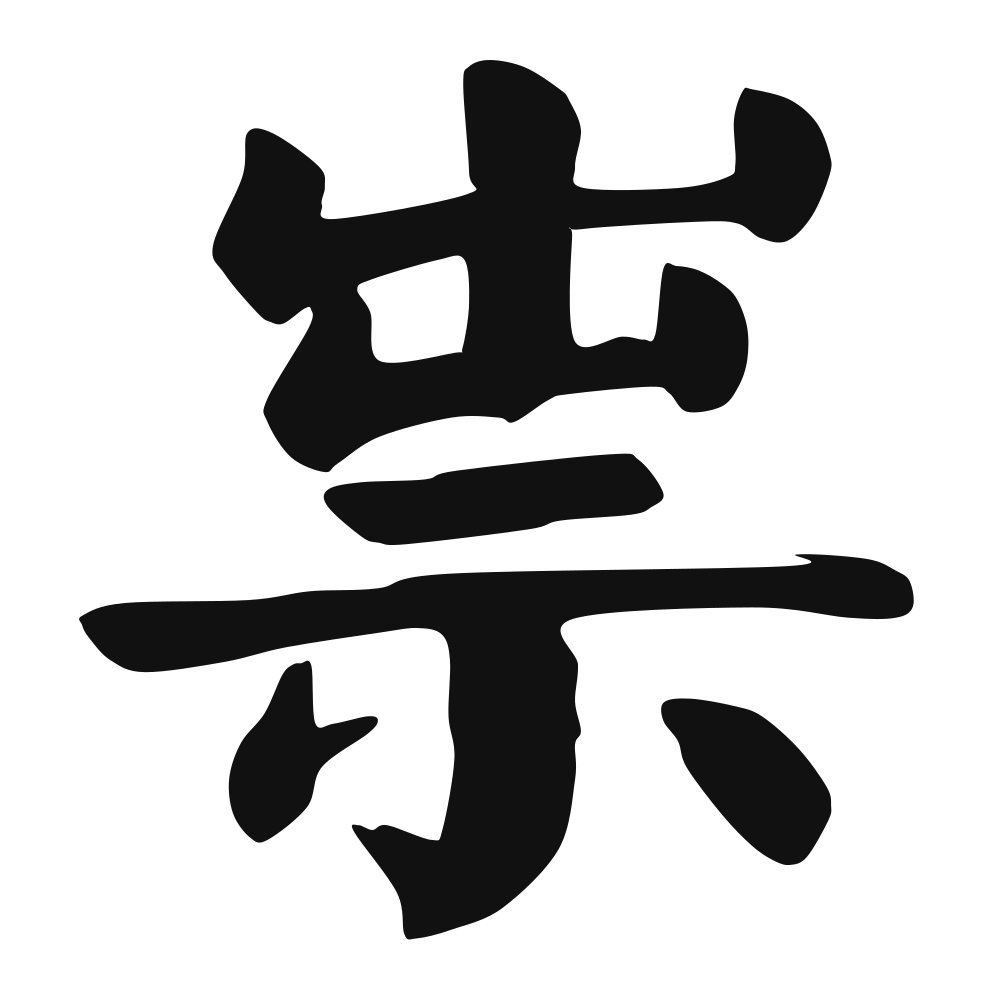
The Calligrapher — Yán Zhēnqīng 颜真卿
Tang master of robust regular script; co-creator of the enduring 'Yan style'.
Tang calligrapher (709–784), master of regular script/running script — the Tang moral paragon whose upright, muscular regular script became the model of Chinese integrity in writing. Tang dynasty
Cultural Story
祟 is mischief made visible: something slipping out from the altar. Oracle bones use it constantly — a haunting, a spirit’s interference behind fever or failed harvest. Diviners were hired to name the 祟 and buy it off with offerings.
Common words & phrases
- 作祟 cause mischief · haunt
- 鬼祟 sneaky · stealthy
- 邪祟 evil spirit
Read the story behind the character
It lives on as metaphor: when a plan collapses oddly, someone quips that jealousy is 作祟, at work; a 鬼祟, sneaky, colleague slinks out early; horror novels keep 邪祟, evil spirits, whispering in old houses. The demon shrank; the suspicion never did.
Why this character belongs on skin
There is a knock at the wall when no one is there, a luck that turns at the threshold, a shadow that follows though you locked the door. This character 祟 crowds two spirits together under a roof, the unseen thing that haunts the house from inside. The old people swept the corners and named the mischief, because what is spoken loses its power to frighten. The Buddhists exorcise with light; the Christians, with naming; the warrior faces the ghost rather than fleeing it. To carry this word is to refuse the pretense that nothing follows you. Let it rest where your own shadows gather, a quiet act of exposure, the spoken haunt that cannot rule what is named. The ink is the charm against the thing, proof you looked the visitor in the eye and wrote it down, and that the small spirits of the past no longer own the rooms you walk through.
Own this character
Purchase delivers the original SVG of this glyph, brushed by Yán Zhēnqīng 颜真卿, ready to place on skin, paper, or screen.