
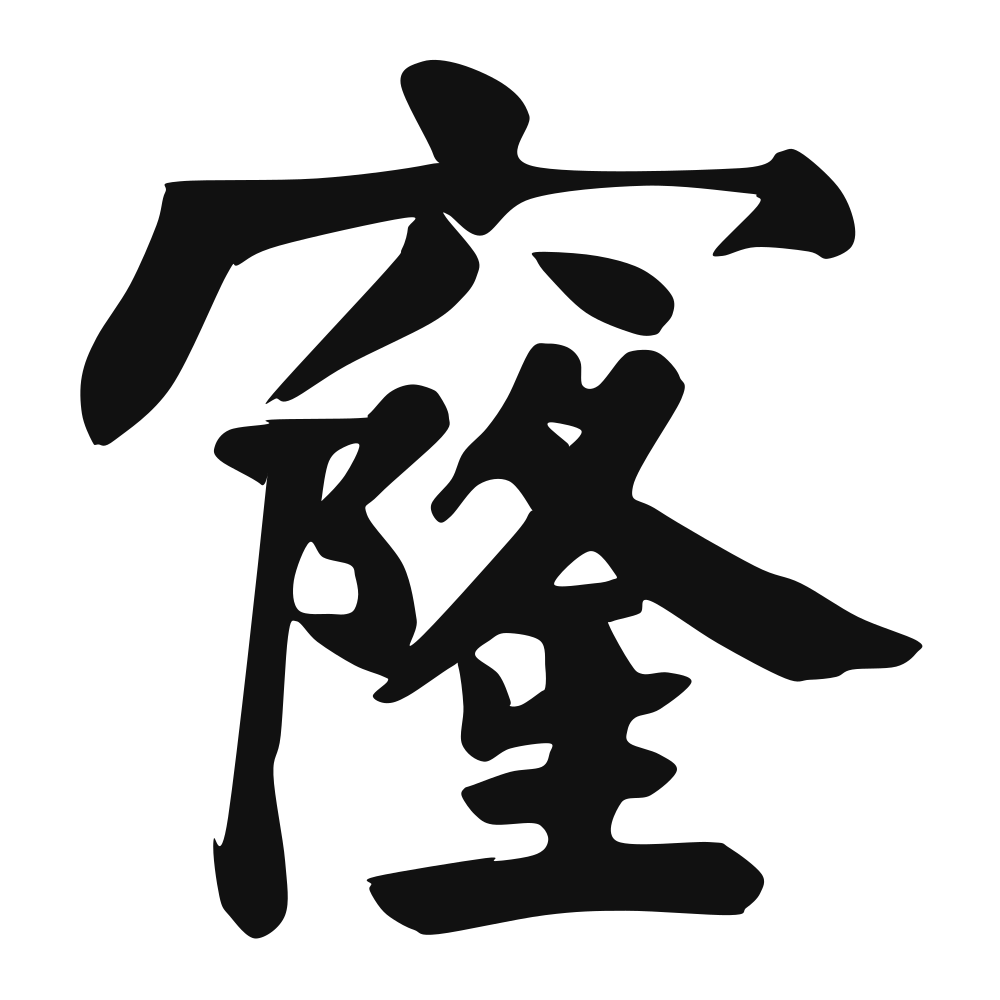
The Calligrapher — Yán Zhēnqīng 颜真卿
Tang master of robust regular script; co-creator of the enduring 'Yan style'.
Tang calligrapher (709–784), master of regular script/running script — the Tang moral paragon whose upright, muscular regular script became the model of Chinese integrity in writing. Tang dynasty
Cultural Story
窿 is the hole itself — 窟窿, that deep round cavity, whether a punched roof tile, a hollowed hillside or a gap in the accounts. Miners' talk borrowed it for shafts and tunnels: the 窿工 worked the dark, following the seams underground while daylight thinned to a coin behind them.
Common words & phrases
- 窟窿 hole · cavity
- 窿工 mine worker
Read the story behind the character
窿 appears whenever something is punctured. Kids report a 窟窿 hole in the schoolbag or a hole in the sock; accountants hunt a 窟窿 in the budget — a gap in the books. Mining towns remember the 窿工 tunnel workers who carved shafts through hillsides, lamps strapped to their foreheads.
Why this character belongs on skin
Caves were the first cathedrals. Before stone was carved, it was entered. 窿 names that hollow — the mine shaft, the kiln's throat, the dark rounded interior where echoes learn to sing. The character carries 穴, the roof-cave radical, swollen into something deeper, a chamber rather than a shelter. Daoists loved such spaces: the valley spirit, the empty bell, the uncarved block. What is hollow is not absent; it is resonant. A drum is 窿 at heart, and that is why it speaks. You have hollows too — places grief carved, places no one tours. This character does not fill them. It consecrates them, reminds you that emptiness is where the echo lives, that the cup is useful because of its void. Wear it and let it be a small dark doorway on your skin, an opening that admits depth. The body deserves one secret chamber. This is how you build it.
Own this character
Purchase delivers the original SVG of this glyph, brushed by Yán Zhēnqīng 颜真卿, ready to place on skin, paper, or screen.