
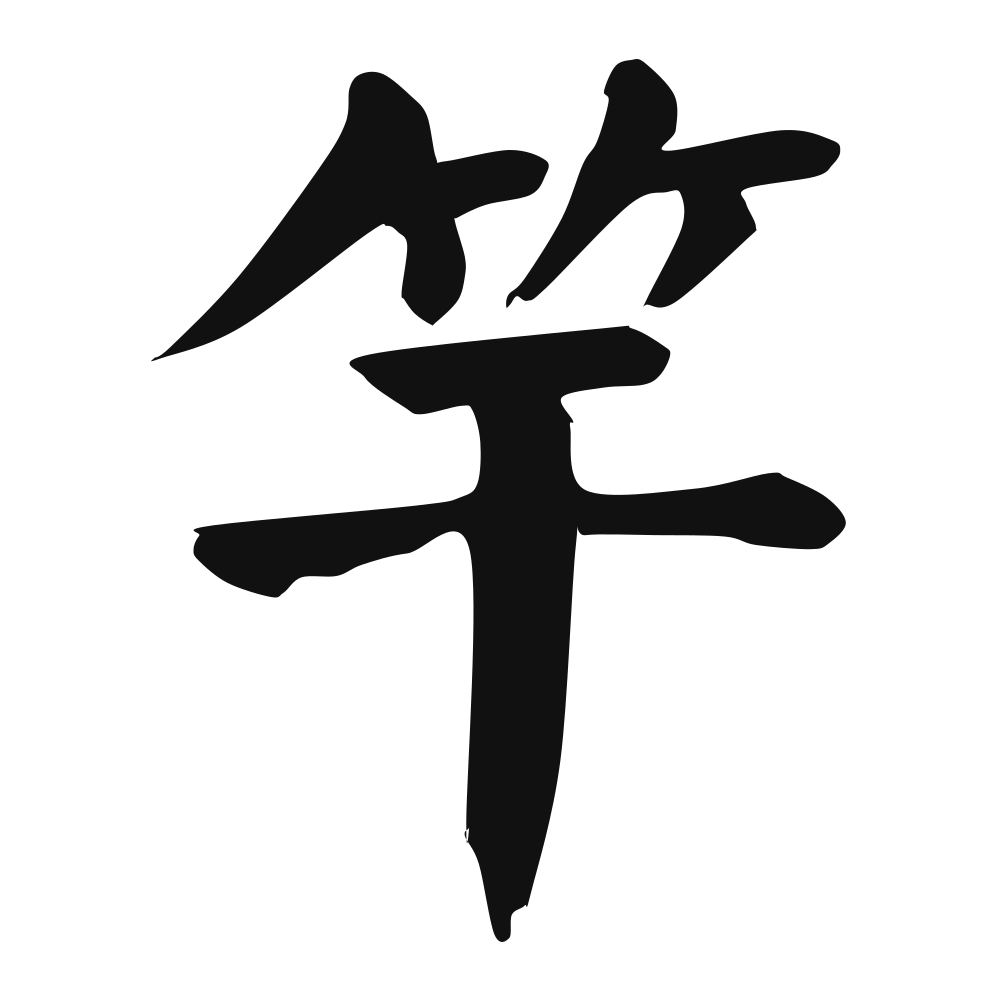
竿
(bound form) pole; rod
Closest English meanings
pole·rod·bamboo pole
The Calligrapher — Yán Zhēnqīng 颜真卿
Tang master of robust regular script; co-creator of the enduring 'Yan style'.
Tang calligrapher (709–784), master of regular script/running script — the Tang moral paragon whose upright, muscular regular script became the model of Chinese integrity in writing. Tang dynasty
Cultural Story
A 竿 is a bamboo pole — fishers, flagmen, and acrobats all owned one. Buddhist masters used the pole as a ladder of the spirit: 百尺竿头更进一步, 'atop the hundred-foot pole, step one pace further.' Politely it measured a lifetime's climbing — the higher the 竿, the harder the next step.
Common words & phrases
- 竹竿 bamboo pole
- 钓竿 fishing rod
- 滑竿 sedan chair · carried chair
Read the story behind the character
Weekend anglers compare 钓竿 (fishing rods) — carbon fiber now, not bamboo — beside city rivers. Kids chase bubbles with a bubble 竿, cleaners squeegee windows with telescoping poles, and old Sichuan hill towns still rent 滑竿 (sedan chairs on poles) to tired tourists climbing stone steps.
Why this character belongs on skin
There is a moment in the practice hall when the body becomes a single line of intention, reaching upward past its own doubt. The character is bamboo—that plant which bends in the storm and does not break, which the ancients used to measure the sky and to teach the archer his aim. A 竿 is a rod, a pole, a length of green discipline set against the wind. The fisherman waits beside his with the patience of a saint; the pole-vaulter gathers the earth and leaps. To carry this mark is to honor the vertical pull in you, the part that will not lie flat. We are meant to rise. Even our grief has a direction. Let it be your spine in ink—a quiet pole against which you measure the height you have yet to climb, and the grace with which you bend.
Own this character
Purchase delivers the original SVG of this glyph, brushed by Yán Zhēnqīng 颜真卿, ready to place on skin, paper, or screen.