
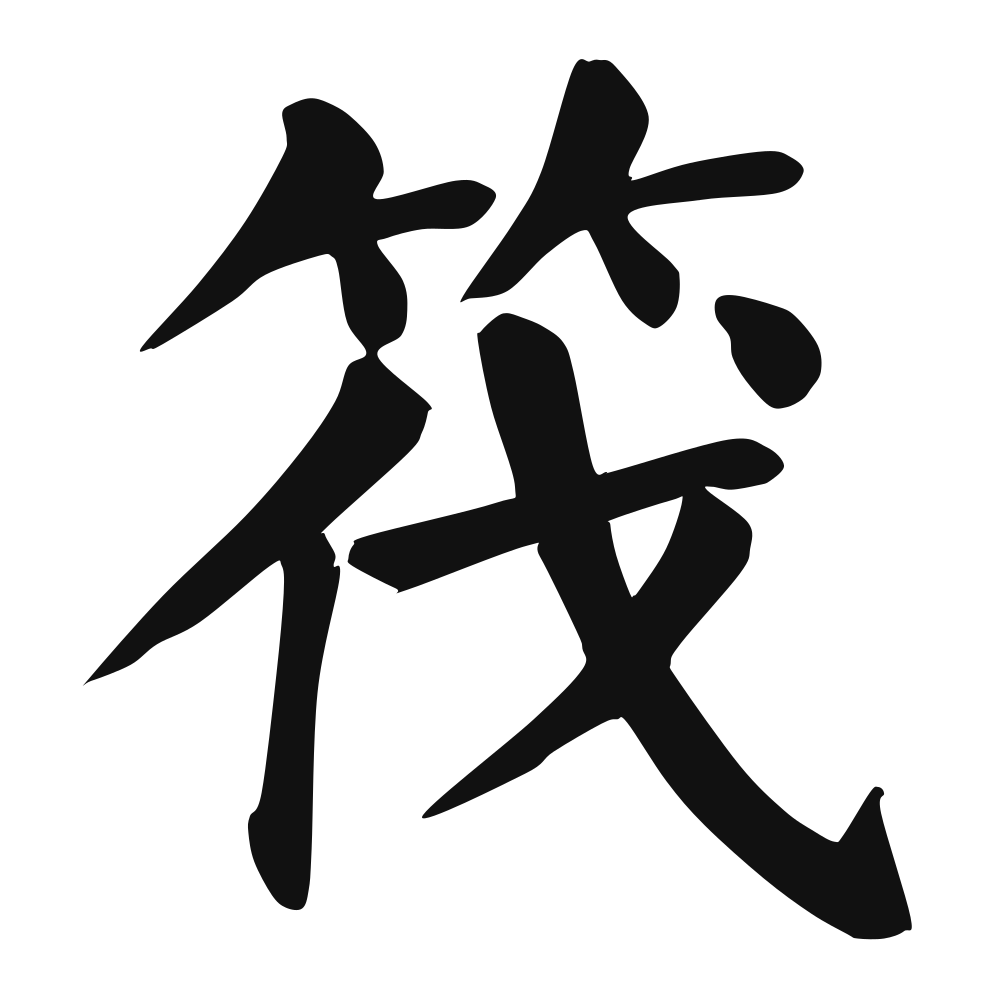
The Calligrapher — Yán Zhēnqīng 颜真卿
Tang master of robust regular script; co-creator of the enduring 'Yan style'.
Tang calligrapher (709–784), master of regular script/running script — the Tang moral paragon whose upright, muscular regular script became the model of Chinese integrity in writing. Tang dynasty
Cultural Story
Before bridges, rivers meant 筏 — bamboo poles lashed into a raft, or inflated hide floats riding the Yellow River's rapids. Ferrymen poled traders and soldiers across; monks and pilgrims drifted downstream, and Zhuangzi's river lore treated the raft as a lesson in letting go at the far shore.
Common words & phrases
- 木筏 wooden raft
- 竹筏 bamboo raft
- 皮筏 raft · hide raft
- 筏子 raft
Read the story behind the character
Tourists float down the Li River on a 竹筏 (bamboo raft) to the soundtrack of camera shutters; Lanzhou's ancient 皮筏 (hide rafts) now run commercial rapids for thrill-seekers. Hardware stores sell inflatable 筏子 (rafts) for beach days, and rafting parks make the oldest boat technology a weekend adventure.
Why this character belongs on skin
The Buddha compared his entire teaching to a raft: lashed together to cross the flood, then left on the far shore without sentiment. 筏 is that vessel — logs bound with rope, ridden across deep water by someone who trusted buoyancy more than guarantee. It is the humblest craft in the language, and the most honest. No cabin, no keel, just enough to carry you over. Every philosophy is a raft; every love, every faith, every identity you have outgrown. The wisdom is in knowing when to hold on and when to step off dry-shod. This mark is for survivors of deep water, the ones who crossed with less than they needed and arrived anyway. Ink the raft. Keep walking.
Own this character
Purchase delivers the original SVG of this glyph, brushed by Yán Zhēnqīng 颜真卿, ready to place on skin, paper, or screen.