
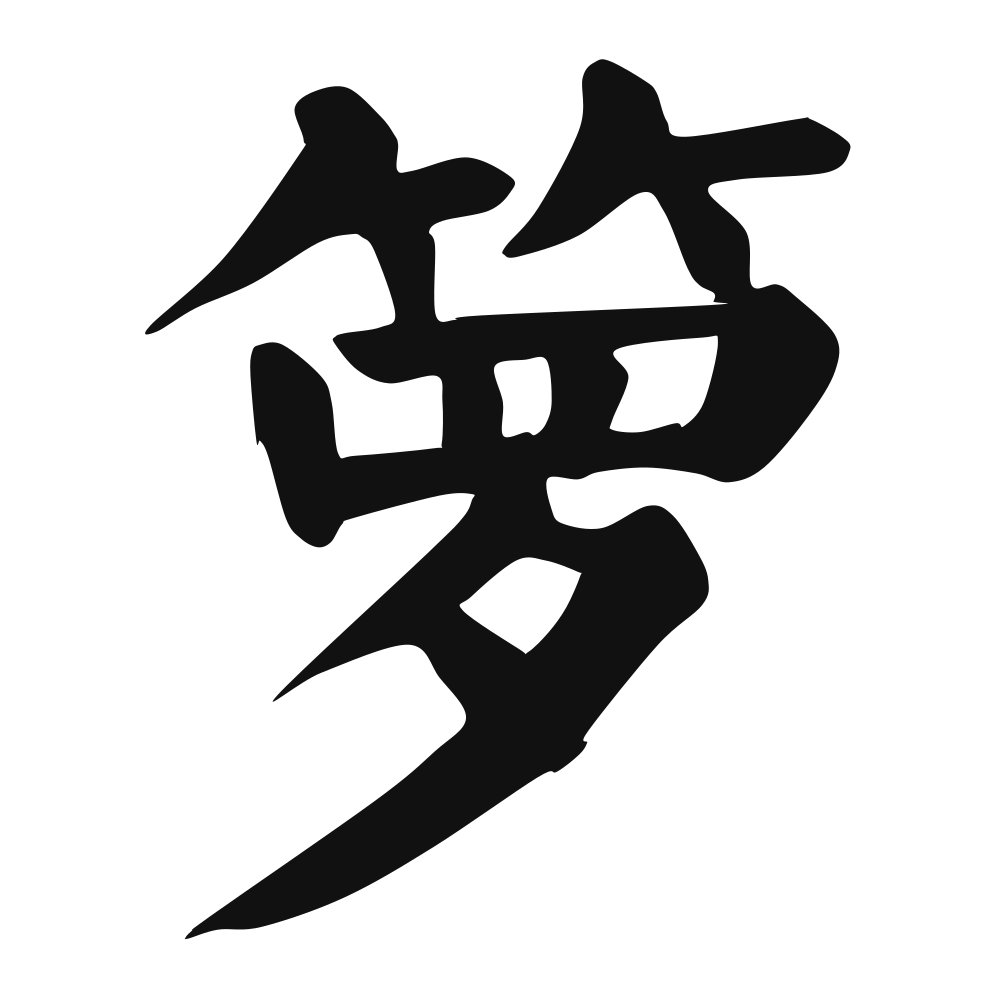
The Calligrapher — Yán Zhēnqīng 颜真卿
Tang master of robust regular script; co-creator of the enduring 'Yan style'.
Tang calligrapher (709–784), master of regular script/running script — the Tang moral paragon whose upright, muscular regular script became the model of Chinese integrity in writing. Tang dynasty
Cultural Story
箩 was the deep round basket of granary and kitchen: rice was washed in the 淘箩, flour measured by the 箩, taxes counted in baskets. Sifted fineness took its name — 箩面, flour passed to silk smoothness. In market records the 箩 stood as the basic unit of plenty.
Common words & phrases
- 箩筐 bamboo basket
- 淘箩 sifting basket
Read the story behind the character
Markets still fill the 箩筐 (basket): vendors scoop rice from a 箩, fish sellers line crates with them, and elderly shoppers carry 淘箩 (rice-washing baskets) to morning stalls. Rural-tourism brochures show harvests piled high in 箩筐, and nostalgia essays measure a childhood by baskets carried.
Why this character belongs on skin
Woven bamboo, fine as a net, shaking gently over white rice — 箩 is the sieve, the sifter, the quiet judge of the kitchen. It lets through what is fine and keeps what is whole, or the reverse, depending on what you are making — and that is its wisdom: the sieve does not moralize, it only sorts for the task at hand. In old market towns the sound of sifting was the sound of morning itself, women at the doorway with baskets on their laps, separating flour from husk while the street woke up. There is a meditation in it, the same rhythm monks find in sweeping: motion repeated until the mind empties and only the work remains. To tattoo 箩 is to celebrate discernment — to say you have learned to shake loose what does not feed you and keep the flour that does. Wear it on the wrist or shoulder blade, thin and woven like the basket itself, a reminder that refinement is a practice, not a gift.
Own this character
Purchase delivers the original SVG of this glyph, brushed by Yán Zhēnqīng 颜真卿, ready to place on skin, paper, or screen.