
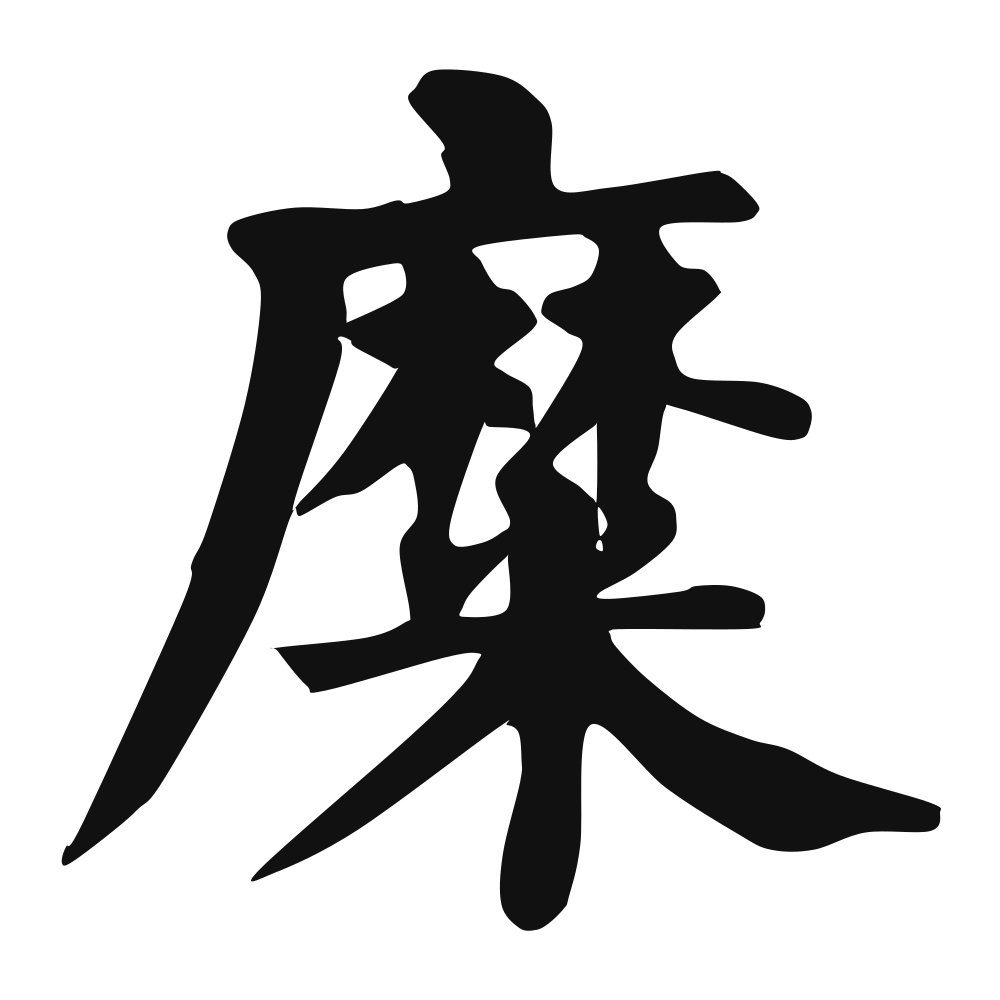
糜
surname Mi; millet; rice gruel; rotten; to waste (money)
Closest English meanings
gruel·to rot·wasteful
The Calligrapher — Yán Zhēnqīng 颜真卿
Tang master of robust regular script; co-creator of the enduring 'Yan style'.
Tang calligrapher (709–784), master of regular script/running script — the Tang moral paragon whose upright, muscular regular script became the model of Chinese integrity in writing. Tang dynasty
Cultural Story
糜 is gruel gone utterly soft — rice boiled past all form — and by extension anything rotted or squandered. 糜烂 describes festering sores and rotten morals; 糜费 is the wasteful spending historians pin on decadent courts. And the bitter line 何不食肉糜 — why not eat meat porridge — came from Emperor Hui of Jin, told of starving peasants.
Common words & phrases
- 糜烂 rotten · erosive
- 糜费 wasteful · extravagant
- 肉糜 meat paste · minced meat
- 糜粥 congee · gruel
Read the story behind the character
糜烂 survives in hospitals and gossip columns: ulcerated tissue in reports, a 糜烂 lifestyle in reviews. Historians still quote Emperor Hui's 何不食肉糜 whenever an official seems oblivious — the meme-ready ancient line about porridge. Auditors reach for 糜费 to name squandered budgets, though 浪费 does the everyday work.
Own this character
Purchase delivers the original SVG of this glyph, brushed by Yán Zhēnqīng 颜真卿, ready to place on skin, paper, or screen.