
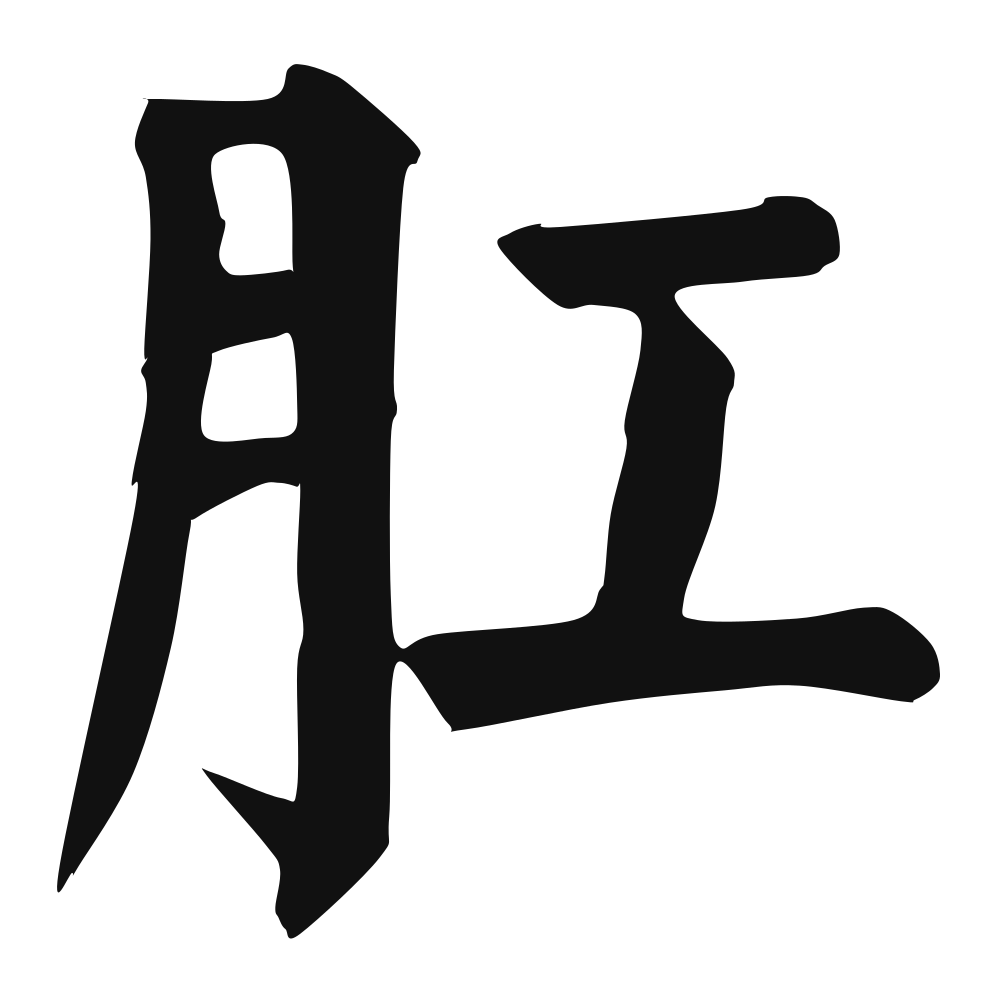
The Calligrapher — Yán Zhēnqīng 颜真卿
Tang master of robust regular script; co-creator of the enduring 'Yan style'.
Tang calligrapher (709–784), master of regular script/running script — the Tang moral paragon whose upright, muscular regular script became the model of Chinese integrity in writing. Tang dynasty
Cultural Story
肛 is an old anatomical term for the anus, built with the flesh radical. It appears in early medical literature; the physician-historian 淳于意 recorded bowel ailments in his casebooks of the Han dynasty. Surgeons of later eras already treated hemorrhoids and 肛瘘 anal fistula with probes and herbal ointments.
Common words & phrases
- 肛门 anus
- 肛肠 anal and intestinal
- 肛瘘 anal fistula
Read the story behind the character
Modern medicine keeps the character clinical: 肛肠 anal and intestinal department signs hang in every hospital, where embarrassed patients whisper their symptoms at the registration desk. Office workers who sit ten hours a day hear warnings about hemorrhoids from colleagues, and the 肛门 anus itself is named plainly in health class diagrams.
Why this character belongs on skin
Every empire has a back gate. Gāng is the body's lowest door, the humble passage the proud forget they own—the place where what was consumed is finally released, and the self, however noble, bows to earth. The Daoists mapped the body as a kingdom with many gates, and salvation lay in knowing each, even the lowliest, because what you refuse to see still rules you. To wear this mark is an act of radical humility: to claim the whole animal, not just the face it shows. Let it rest at the body's root as a private sacrament of honesty. You are earth and spirit both. The ink keeps you grounded—literally—in the truth that nothing human is beneath you. Wear the whole truth, or wear none.
Own this character
Purchase delivers the original SVG of this glyph, brushed by Yán Zhēnqīng 颜真卿, ready to place on skin, paper, or screen.