
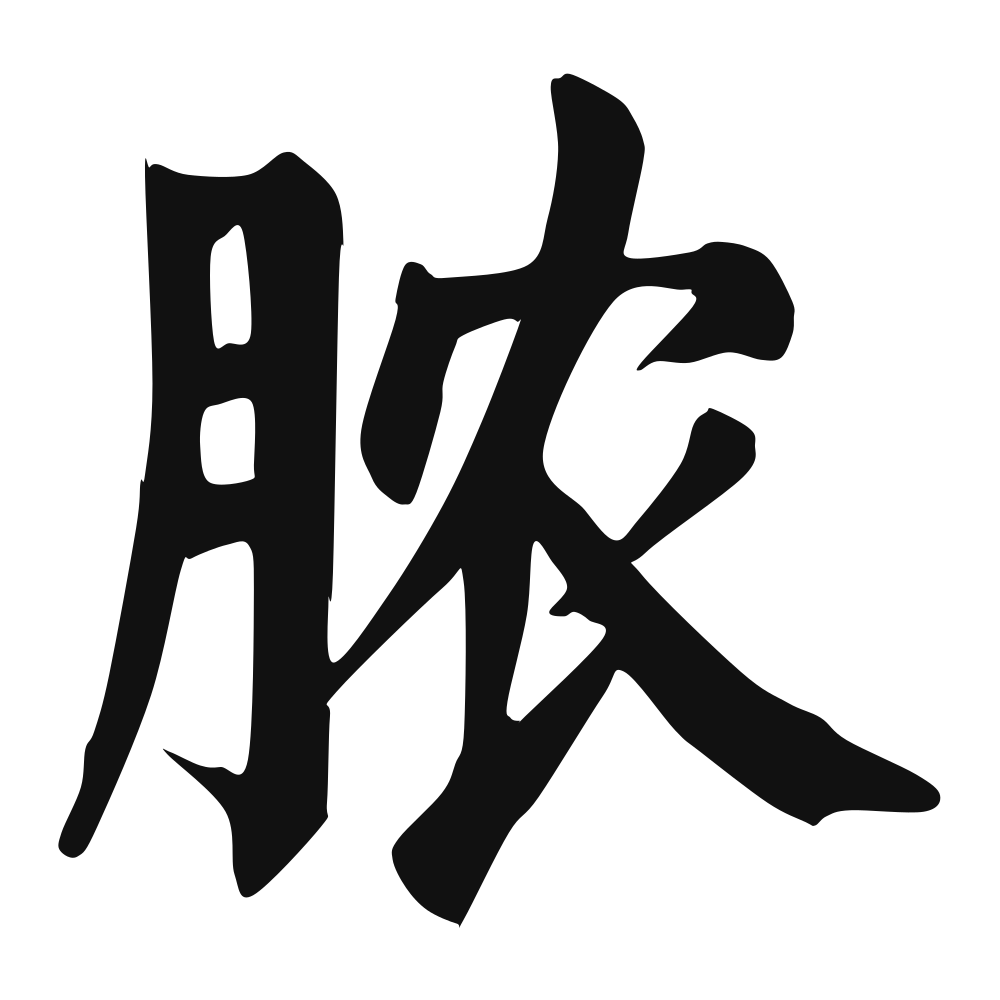
The Calligrapher — Yán Zhēnqīng 颜真卿
Tang master of robust regular script; co-creator of the enduring 'Yan style'.
Tang calligrapher (709–784), master of regular script/running script — the Tang moral paragon whose upright, muscular regular script became the model of Chinese integrity in writing. Tang dynasty
Cultural Story
脓 is pus, the body's creamy surrender in battle. Early surgical treatises described when a swelling had 化脓 festered and must be lanced; a 脓肿 abscess drained properly was the difference between healing and ruin. The word carried disgust in literature too — hollow flattery was compared to festering matter.
Common words & phrases
- 脓液 pus
- 化脓 fester · suppurate
- 脓肿 abscess
- 脓包 pustule · pustule
Read the story behind the character
A scraped knee turns angry, and the school nurse grimaces at the 脓液 pus before cleaning it out. The doctor lances a 脓肿 abscess with efficient horror; a pimple ripens into a 脓包 pustule the night before photo day. Wound-care instructions repeat one rule: if it 化脓 festers, come back.
Why this character belongs on skin
Beneath the scab the body is doing its honest work. 脓 is what gathers when the flesh fights what should not be there, the yellow witness of an infection the body refused to hide. We are taught to flinch from it, to call it ugly, but the old physicians knew pus as proof of life, the small army marching out the poison. To choose this character is to refuse pretty lies. You have been wounded, and you let it drain. There is a Christianity in that, the wound that will not close until it tells the truth. A warrior does not bandage over the rot; he opens the gate and lets the filth run. Wear 脓 as a vow against the silences that fester. It is not grotesque. It is clean. It says you survived the thing that tried to settle in you, and you are not ashamed of the evidence drawn from your own faithful flesh.
Own this character
Purchase delivers the original SVG of this glyph, brushed by Yán Zhēnqīng 颜真卿, ready to place on skin, paper, or screen.