
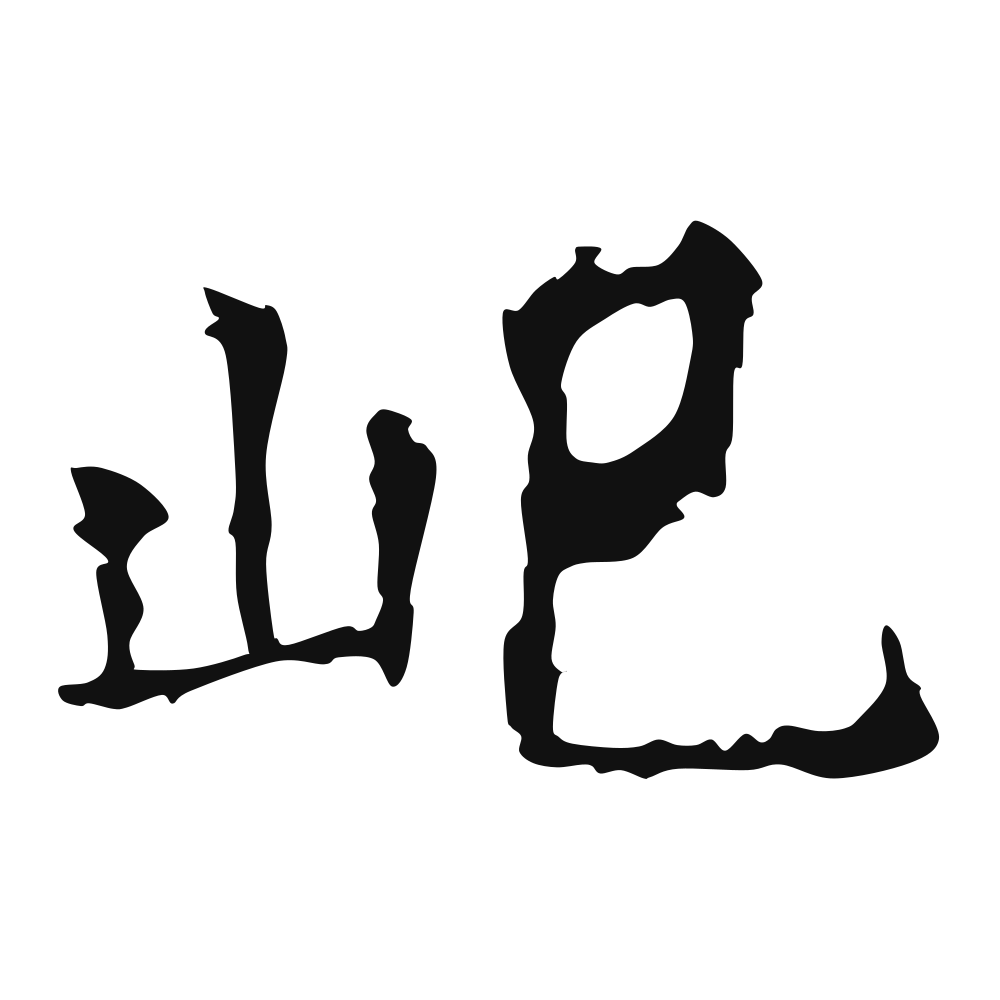
The Calligrapher — Chǔ Suíliáng 褚遂良
Tang chancellor and regular-script master of elegant, balanced strokes.
Tang calligrapher (596–658), master of regular script — Tang master of graceful, tensile regular script favored by the imperial court. Tang dynasty
Cultural Story
屺 is a bare, treeless hill; the Shuowen gives a bare hill. The Shijing's 陟屺 (climb the bare hill) was sung by a soldier thinking of his mother far away, and the image became a classical trope for a child's longing for a parent from a distant, lonely post.
Common words & phrases
- 陟屺 climb bare hill · mourn mother
Read the story behind the character
Hikers rest on a 屺 (bare hill) with no shade, and poets still cite 陟屺 (climb the bare hill) to mean missing mother. Though the character is rare in daily talk, it carries one tender job — naming the treeless height a homesick traveler climbs, a small word with a mother waiting at the bottom.
Why this character belongs on skin
A hill with no trees, no grass, only bare earth lifted toward the sky—that is 屺. It appears in one of the oldest poems of the Book of Songs, where a soldier far from home cries out: 陟彼屺兮, I climb that bare hill, and gaze, and my heart aches for my mother. To the ancients, the leafless mound meant a mother; the wooded mountain meant a father. So this little character holds one of the tenderest images in Chinese literature: a man on a bald ridge, wind in his face, looking the long way home. Everyone who has left carries a 屺 inside them—the rise of ground you scan at the end of a journey, the person you scan the crowd for. The character does not weep; it simply climbs and looks. Inked on the body, it becomes that lookout, a quiet promise that no matter how far you travel, part of you is always turned toward the ones who wait.
Own this character
Purchase delivers the original SVG of this glyph, brushed by Chǔ Suíliáng 褚遂良, ready to place on skin, paper, or screen.