
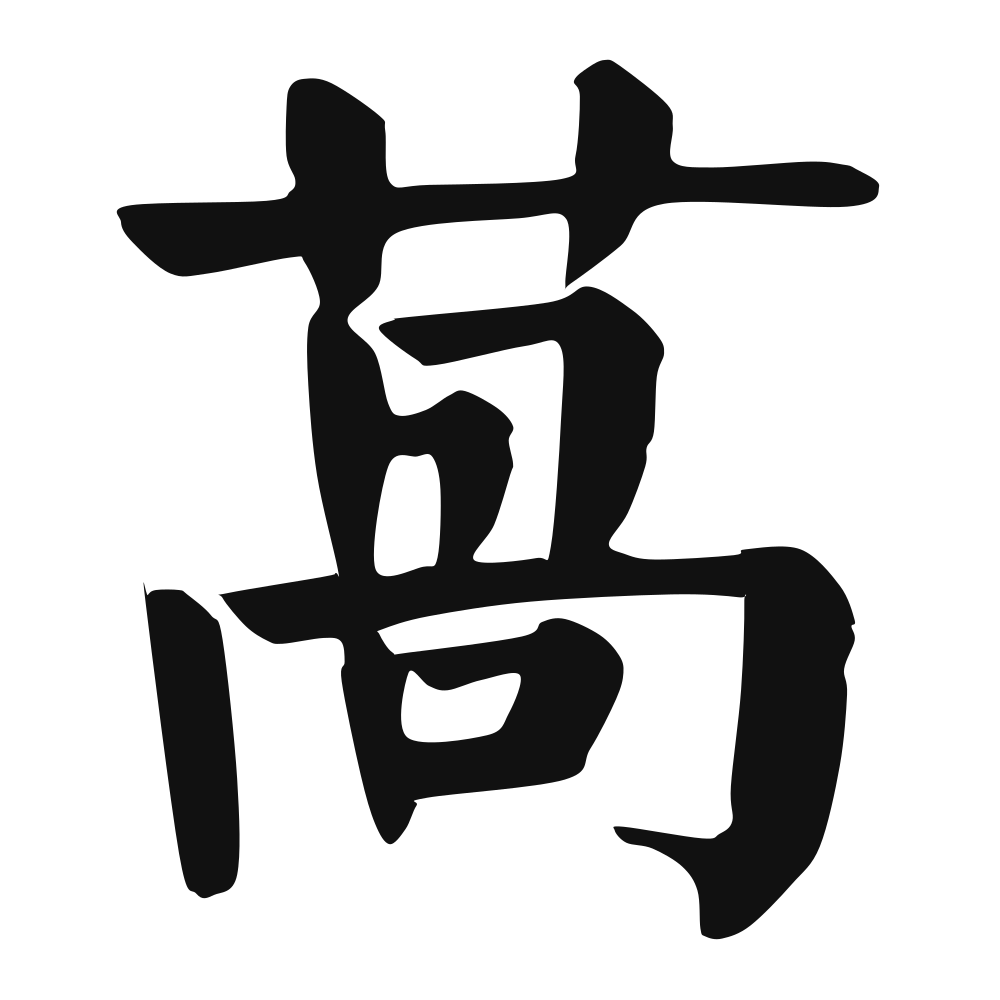
莴
usually seen in: celtuce; stem lettuce (Lactuca sativa var. asparagina), aka Chinese lettuce (莴笋); lettuce (Lactuca sativa) (莴苣)
Closest English meanings
lettuce (in compound)
The Calligrapher — Yán Zhēnqīng 颜真卿
Tang master of robust regular script; co-creator of the enduring 'Yan style'.
Tang calligrapher (709–784), master of regular script/running script — the Tang moral paragon whose upright, muscular regular script became the model of Chinese integrity in writing. Tang dynasty
Cultural Story
莴 belongs to 莴苣, lettuce — a plant that journeyed west to China by way of the western regions, earning early names that remembered its foreign road. Chinese gardeners bred it in a direction Europe never took: 莴笋, celtuce, grown for its thick jade stem rather than its leaves, peeled and sliced to reveal translucent green flesh. Du Fu, farming in Sichuan during his exile, grumbled in verse about his failed lettuce patch.
Common words & phrases
- 莴苣 lettuce
- 莴笋 celtuce · stem lettuce
Read the story behind the character
The wok hisses: 莴笋 slices hit garlic oil, turning glass-bright in seconds, the classic two-minute home stir-fry. A salad bar shreds 莴苣 lettuce beside iceberg, shoppers unable to explain the difference. A food vlogger peels celtuce on camera, revealing the jade core, and captions it 'the vegetable Du Fu complained about' — recipe in the comments, anecdote attached, history quietly delicious.
Why this character belongs on skin
Out of the common lettuce family comes the one kind the Chinese kitchen raised into a delicacy: the thick jade stem, peeled and sliced, crisp as fresh snow and tasting faintly of the cold spring it grew in. This is the character for that stem. It is a small lesson in cultivation — botany made cuisine made culture — proof that a people's genius often shows not in what they invent but in what they notice and refine. The same leaf every garden throws away; here, the part worth eating, honored for centuries. Every tradition has its version: the Italians made weeds into radicchio, the French turned scraps into pâté, the Hebrews turned bitter herbs into the taste of freedom at Passover. Attention is an art form. To wear this character is to claim the connoisseur's eye for the overlooked — in food, in people, in your own unspectacular mornings. The ordinary is an unopened pantry. Slice it thin. Taste everything.
Own this character
Purchase delivers the original SVG of this glyph, brushed by Yán Zhēnqīng 颜真卿, ready to place on skin, paper, or screen.