
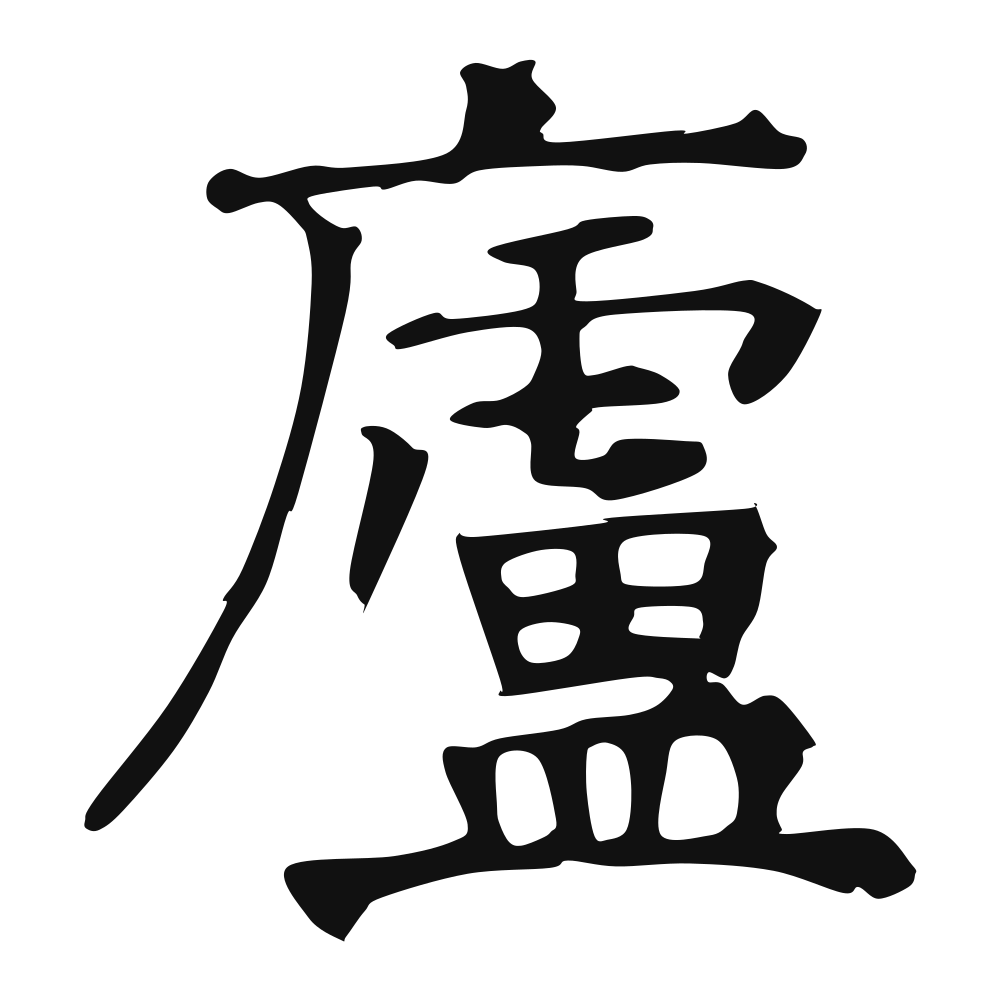
庐
surname Lu; Luzhou or Lu Prefecture 廬州|庐州[Lu2 Zhou1], a prefecture between the 6th and 13th centuries in present-day Anhui; Mount Lu 廬山|庐山[Lu2 Shan1] in Jiangxi Province; hut
Closest English meanings
cottage·hut·cabin·dwelling
The Calligrapher — Chǔ Suíliáng 褚遂良
Tang chancellor and regular-script master of elegant, balanced strokes.
Tang calligrapher (596–658), master of regular script — Tang master of graceful, tensile regular script favored by the imperial court. Tang dynasty
Cultural Story
廬 is the rough hut a traveler or hermit throws up. 劉備 rode out three times to a 茅庐 in 隆中 to beg 諸葛亮 to leave his thatch and save a kingdom — the most famous knock on a cottage door in Chinese story. 李白 later praised the waterfall at 庐山, the mountain that took the hut's name.
Common words & phrases
- 茅庐 thatched cottage
- 庐山 Lushan (Mount Lu)
- 庐舍 house · dwelling
- 草庐 thatched hut
Read the story behind the character
庐 now mostly names a place more than a shack: 庐山 is a misty resort where Mao met Nixon, and 草庐 survives in restaurant signs selling rustic tea. The thatched roof is gone, but the word still promises a retreat from the city, a small shelter against too much noise.
Why this character belongs on skin
A roof of thatch, a wall of mud, a single room where a man reads by lamplight and owes nothing to anyone. Lú is the humble dwelling, the cottage the scholar built on the mountain to escape the noise of office and court. The Daoists loved the lú — plain, low, enough — and called it freedom made of wood and silence. Zhuge Liang plotted the fate of kingdoms from such a hut, proving the small house can hold a large mind. To carry this character is to honor the life pared down to its true necessities, the home you carry inward rather than the mansion you display. Let it rest near the chest, a quiet mark that your real dwelling is simple, and that wherever you stand, you have already come home.
Own this character
Purchase delivers the original SVG of this glyph, brushed by Chǔ Suíliáng 褚遂良, ready to place on skin, paper, or screen.