
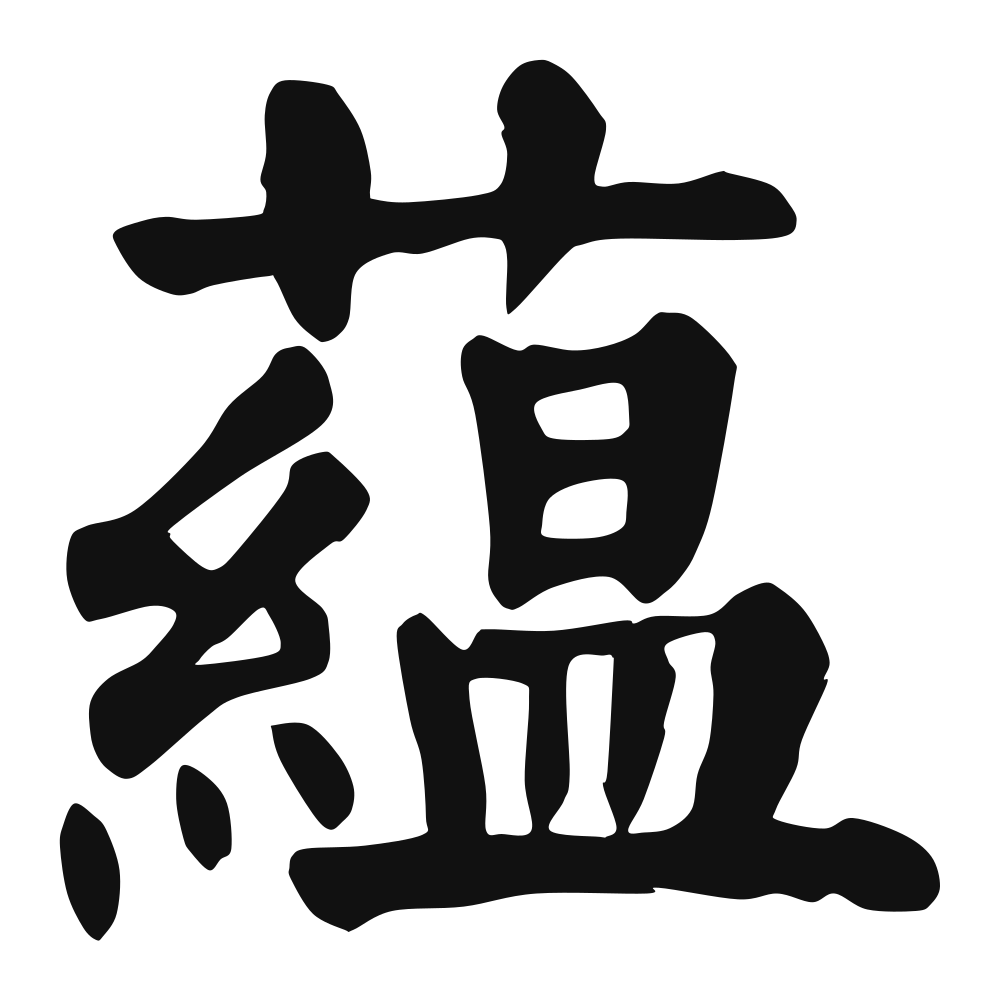
蕴
to accumulate; to hold in store; to contain; to gather together; to collect; depth; inner strength; profundity
Closest English meanings
accumulate·contain·store
The Calligrapher — Yán Zhēnqīng 颜真卿
Tang master of robust regular script; co-creator of the enduring 'Yan style'.
Tang calligrapher (709–784), master of regular script/running script — the Tang moral paragon whose upright, muscular regular script became the model of Chinese integrity in writing. Tang dynasty
Etymology & Meaning · 字义溯源
### Soundyùn — yùn (4th tone). Free-standing morpheme ### Original meaningYùn (4th tone). Scholarship first, because the honest answer is not the tidy one: the Shuowen Jiezi has no 蘊 entry. Xu Shen's word is 薀 「積也。从艸溫聲。《春秋傳》曰:薀利生孽」 (Shuowen, 卷一下·艸部) — 'to heap up', grass radical with 溫 as phonetic, quoting 《左傳·昭公十年》「蘊利生孽」. 蘊/藴 is the later standard form, and today's simplified 蕴 continues it; 《廣雅》 glosses 「蘊,聚也」 and the Kangxi dictionary adds 《玉篇》「積也、聚也、蓄也」. The word's life runs from heat to grief to doctrine: 《詩·大雅·雲漢》「蘊隆蟲蟲」 (the heat heaps up and blazes), 《詩·檜風·素冠》「我心蘊結兮」 (my heart is knotted and held in), 《莊子·齊物論》「萬物盡然,而以是相蘊」 (all things are so, and are folded into one another), 《左傳·隱公三年》「蘋蘩薀藻之菜」 (the 韻會 notes 薀 should be 蘊 — 蘊藻, the weed that grows in clumps), and 《易·繫辭》「乾坤,其《易》之縕耶」 — the whole Changes bound up inside two trigrams. In Buddhism it became the technical 五蘊 (skandha, the five aggregates). Honest disclosure: 蕴 means 'to heap up, to hold inside', not 'mysterious' (玄) and not 'profound' (深) — its depth is stored content, not obscurity. ### The structure (形聲 · 从艸,縕/溫聲 — grass radical over the 'heap / warm' phonetic; the Shuowen head-word is 薀 「積也」, not 蘊)①艸cǎograss / plantsthe radical: growth that gathers②溫wēnwarm (phonetic)the sound-bearer of 薀, 'heaped up'③蘊yùnto store upthe later standard form of 薀④五蘊wǔyùnfive aggregatesBuddhism's skandha — what a person is 'made of' ### In use todayItemReading / meaningNoteReadingyùn (4th tone)single syllableCore senseto accumulate / to hold within蘊,積也 — heap up, keep inGrammarverb-adjective morpheme蕴含 to contain; 蕴藏 to store; 底蕴 inner substanceTattoo fityes-standalone — calm, scholarly, no negative sensetraditional 蘊 needs a large canvas ### Closest words in English — and what each misses - Deep / Profound — 深 holds literal depth and 玄 holds mystery; 蕴 is content stored up, not obscurity - Mysterious — the 'hidden' feel comes from 藏/隱; 蕴's Shuowen gloss is simply 積 'to heap up' - Rich / Wealth — 財/富 hold money; 蕴 is abundance of content, never of coin - Grass / Plants — the 艸 radical is only a classifier here; 蘊 was never a plant name (unlike 蘊藻, which is)An honest note on grammar. Verb-adjective morpheme — a free word in classical usage (蘊,積也); near-bound in modern Mandarin (蕴含, 蕴藏, 底蕴), and a technical term in 五蘊 (Buddhist skandha)Where a Western reader can stand: 蕴 (yùn) means 'to heap up and hold inside'. The Shuowen writes it 薀 and defines it 積 — 'to accumulate'; the familiar 蘊 is the later form, and 蕴 is the simplified one. In use it is the Chinese word for what something contains: 蕴含 (to contain)
Cultural Story
蕴 is what lies stored inside: coal in the earth, feeling under a calm face. 蕴藏, to contain or harbor, maps mineral wealth and talent reserves alike; 蕴涵, to imply, belongs to logic and literature. 底蕴, the inner ground of a person or a city, is what surfaces under pressure; 意蕴, meaning, is what a poem holds past its words. 蕴蓄, to store up, is the slow amassing — of strength, of feeling, of a sentence's held breath before it lands.
Where a Western reader can stand: 蕴 (yùn) means to store up and hold within; its Shuowen root is 薀, 'to heap up,' so it is accumulated content, not mystery. The Yi Jing says the whole Classic of Changes is folded inside qian and kun. As a tattoo it is quiet depth and held warmth. Be precise: it is not 'profound' or 'enigmatic' in the mystical sense, just what is kept back — and 五蘊 is the Buddhist five aggregates, a bonus for a Buddhist wearer rather than the ordinary meaning. The traditional 蘊 is 22 strokes and needs size.
Common words & phrases
- 蕴藏 contain · hold (hidden)
- 蕴涵 contain · imply
- 底蕴 inner meaning
- 意蕴 meaning · import
- 蕴蓄 store up
Read the story behind the character
蕴 names depth in people and cities. A reviewer praises the film's 意蕴, meaning, which no synopsis can carry; a city's 底蕴, inner depth, shows in its old bookshops and opera houses. Geologists announce new 蕴藏, reserves, of lithium under the salt flats; a logic lecture untangles 蕴涵, implication, with eye-glazing patience. A quiet colleague finally speaks, and everyone hears the 蕴蓄, stored-up, force of a year's thinking.
Why this character belongs on skin
The grass radical folded over silk and fullness: this character means what is held inside, stored, warm and unannounced. 蕴藏 — to harbor; 蕴含 — to imply, to carry meaning beneath the surface the way earth carries water. Chinese criticism uses it as high praise: a poem with蕴 has reserves — you read it twenty years and it keeps giving. The grass radical is exact here; think of compost under the snow, of seeds banking their summer, of peat darkening into fuel. Everything potent gathers first in silence. So with people: the most interesting ones carry weather systems no one has charted, and what looks like stillness is inventory. Ink it over the lower belly, where the body keeps its center of gravity and its oldest secrets. It marks the one who is more than they show — deliberately, patiently more.
Own this character
Purchase delivers the original SVG of this glyph, brushed by Yán Zhēnqīng 颜真卿, ready to place on skin, paper, or screen.