
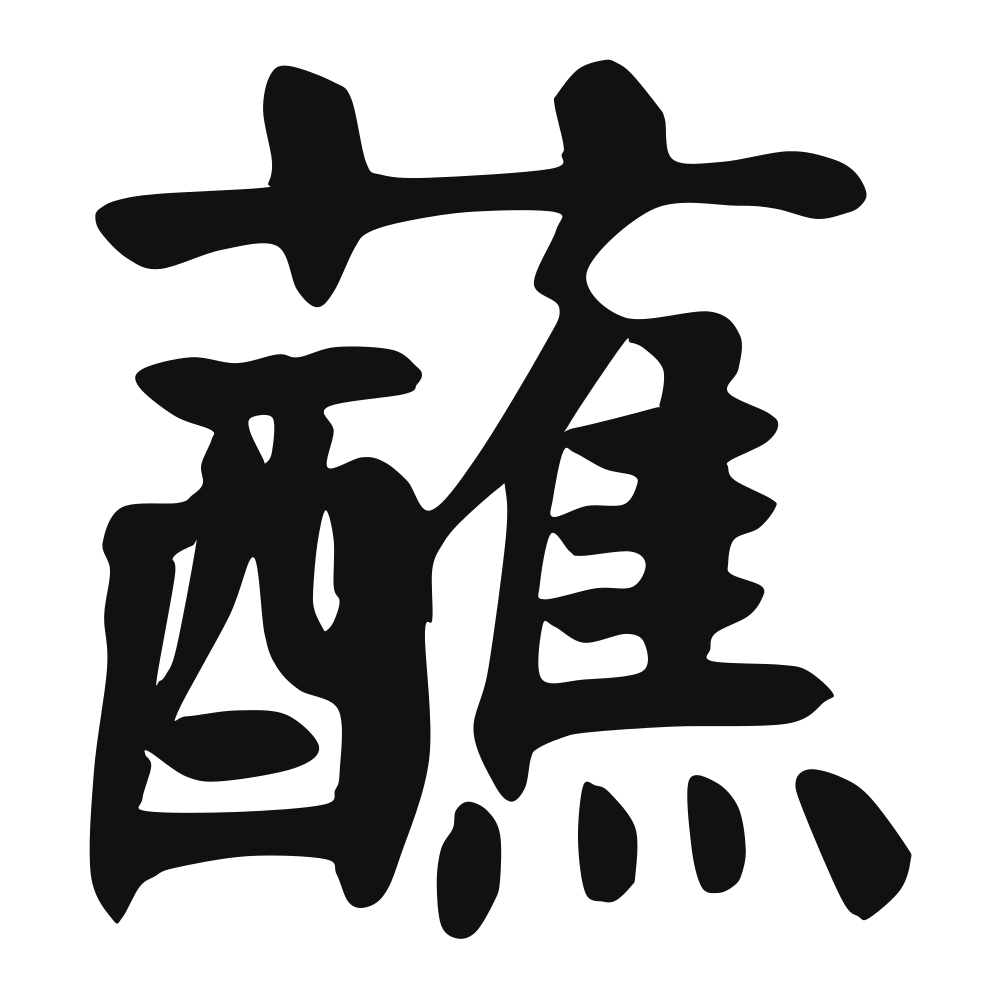
蘸
to dip in (ink, sauce etc)
Closest English meanings
dip·soak
The Calligrapher — Yán Zhēnqīng 颜真卿
Tang master of robust regular script; co-creator of the enduring 'Yan style'.
Tang calligrapher (709–784), master of regular script/running script — the Tang moral paragon whose upright, muscular regular script became the model of Chinese integrity in writing. Tang dynasty
Cultural Story
蘸 means to dip — a small plunge that shows up everywhere in Chinese eating and writing. It is a vernacular character of kitchens and calligraphy desks: the cook 蘸s dumplings in vinegar, the calligrapher 蘸s the brush in ink before a stroke. Old novels use it constantly, grounding scenes in the tactile — a finger 蘸水-ing to write a promise on the table.
Common words & phrases
- 蘸酱 dip in sauce
- 蘸水 dip in water
- 蘸料 dipping sauce
Read the story behind the character
Every Chinese meal is a duet with 蘸料 (dipping sauce): hotpot with sesame paste, dumplings with black vinegar and chili oil, Peking duck with sweet bean sauce. Cooks 蘸水 (dip in water) their fingers to flip sizzling dumplings; kids 蘸酱 (dip in sauce) everything from cucumber sticks to fries. And at a calligraphy class, students still watch the brush 蘸 ink until the tip glistens like a black drop of night.
Own this character
Purchase delivers the original SVG of this glyph, brushed by Yán Zhēnqīng 颜真卿, ready to place on skin, paper, or screen.