
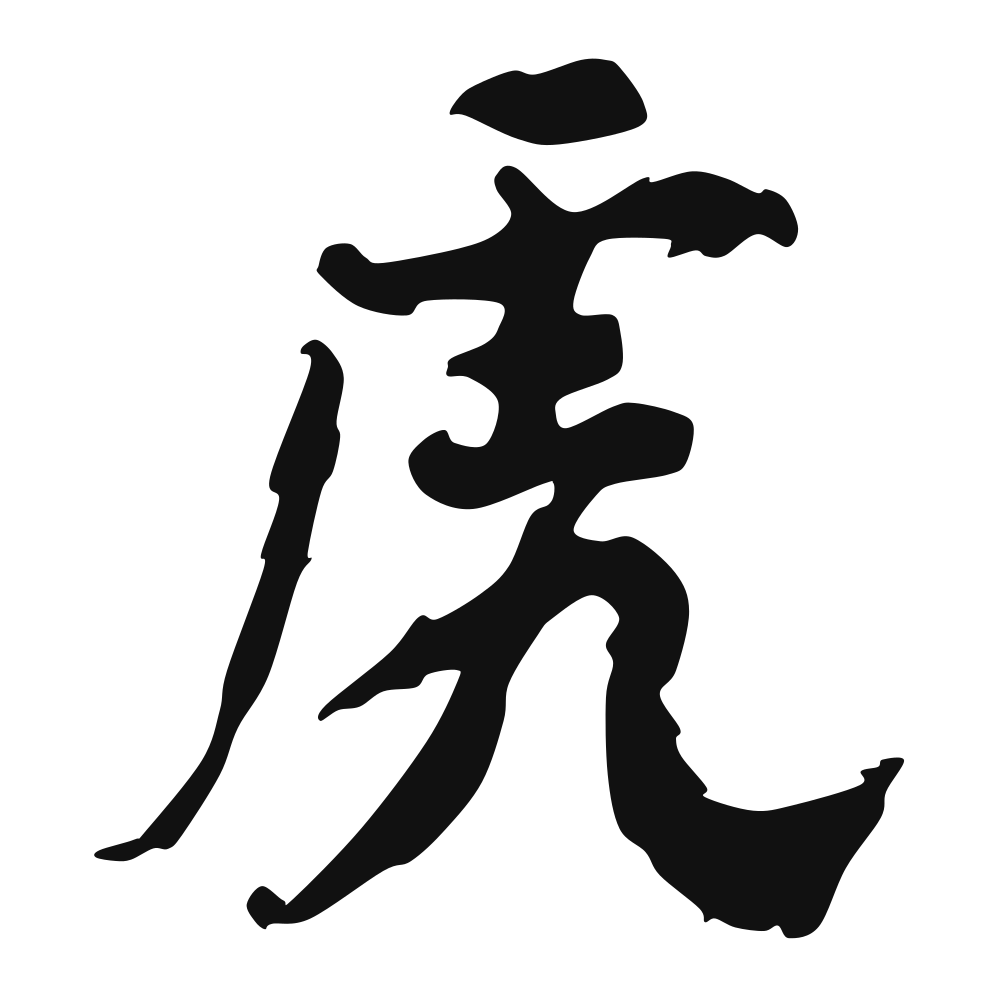
The Calligrapher — Yán Zhēnqīng 颜真卿
Tang master of robust regular script; co-creator of the enduring 'Yan style'.
Tang calligrapher (709–784), master of regular script/running script — the Tang moral paragon whose upright, muscular regular script became the model of Chinese integrity in writing. Tang dynasty
Cultural Story
The tiger stalks through Chinese culture as king, threat, and omen. Generals were 虎将, brave as tigers; imperial army tallies cast in tiger shape sealed the right to mobilize troops. The Book of Songs praises 矫矫虎臣, and the Water Margin's heroes call the beast simply 大虫. Yet the same fierce syllable hides in 马虎 — careless — where the tiger dozes.
Common words & phrases
- 老虎 tiger
- 马虎 careless
- 虎口 tiger's mouth · danger
- 壁虎 gecko
- 虎将 brave general
Read the story behind the character
Tigers still prowl language. Commuters joke about the 虎口 (tiger's mouth, danger) between two buses as they dash for the doors; a 壁虎 (gecko) hunts mosquitoes on the bedroom wall at night. Parents sigh over 马虎 (careless) exam papers, coaches roar that the team needs 虎将 (brave generals), and every tiger-year baby boom shows the old reverence is not extinct.
Why this character belongs on skin
He walks alone because he can. The 虎 asks for no pack, no permission, no throne — only the mountain and the dark. In Chinese lore he is the king of beasts not by conquest but by presence; bandits tattooed him for protection, mothers sewed his image into infant clothes to ward the night. He is raw courage without apology, the body's own weather. Where the dragon rules the sky, the tiger rules the earth and the pulse — the red, animal yes beneath every polite no. To carry him is to keep a predator on your side of the fence, the part of you that will not be domesticated, that meets the threat and does not blink. Some guards wear badges. You wear teeth.
Own this character
Purchase delivers the original SVG of this glyph, brushed by Yán Zhēnqīng 颜真卿, ready to place on skin, paper, or screen.