
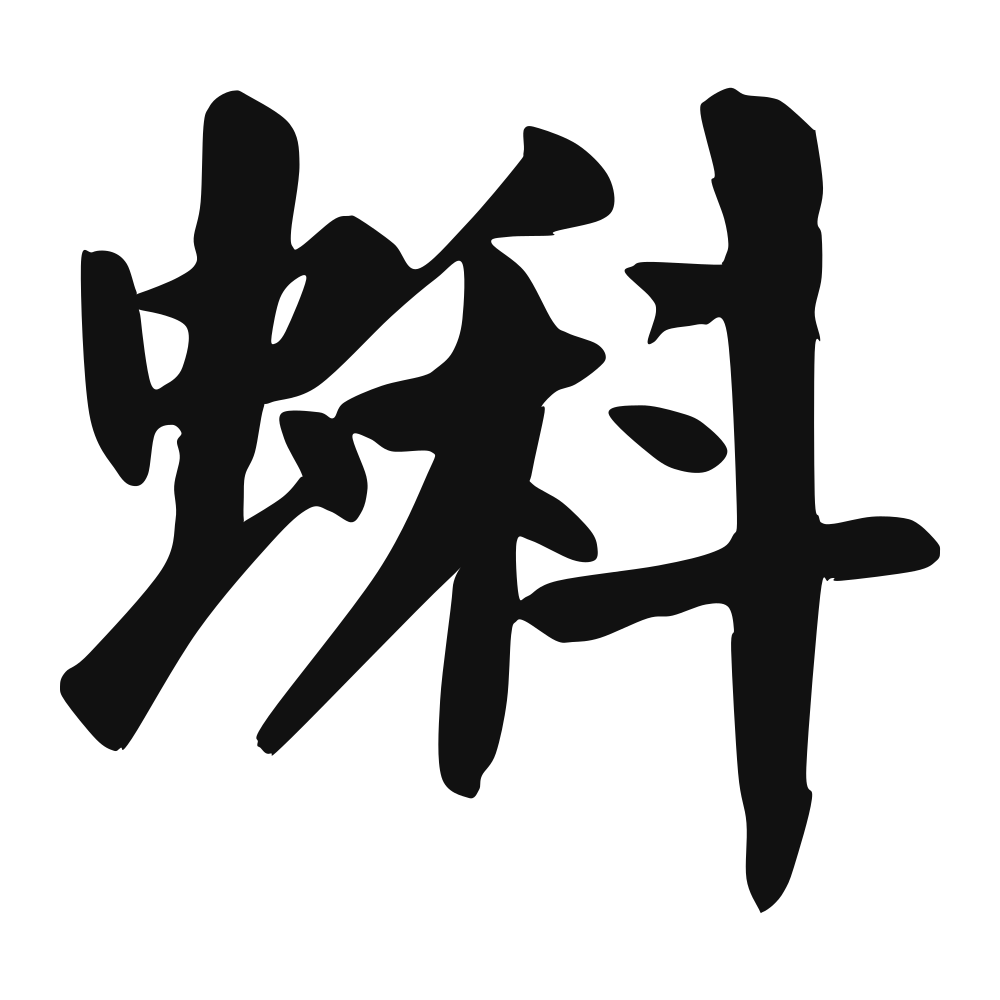
蝌
usually seen in: tadpole (蝌蚪)
Closest English meanings
tadpole
The Calligrapher — Yán Zhēnqīng 颜真卿
Tang master of robust regular script; co-creator of the enduring 'Yan style'.
Tang calligrapher (709–784), master of regular script/running script — the Tang moral paragon whose upright, muscular regular script became the model of Chinese integrity in writing. Tang dynasty
Etymology & Meaning · 字义溯源
### Soundkē — kē (1st tone). Often a bound morpheme — needs a partner word ### Original meaningKē (1st tone). Honesty first: 蝌 is a late character and has no Shuowen entry. The Kangxi dictionary says so in four words — 「蝌蚪。本作科」 ('tadpole; originally written 科') — giving the reading 《唐韻》《集韻》《韻會》苦禾切,音科. The word itself is old, though: 《爾雅·釋魚》「科斗,活東」, and the 疏 explains 「蝦蟇子。此蟲一名科斗,一名活東,頭圓大而尾細,古文似之,故孔安國皆云科斗文字是也」 — a frog's brood, round-headed and thin-tailed, and because the oldest Chinese script looked like that, 孔安國 and others called the ancient graphs 科斗文字, 'tadpole script'. So the character's real claim to fame is calligraphic: 科斗文 / 蝌蚪文, the name given to the archaic script of the pre-Qin manuscripts. 《本草》 gives it two more names, 懸針 and 水仙子; 李時珍 describes it as 「狀如河豚,頭圓,身上青黑色,始出有尾無足,稍大則足生尾脫」 — tail first, legs later, tail gone; 《爾雅翼》 adds the charming detail 「月大盡生前兩足,月小盡生後兩足」. Honest disclosure: 蝌 is a bound element meaning tadpole, it is post-classical as a graph, and it carries no symbolic weight in the classics beyond the script-name. ### The structure (形聲(后起字) · 从虫,科聲 — insect radical with 科 as phonetic; the Kangxi dictionary states plainly that the word was originally written 科 (本作科), i.e. 科斗)①虫chónginsect / creaturethe classifier, added when the word was given its own graph②科kē(phonetic)the original writing of the word: 科斗③科斗kēdǒutadpole《爾雅·釋魚》: 科斗,活東④科斗文kēdǒuwéntadpole scriptthe archaic graphs named for their shape ### In use todayItemReading / meaningNoteReadingkē (1st tone)single syllableCore sensetadpole (bound element)written 科斗 in the classicsGrammarbound morpheme蝌蚪 tadpole; 蝌蚪文 tadpole scriptTattoo fitcaution — not a word alone, and a late graphfor 'becoming' use 化 / 蛻 / 蛙 ### Closest words in English — and what each misses - Frog — 蛙/蟾 hold the adult; 蝌蚪 is the larva that has not arrived - Change / Metamorphosis — 化 holds transformation; the tadpole shows it but the character does not carry it as a meaning - Small / Tiny — 小 holds small; 蝌 is a name, not a size - Script / Writing — 文/書 hold writing; 科斗文 is one historical name for one archaic style, not writing in generalAn honest note on grammar. Strictly bound morpheme — occurs only in 蝌蚪 (tadpole) and in the script-name 蝌蚪文 / 科斗文; the older written form of the word was simply 科斗Where a Western reader can stand: 蝌 (kē) is the tadpole — but only as half of 蝌蚪; alone it is not a word. It is also a late character: the Shuowen does not contain it, and the Kangxi dictionary notes that the word was originally written 科斗, as in 《爾雅·釋魚》「科斗,活東」. Its one genuinely distinguished use is 科斗文, 'tadpo
Cultural Story
When workmen repairing the wall of Confucius's old house found buried texts, they were written in a script whose strokes swelled at the head like little tails, 蝌蚪文, the tadpole writing. The 蝌 alone never stands free; it lives only inside 蝌蚪, the word for the black comma-shaped creature that hatches in every spring puddle. Scholars learning those recovered classics traced the tadpole-shaped graphs by lamplight, connecting a drowned scholar's pet to the oldest recovered books in the land.
Where a Western reader can stand: 蝌 (kē) is a bound element — alone it is not a word; 'tadpole' is 蝌蚪. Its real distinction is 科斗文, 'tadpole script,' the name scholars gave the archaic pre-Qin graphs because their thick heads and thin tails looked like tadpoles. As a tattoo the lone glyph reads as a fragment; wear 蝌蚪 for the creature or 科斗文 if you mean the love of old writing. Note it is a late graph — the Shuowen lacks it, and Kangxi says it began as 科 — so any 'ancient emblem' claim is false.
Common words & phrases
- 蝌蚪 tadpole
Read the story behind the character
In a primary-school science jar, a row of 蝌蚪 wriggles, tails flicking, while children wait for the first legs to sprout. At the pond edge, a father nets a few to show his daughter the creature mid-transformation. A calligrapher jokingly calls his stubby brush dots 蝌蚪, fat at the head like the little animals. From the classroom jar to the weekend pond to the writing desk, 蝌 names the same small black shape that means water, change, and the start of something with legs still to grow.
Why this character belongs on skin
Every frog the pond has ever sung with began here: a small dark comma swimming in the shallows, half-written, becoming. 蝌 lives inside 蝌蚪—tadpole—蚪 meaning wriggle, which is exactly what the thing does, tail whipping, no legs yet, all possibility and fin. The ancient calligraphers borrowed the name: 蝌蚪文, tadpole script, the archaic writing found hidden in the walls of Confucius's house, its characters fat-headed and thin-tailed, older than the age that found them. So the word holds transformation twice—once in the pond, once in the library. Metamorphosis does not consult the tadpole's opinion. The legs arrive anyway. The tail is reabsorbed—actually used, not wasted—and one morning the comma of the shallows sits in the air, breathing a different element. To wear 蝌 is to honor your own unfinished sentence: the versions of you that were entirely real and entirely provisional, dissolved and not wasted, singing now from a bank you couldn't have imagined from inside the water.
Own this character
Purchase delivers the original SVG of this glyph, brushed by Yán Zhēnqīng 颜真卿, ready to place on skin, paper, or screen.