
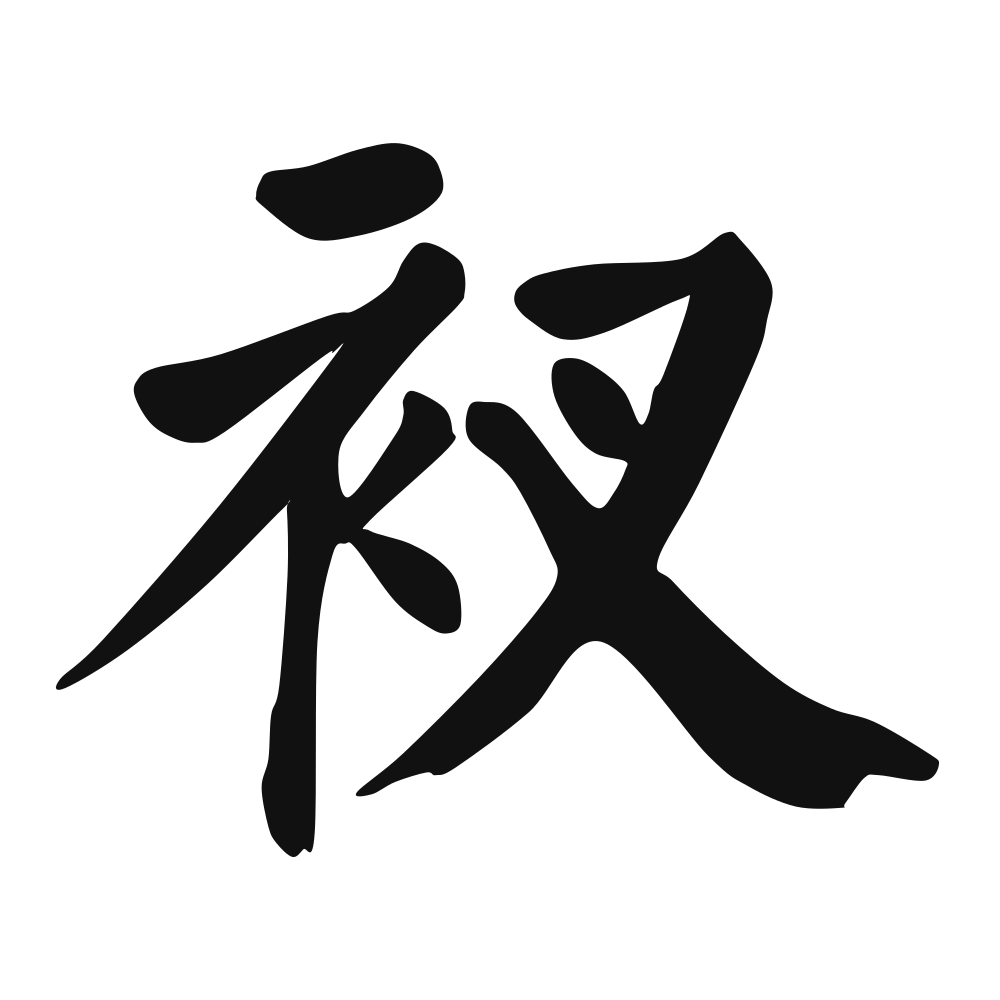
衩
open seam of a garment; shorts; panties; slit on either side of robe
Closest English meanings
slit·underpants
The Calligrapher — Yán Zhēnqīng 颜真卿
Tang master of robust regular script; co-creator of the enduring 'Yan style'.
Tang calligrapher (709–784), master of regular script/running script — the Tang moral paragon whose upright, muscular regular script became the model of Chinese integrity in writing. Tang dynasty
Cultural Story
The qipao, the close-fitting dress of Republican Shanghai, is defined by its kaicha, the high side slit that lets the wearer step freely while keeping the line elegant. Earlier robes and riding jackets carried the same opening, a practical gap in a long garment. The slit is small but it is the detail everyone notices first.
Common words & phrases
- 裤衩 underpants · shorts
- 开衩 slit (in garment)
Read the story behind the character
In a changing room a shopper checks the kaicha of a new dress, while a boy pulls on his kucha shorts for swimming. The character names the deliberate opening in clothing, the cut that trades modesty for movement. From the evening gown to the child's summer shorts, it marks where a garment is split on purpose.
Why this character belongs on skin
A garment radical beside a fork in the road—衩 is the slit, the split hem, the opening through which movement happens. It names the side-slit of the qipao, that legendary seam running up the leg, a piece of engineering so quietly devastating that an entire century of glamour walked through it. Fashion's oldest secret: nothing seduces like an opening, not the covered but the nearly revealed, the suggestion of what the fabric keeps. 衩 is the doorway in cloth, the precise aperture where restraint becomes invitation. Worn as ink, it is sly, elegant, a little dangerous—a character that whispers rather than shouts, best placed where only the patient discoverer will find it. Some marks dress the skin. This one undresses a moment.
Own this character
Purchase delivers the original SVG of this glyph, brushed by Yán Zhēnqīng 颜真卿, ready to place on skin, paper, or screen.