
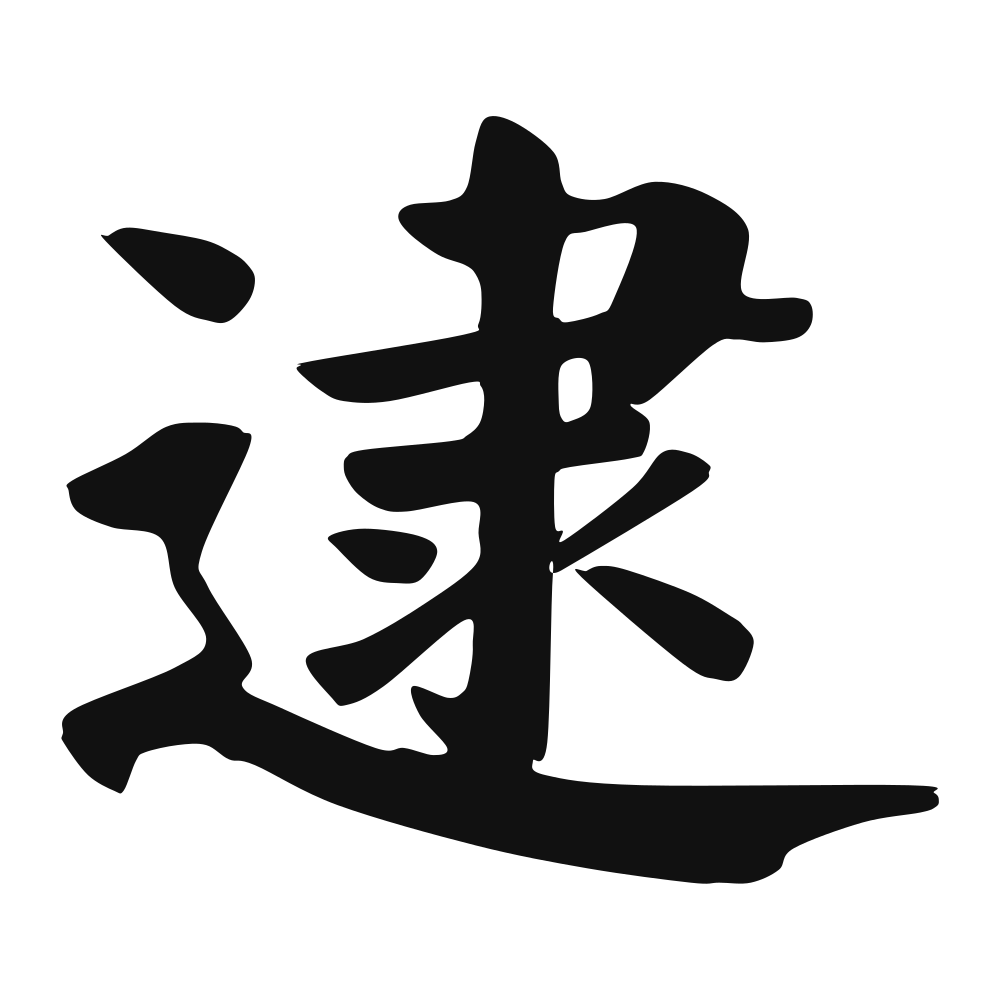
逮
(coll.) to catch; to seize; to capture; (literary) to reach
Closest English meanings
to catch·arrest·reach·to seize
The Calligrapher — Yán Zhēnqīng 颜真卿
Tang master of robust regular script; co-creator of the enduring 'Yan style'.
Tang calligrapher (709–784), master of regular script/running script — the Tang moral paragon whose upright, muscular regular script became the model of Chinese integrity in writing. Tang dynasty
Cultural Story
Dai is the reaching hand — to catch what was about to slip away. Han legal documents used dai for officers seizing suspects, and the word also grew a gentler sense: to attain, to be equal to the task.
Common words & phrases
- 逮捕 to arrest · arrest
- 逮住 to catch · to capture
- 力有未逮 beyond one's power · inability
Read the story behind the character
Dai keeps both arms: daibu (arrest) on the evening news, dai zhu (catch hold) the child before the escalator, and the scholar's confession li-you-weidai — 'my strength falls short of reaching' — the elegant way to say you are not up to it. From warrant to modesty in one character.
Why this character belongs on skin
There is a moment the hawk decides — no more circling, only the drop. The wind closes, the rabbit does not look up, and the world narrows to a single certainty. This is to seize, to catch, to lay hands on the fleeting thing before it vanishes. The huntress Artemis never missed; the fisher on the Galilean lake was told to catch men instead of fish. To seize is not cruelty — it is presence, the courage to act when the opening appears. Most lives are lost not to failure but to hesitation, the hand that reaches and then withdraws. Wear this word as a vow to your own appetite: when the moment is real, close your fingers. Take the love, the chance, the truth. Let the ink be the talon on your skin, a small fierce reminder that you were built to catch what the timid only watch float past.
Own this character
Purchase delivers the original SVG of this glyph, brushed by Yán Zhēnqīng 颜真卿, ready to place on skin, paper, or screen.