
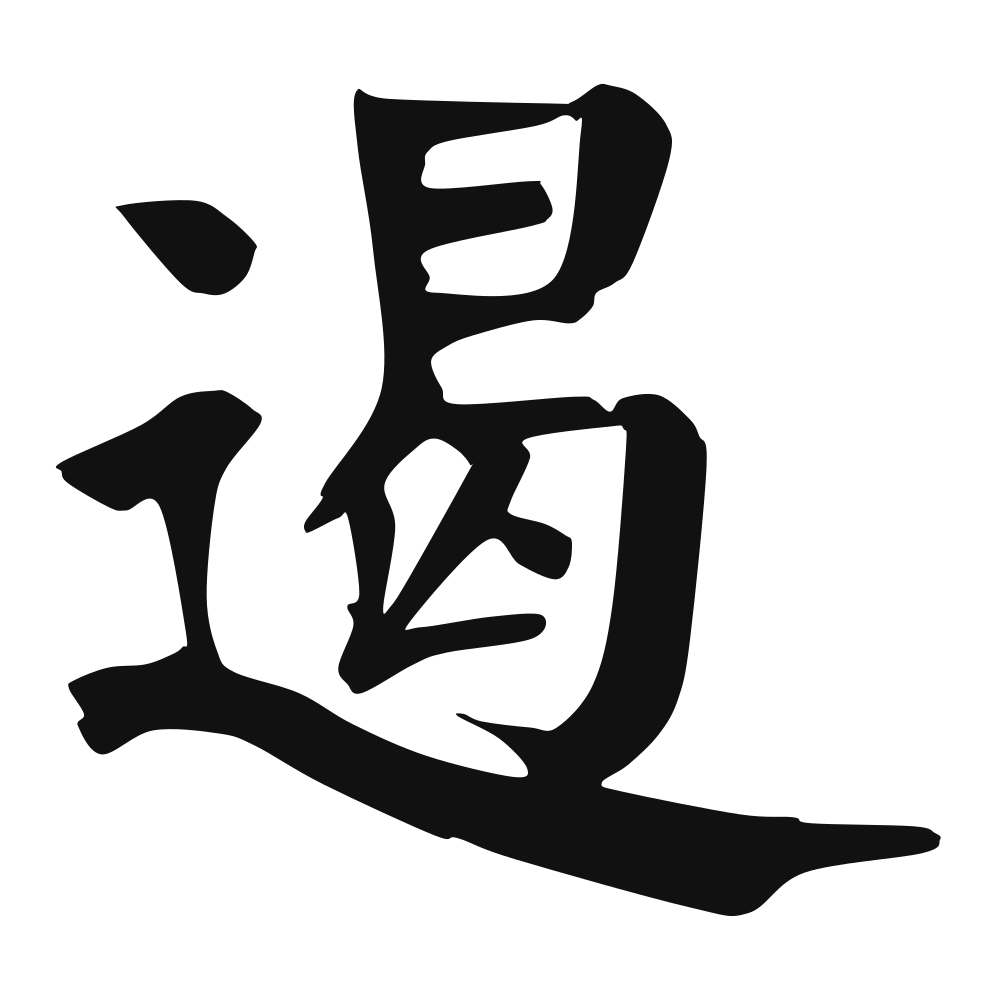
遏
to restrain; to check; to hold back
Closest English meanings
stop·restrain·hinder
The Calligrapher — Yán Zhēnqīng 颜真卿
Tang master of robust regular script; co-creator of the enduring 'Yan style'.
Tang calligrapher (709–784), master of regular script/running script — the Tang moral paragon whose upright, muscular regular script became the model of Chinese integrity in writing. Tang dynasty
Cultural Story
E is the dam in the word — force applied to stop what is moving. Early ritual texts speak of music silenced 'withheld' at a king's death, and e settled into the language as restraint with muscle: to halt a thing in its course.
Common words & phrases
- 遏制 contain · restrain
- 遏止 check · stop
- 怒不可遏 beside oneself with anger
- 遏抑 suppress
Read the story behind the character
E holds modern lines: ezhi (curb) inflation, the central bank ezhi (stem) the panic, ezhi (contain) the spread before it becomes a wave, and the classic idiom nu-buke-e — rage that cannot be dammed — the moment the comment section erupts. To e is to bet that the flood can still be stopped.
Why this character belongs on skin
A hand raised flat against a door that wants to burst open — that is the gesture inside this character, the old sense of halting a horse at full gallop, damming a river mid-surge. The warriors of every tradition knew it: the samurai's stillness before the strike, the desert fathers holding their tempers like live coals in bare hands, the boxer who does not throw the punch he could. To restrain is not to be weak. It is power gathered behind a gate, pressure with a purpose, the longest note a singer holds without cracking. Anyone can spill; very few can hold, and fewer still can hold without hating the holding. The ink sits where the discipline lives — wrist, forearm, the place of grips — a small dark seal on the flood you carry, proof to no one but yourself that you decide when the water breaks.
Own this character
Purchase delivers the original SVG of this glyph, brushed by Yán Zhēnqīng 颜真卿, ready to place on skin, paper, or screen.