
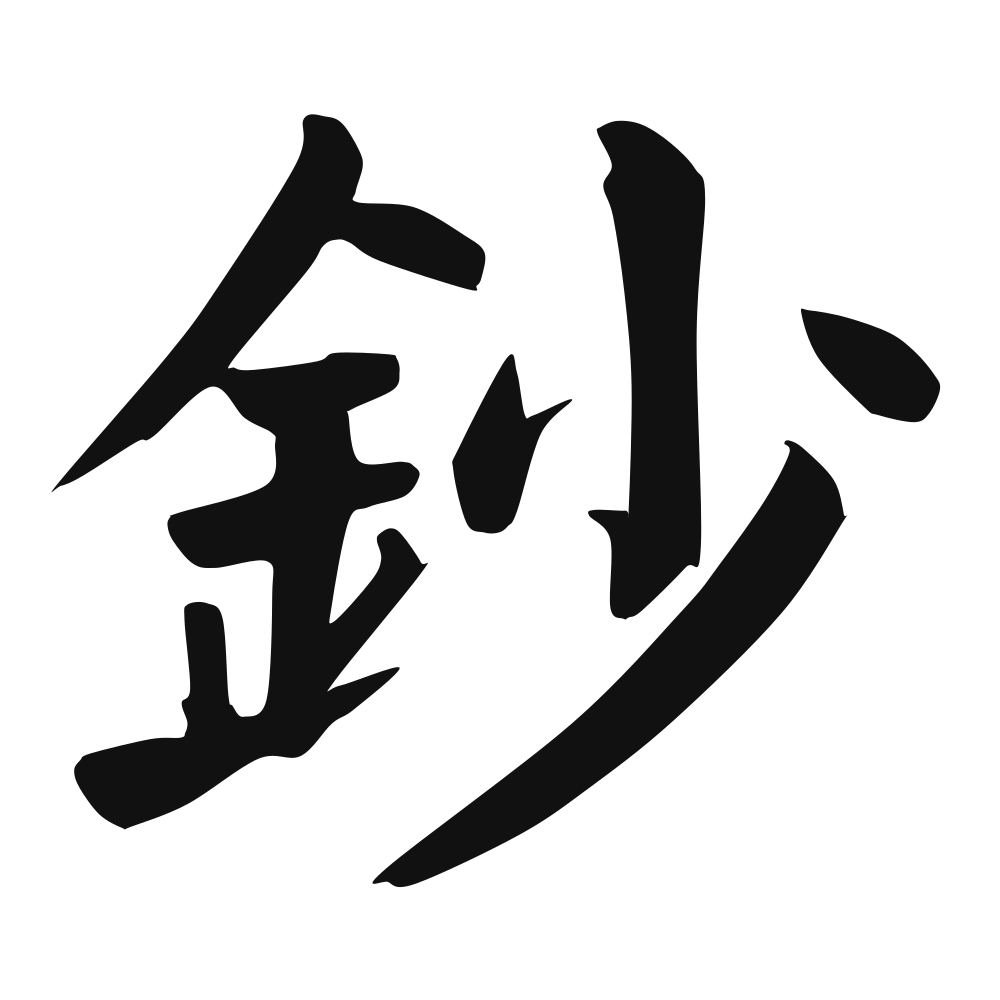
The Calligrapher — Yán Zhēnqīng 颜真卿
Tang master of robust regular script; co-creator of the enduring 'Yan style'.
Tang calligrapher (709–784), master of regular script/running script — the Tang moral paragon whose upright, muscular regular script became the model of Chinese integrity in writing. Tang dynasty
Etymology & Meaning · 字义溯源
### Soundchāo — chāo (1st tone). Free-standing morpheme ### Original meaningChāo (1st tone). The Shuowen Jiezi defines it as 「鈔,叉取也。从金少聲」 — 'to take with a fork, to seize', from 金 with 少 as phonetic; Xu Xuan appends 「今俗別作抄」 — the vulgar modern graph is 抄. That is the sense behind 《後漢書·公孫瓚傳》「攻鈔郡縣」 (to raid the commanderies) and the Zhou Li commentary 「烏鳶善鈔,盜便汙人」 (kites are good at snatching). Two other lives grew from it. The first is scholarly: 《抱朴子·金丹》「余令略鈔金丹之都」 — to copy out; hence 鈔書, 鈔錄, and the great Tang excerpt-collection 《北堂書鈔》. The second is money: by the Jin and Song, 交鈔, paper notes; 《金史·食貨志》「遞制交鈔,與錢並用」. 《管子·幼官》 even uses it for the far end of a thing — 「教行於鈔」 with the gloss 「鈔,末也」 — and 「聽於鈔,故能聞未極」. Kangxi: 12 strokes (金 radical + 4). Wuxing: Metal (金) by the radical and the tables (verify). Honest disclosure: the everyday modern reading of 钞 is 鈔票 — banknotes, cash. ### The structure (形聲 · 从金少聲 — metal (金) with 少 as phonetic; Xu Xuan notes the vulgar form is 抄, written with a hand)①金jīnmetalthe radical — coin, and the thing seized②少shǎofew / littlethe phonetic; the little that is taken③钞chāoto snatch; to copy; paper moneythe three lives of the word④抄chāoto copythe vulgar form Xu Xuan records — written with a hand, not metal ### In use todayItemReading / meaningNoteReadingchāo (1st tone)single syllableCore sensepaper money; to copy out; (classical) to raidmoney is the default reading todayGrammarfree morpheme鈔票 banknote; 鈔寫 / 鈔錄 to transcribe; 鈔掠 to lootTattoo fitcaution — reads as 'cash'the classical root sense is 'to snatch' ### Closest words in English — and what each misses - Wealth — 富 holds 'wealth'; 鈔 is the note in your hand, and its root sense is taking - Gold — 金 holds 'gold'; 鈔 is paper that stands in for it - Copy — 抄 is the usual modern graph for 'to copy'; 鈔 is the earlier form, and today means money - Steal — 盜/掠 hold 'to rob'; 鈔掠 is the raiding compound, but 鈔 alone in modern Chinese is a banknoteAn honest note on grammar. Free morpheme (鈔寫 to transcribe, 鈔票 banknote, 鈔掠 to raid); in modern Chinese the default reading is the noun — paper money; also a rare surnameWhere a Western reader can stand: 钞 (chāo) is the character for paper money — 鈔票. Its Shuowen sense is 叉取, 'to snatch', the word used for raiding commanderies; from 'taking' it moved to 'copying out' (鈔書, the hand-copied book, hence the Tang compilation 《北堂書鈔》), and then, under the Jin and Song, to printed notes (交鈔). There is one lovely outlier — 《管子》 uses 鈔 for 'the far end of a thing'. But on skin, a lone 钞 says 'cash'. If you want prosperity, 亨 is the classical wo
Cultural Story
The Song court, short of coin in the Sichuan mints, authorized the 交子 around 1023, the world's first paper money, and the 钞 became the printed promise that stood for metal it did not hold. The 鈔本 of later ages kept the other sense, the copied manuscript. From that mint the character carried both the note in a hand and the page copied by one.
Where a Western reader can stand: 钞 (chāo) is the character for paper money. Its Shuowen sense is 'to snatch' (raiding commanderies); from taking it moved to copying books by hand, then to printed notes. Yan Zhenqing's stone stelae are its opposite — permanence against paper. Read it honestly: a lone 钞 says 'cash', not prosperity.
Common words & phrases
- 鈔票 banknote · cash
- 現鈔 cash
- 鈔本 manuscript copy
Read the story behind the character
A bank dispenses 鈔票 from its machines and a clerk counts 現鈔 at the counter, while a library catalogs a rare 鈔本 of an old poem. The character now folds in a wallet and rests on a shelf. The paper promise of the Song mint has become the cash a teller counts and the copied book a scholar turns, the printed value and the copied line.
Why this character belongs on skin
The paper in your wallet is lighter than the promise it pretends to keep, and still the whole world bends toward it. This character joins the metal radical to a sound like a swift current—wealth made thin, value carried on a breeze, the empire's gold beaten down to a slip you can lose in a breath. The Buddhists warned that desire is a river with no far bank, and here is its modern scripture: a printed number, a fleeting faith. And yet there is a strange honesty in paper money, for it admits what gold always lied about—that worth is something we agree to believe. To mark yourself with it is not to worship the coin but to name the spell, to laugh at the current that carries us all. Let it sit near the pulse, where the blood moves fast, a small talisman against taking the world's arithmetic too seriously.
Own this character
Purchase delivers the original SVG of this glyph, brushed by Yán Zhēnqīng 颜真卿, ready to place on skin, paper, or screen.